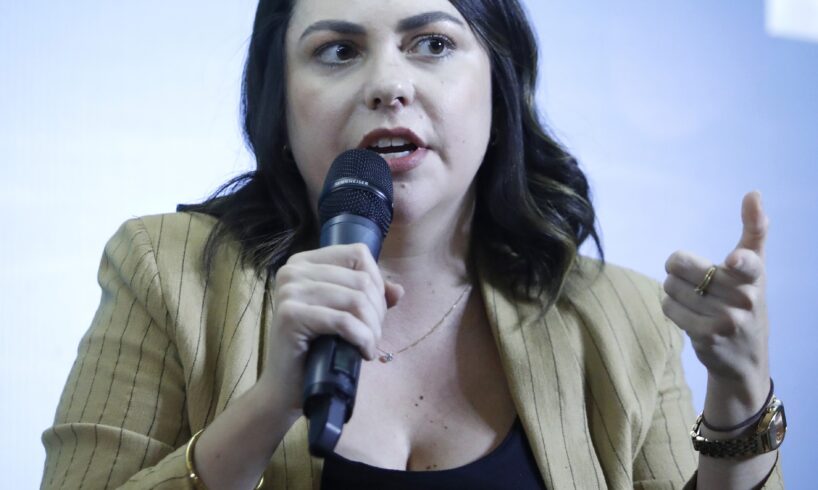
The Brazilian bioeconomy has entered a new phase in the wake of COP30 and is expected to make significant progress on implementation this year, according to industry experts. The next five years will be decisive for Brazil to consolidate its leadership in biodiversity and sustainable economic development, says economist Talita Pinto, executive director of the Getulio Vargas Foundation (FGV) Observatory of Knowledge and Innovation in Bioeconomy.
“We are seeing a clear shift as the bioeconomy moves from theory to practice, benefiting businesses, opening new markets, and serving as a model for different regions. These are scalable ventures that can attract financing,” she said.
Until a few years ago, Pinto notes, the bioeconomy was widely viewed as a promising environmental concept but difficult to measure. Going forward, she says, it will gain stronger operational grounding and momentum through public policies, financial instruments, and the development of metrics that demonstrate its economic advantages.
At COP30 in Belém, the bioeconomy was the focus of a series of public policy initiatives. Brazil introduced the Global Bioeconomy Challenge platform to translate principles into concrete actions. The federal government also launched the Coopera+ Amazônia program, backed by R$ 107 million in funding through BNDES and the Amazon Fund, to support local farmer cooperatives. The Amazonas state government, in turn, created a bioeconomy plan to strengthen sustainable production, with an emphasis on supporting traditional communities and valuing standing forest.
The measures are intended to ensure that, by 2030, Brazil’s approach to sustainable development gains scale and becomes a benchmark for green business models abroad, with clear rules governing production chains, financing, and governance, according to the FGV economist.
From 2010 to 2023, despite advances, Brazil’s bioeconomy expanded modestly, at less than 1% per year, representing about 20% of the country’s Gross Domestic Product (GDP), according to data compiled by the Observatory in 2024.
To estimate the value of the macro-bioeconomy, researchers applied the same methodology used by the Brazilian Institute of Geography and Statistics (IBGE), while segmenting primary bioeconomy activities, bioindustry, bioenergy, and biologically based industrial chains. The result was a Bioeconomy GDP (PIB-Bio) of R$ 2.7 trillion in 2023, equivalent to 25.3% of national economic activity. In 2010, that share stood at 20.2%.
Although updated figures are not yet available, Pinto expects stronger growth ahead, as variables such as the income of affected communities and carbon sequestration are being tracked and incorporated into a new report scheduled for release in 2026.
She adds that the government’s progress on the bioeconomy agenda helps reduce the risk of the sector remaining confined to rhetoric, ensuring it is supported by guidelines that substantiate its real economic, environmental, and social value.
The National Bioeconomy Strategy, established by decree in June 2024, helped structure the National Bioeconomy Development Plan and the National Bioeconomy Policy—approved by a Senate committee in October 2025 and now in the final stages of approval, Pinto notes.
“Both will align closely with the COP priorities. This entire framework is creating mechanisms to formalize what was once a broad concept, but now has a portfolio of goals, actions, indicators, responsibilities, and resources,” she explained.
From this perspective, she adds, COP30 in Brazil served as a catalyst, moving the bioeconomy debate from an aspirational narrative to an operational agenda.
Looking ahead, three requirements will guide Brazil’s bioeconomy strategy, Pinto predicts: the ability to scale production chains with socio-environmental integrity; the mobilization of capital supported by governance and auditable metrics; and the delivery of verifiable results in areas such as food security, supply, and the reduction of social vulnerabilities.
She describes the current phase as one of institutionalizing the bioeconomy—a process she sees as decisive for public policy and for the 2026 electoral agenda, particularly through initiatives aimed at embedding the bioeconomy into the country’s budget planning and fiscal targets.
One of the most significant trends in this new cycle, Pinto says, is the convergence between the bioeconomy and Brazil’s food security and supply policies. Through guidelines such as the National Supply Policy, public procurement could increasingly be sourced from the socio-bioeconomy, thereby strengthening vulnerable populations.
The direction, she argues, points to a new cycle marked by deeper integration among the public, private, and scientific sectors, accelerating gains in technology, productivity, and logistics, and bringing biodiversity-based production chains to life.
The sector has also been bolstered by cooperativism, she notes, as cooperatives reduce transaction costs, aggregate supply, enhance traceability, and provide collective governance for small farmers.
Among the latest projections is an estimate that the sector could add between $100 billion and $140 billion to the Brazilian economy, driven by high-value-added innovation beginning in 2032, according to a study by ICC Brazil (International Chamber of Commerce).
In 2024, Nature Finance estimated that the global bioeconomy was worth between $4 trillion and $5 trillion and could reach $30 trillion by 2050. Over time, Brazil is expected to strengthen its position as a global leader in the field, primarily because its biodiversity extends beyond the Amazon, the analysis notes.
“The bioeconomy alone will not save the forest or become Brazil’s main economic sector. It is not a silver bullet, but it is an important additional component of a strategy to generate value in the Amazon and other biomes, such as the Brazilian savanna (Cerrado). It is about valuing Brazil’s natural capital by bringing bioeconomy products to market,” said Rodrigo Spuri, conservation director for The Nature Conservancy (TNC) in Brazil.
By linking the biodiversity of very different territories, Pinto highlights the unique business opportunities Brazil can offer—well beyond the Amazon. Brands and hyperlocal cuisine are among the examples she cites. In this context, instruments such as public procurement, including the Food Acquisition Program (PAA), play a market-shaping role by fostering productive inclusion, strengthening supply, and supporting food security, especially in urban and peripheral areas.
Although there are still no consolidated projections for job creation in the sector, Pinto says the shift toward greater value addition and regional development is likely to boost income, consumption, and demand for services, generating employment. The bioeconomy will also increasingly require investment in science, technology, and innovation tailored to regional specificities, which could attract skilled professionals beyond the Rio–São Paulo hub.
The economist argues that the first major transition in the bioeconomy has already taken place, and that capital flows will now underpin Brazil’s leadership in the field.
“In a country that already has one of the cleanest energy matrices in the world—with about 30% of all energy generated from biomass—the bioeconomy emerges as a strategic axis capable of combining economic development, reduced inequality, and lower environmental impact,” she explained.
Given Brazil’s socio-environmental complexity, progress will not be immediate. “Brazil is a diamond in the rough. The challenge is to polish this potential in a structured, measurable, and inclusive way,” she emphasized. Alongside this process, long-awaited decarbonization is also accelerating.
Before it became clear that the bioeconomy could scale small businesses, achieving development seemed harder.
One example of the growth of bio-based ventures is the Amazon Impact Accelerator, which in 2025 marked five years of activity, with 16 active companies in its portfolio, 29 in formation, 52 supported businesses, and roughly 500 bioeconomy startups evaluated.
“We have identified two major sectors driving innovation in the Amazon bioeconomy: food and cosmetics. In food, higher value-added products are emerging, such as superfoods and meal replacements made from ingredients like guaraná, cocoa, nuts, and cassava. In cosmetics, we are seeing a growing diversity of competitors that already operate established value chains, such as Natura. The challenge is gaining broader market penetration,” explains Gabriela Souza, operations lead for Idesam’s New Business initiatives and operations manager at Amaz.
She notes that companies are increasingly seeking to anchor their businesses in environmental assets, underscoring how the bioeconomy can connect with more consolidated industrial chains. “It’s not just about scaling products, but about structuring the supply chains, relationships, and services around these models,” she says.
For Souza, the turning point across all these chains lies in investing in research and development so that, beyond raw materials and finished goods, bio-based value chains can also deliver services—for example, through the development of biofactories. She adds that 2026, the year following COP in Brazil, should further raise the country’s sustainable economy’s profile.
Coordinated by the Amazon Conservation and Development Institute (Idesam), Amaz was the only Brazilian initiative selected as a finalist for the 2026 GAEA (Giving to Amplify Earth Action) Awards, an international prize from the World Economic Forum that recognizes innovative solutions to climate challenges.
In 2026, Amaz aims to expand the flow of resources directed to the bioeconomy through new financing models, including the incubation of community-based, science- and technology-driven ventures that generate products, services, and jobs.
Souza emphasizes that the Amazon has the power to attract international attention and remains at the forefront of Brazil’s bioeconomy. Amazonas alone is the region’s most preserved state, with 93.22% forest cover—an essential asset for the bioeconomy, according to the Atlas of Inclusive Bioeconomy, recently published by Embrapa.