Shafaq News
Iraq’s water
crisis is intensifying, pushing the nation to the edge of severe scarcity with
few solutions in sight. A sharp decline in river flows from neighboring
countries, combined with years of climate change and ineffective government
strategies, has left the Tigris and Euphrates struggling to meet Iraq’s needs.
According to
the Ministry of Water Resources, strategic water reserves have plunged to their
lowest level in 80 years — dropping from a typical 18 billion cubic meters at the start of
summer to barely 10 billion this year.
For decades,
Iraq’s water challenges simmered quietly, but now the situation has reached
alarming proportions. Rising temperatures and diminished precipitation could
slash freshwater availability by an additional 20% by 2035, threatening nearly
a third of currently irrigated land. Desertification is accelerating, and as of
2022, roughly 3,000 families across eight provinces had been displaced by drought and environmental degradation.
Read more: Oi for Water: Iraq bets on new Turkiye deal to ease drought crisis
In early
November, Iraq and Turkiye signed an implementation mechanism for a framework
water cooperation deal under caretaker Prime Minister Mohammed Shia Al-Sudani.
Iraqi Foreign Minister Fouad Hussein described it as “one of the sustainable
solutions” to Iraq’s water crisis, calling it “the first of its kind” in
bilateral history. Turkish officials pledged to release one billion cubic
meters of water while assuring that Turkiye’s 90-billion-cubic-metre reserves
would remain unaffected.
Yet experts
and former lawmakers warn that the deal offers little more than assurances.
Ibtisam Al-Hilali, a former member of the parliamentary Agriculture, Water and
Marshlands Committee, dismissed the agreement as transactional rather than
sovereign. “The agreement contains no binding conditions on Ankara,” she
emphasized. “It’s essentially ‘oil for water.’ Turkish companies will build and
manage the dams, while Iraqi firms capable of executing such projects remain
sidelined.”
Al-Hilali
stressed that the deal remains unimplemented, cautioning that continued low
rainfall could push Iraq into severe drought. “The only solution,” she
insisted, “is to cut commercial ties with Turkiye to force it to grant Iraq its
water share.”
Read more: Iraq and Turkiye finalize infrastructure deal: What we know
Thaer Mukhif
Al-Jubouri, another former parliamentary Water Committee member, reinforced
these concerns, noting that discussions with Ankara considered Iraq’s water
needs — including population, daily consumption, and industrial and
agricultural demand — but failed to translate into enforceable commitments.
“The solution begins with a prime minister who prioritizes water as a matter of
national security,” he stressed.
Water and
agricultural expert Tahseen Al-Mousawi criticized the framework agreement as
“unjust.” It does not define Iraq’s water shares or revisit previous accords.
Instead, he explained, it focuses on constructing four regulatory dams to
capture rainwater and seasonal flows, rather than dams reliant on Turkish
releases.
Iraq’s
per capita freshwater share has fallen below 1,000 cubic metres per year — a
level considered severe water stress globally — signaling full-blown shortages
that threaten drinking water, agriculture, and industry.
Warning of
potential “water catastrophes” by summer 2026 if current policies persist,
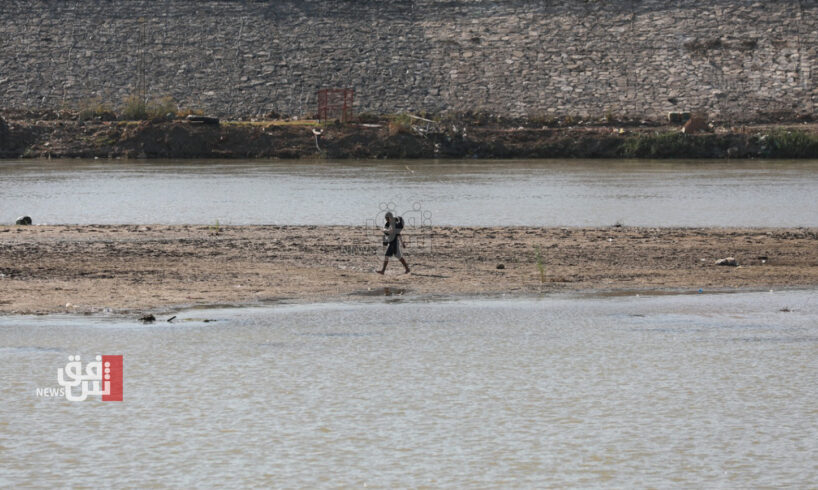
Al-Mousawi highlighted that the Tigris and Euphrates are at historically low
levels, and Turkiye has offered no guarantees regarding water releases.
Al-Hilali
argued that the agreement reinforces Iraq’s vulnerability. Turkish companies
manage the dams entirely, funded through Iraqi oil sales. “It’s a commercial
transaction, not a sovereign safeguard,” she criticized, highlighting the
government’s failure to defend farmers and citizens amid mounting shortages.
The problem
is compounded by long-standing environmental degradation. Agriculture consumes
more than 80% of Iraq’s freshwater, and outdated irrigation methods, including
surface irrigation and unlined canals, cause up to 60% of water losses through
evaporation or seepage.
Pilot
projects using drip and sprinkler irrigation show that water use could be
halved while crop yields increase by up to 40%. To conserve water, cultivation
areas were reduced from 2.5 million dunams last year to 1.5 million dunams this year — a 40% reduction.
The
ecological cost is staggering: marshlands and farmland are shrinking,
desertification is spreading, and saltwater intrusion threatens soil quality,
particularly in southern Iraq.
Read more: A century of promises: Iraq’s water diplomacy with Turkiye and Iran
The looming
drought has become a matter of national security. Iraq relies on the Tigris and
Euphrates for nearly 98% of its surface water. The crisis threatens millions of
Iraqis, affecting agriculture, industry, and urban centers.
Al-Hilali
criticized past government responses as insufficient, noting political
compromises often came at the expense of farmers and citizens. Meanwhile,
Al-Mousawi warned that without immediate reforms and an assertive water policy,
Iraq could face catastrophic shortages in the near future.
Once treated
as a peripheral issue, water management in Iraq now demands urgent attention.
Experts emphasize that resolving the issue will require more than agreements
signed on paper; it will require leadership willing to defend Iraq’s water
rights and place them at the center of national priorities.
Written and edited by Shafaq News staff.