Shafaq News
The morning began under a veil of dust along the edge of
al-Hol camp, north-eastern Syria. From there, buses lined up quietly, taking on
board 858 Iraqis who would soon cross the border toward a different chapter of
their lives.
It was not just a movement between two places, but part of a
long path that Baghdad started four years ago—one return convoy after another,
now reaching its thirty-first.
A camp administration source said that 240 families were
left under the close watch of the US-led coalition forces. These departures
have become familiar, the source noted, even as every step remains tightly
regulated. With each convoy, the number of Iraqis inside the camp shrinks; only
about 3,000 remain, some waiting for their turn, while several dozen families
still refuse to go. Their hesitation has become one of the most difficult parts
of a process Iraq aims to conclude by 2027.
Al-Hol… Outside the Map
Beyond its fences and its sandy terrain, al-Hol is more than
a point on the map. According to information attributed to the Syrian
Democratic Forces (SDF), 26 detention facilities operate in eastern Syria,
holding nearly 12,000 foreign ISIS fighters from over 50 countries.
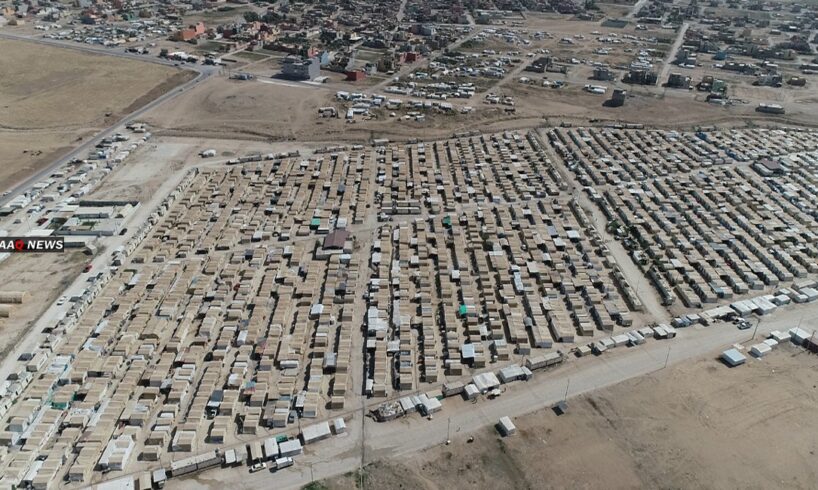
Inside al-Hol’s three-square-kilometer expanse live around
17,000 people—Syrians, Iraqis, and foreign nationals. Out of them, about 6,300
are women and children from 42 countries, many linked to families of ISIS
members. Within this crowded place, life unfolds in a confined rhythm: tents
under strict security rules, a small market for daily needs, and an atmosphere
shaped by waiting.
Entering the camp requires multiple permissions, and
maintaining security inside is a constant effort. Recently, the SDF, backed by
coalition forces, detained an Iraqi man identified as Baha al-Masiri, accusing
him of activating Islamic State cells, coordinating recruitment, and helping
produce explosives inside the camp.
Baghdad Warns of Silence Threat
These incidents serve as reminders of why al-Hol remains a
priority for Baghdad. From the United Nations stage, President Abdul Latif
Jamal Rashid described the camp as a “fertile ground for extremism” and a
“humanitarian disaster,” holding nearly 10,000 hardline individuals from
various countries. He urged governments with nationals inside the camp to
resume repatriation without delay.
Iraq’s Foreign Ministry reported in late September that more
than 18,800 Iraqis have already been brought back under a full rehabilitation
and reintegration plan. Thirty-four countries have retrieved their citizens,
while six have yet to begin. National Security Adviser Qasim al-Araji has
called al-Hol a “ticking bomb,” emphasizing that Iraq has handled returns
responsibly with UN support.
Return Batches… A Long Path Home
Through recent months, the departures continued steadily:
232 families made the trip in late August, followed by 233 in July. On 22 June,
the largest group so far—935 people—left the camp, and two months before that,
another 241 families, totaling 865 people, were transferred.
The Ministry of Migration and Displacement said 29 rounds of
returns have brought back 19,000 individuals, with 12,564 of them completing
rehabilitation programs covering psychological, social, health, educational,
and cultural support, along with the issuance of legal documents.
Minister Evan Faeq Jabro said Iraq’s focus has been on
“rebuilding individuals and supporting their psychological, social, economic,
and legal reintegration.”
Returnees first arrive at the Jada’a center in Mosul,
capital of Nineveh Governorate, where four stages unfold: security screening,
transfer from the camp, comprehensive support, and finally reintegration into
home communities in cooperation with national institutions and international
partners.
After Returning… Hardest Trial
But once the journey ends, another test begins. Many
returning families face social pressure, difficulties securing official
documents, and, in some cases, are asked to distance themselves from relatives
accused of belonging to the Islamic State group. Specialists describe such
measures as unlawful, yet they continue to appear.
As convoys leave al-Hol and others prepare to follow, Iraq
continues working to close this heavy post-war file—while the traces of its
impact remain visible in the faces of those returning, and in the questions
that await them at home.