Key points:
US strikes, naval deployments and legal moves around Venezuela look less like a drug war and more like a prepared regime-change framework.
The operation fits a wider US effort to block Chinese and Russian influence in its hemisphere and reassert a 21st-century Monroe Doctrine.
Venezuelan oil and markets are central: investors are already pricing a post-Maduro opening aligned with Western capital.
As blocs harden, Brazil’s current tilt toward China and “strategic autonomy” will face limits: in the next phase, there will be camps.
Washington’s Quiet Shift From Drug War To War Preparation
(Op-Ed Analysis) Washington has not stumbled into confrontation with Venezuela. It has prepared for it, deliberately and in layers.
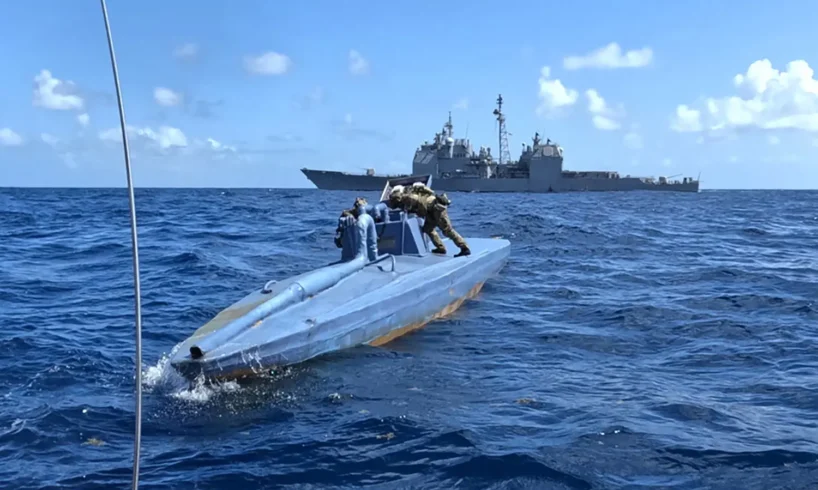
Since September, US forces have carried out more than twenty strikes on small boats off Venezuelan shores, officially in the name of counter-narcotics and “narco-terrorism.”
Yet even US agencies concede that most cocaine headed for the United States travels through the Pacific, and that flows via Venezuela are limited and largely Europe-bound.
Reports from inside the operation say no drugs have been found on the destroyed vessels so far. The campaign looks less like a drug war and more like a prelude.
Why The U.S. Is Preparing For Venezuela And What Brazil Must Decide. (Photo Internet reproduction)
Offshore, the military posture tells the same story. The United States has surged a carrier strike group built around the USS Gerald R. Ford, plus missile destroyers, a nuclear-powered attack submarine, Marine expeditionary units and special operations forces into the Caribbean.
This is not a flotilla of Coast Guard cutters. It is a theater-level package able to suppress Venezuelan air defences, gain air superiority and carry out precision strikes against command and control nodes in hours if ordered.
Fighter jets, electronic-warfare aircraft and Tomahawk-armed ships are overkill for chasing speedboats, but perfectly suited to coercing or toppling a government.
Around that hardware, Washington has built a legal scaffolding. In 2020, the Justice Department indicted President Nicolás Maduro and senior officials on narco-terrorism charges and posted a large reward for his arrest.
More recently, the United States has designated the loose “Cartel de los Soles,” allegedly embedded in Venezuela’s security forces, as a foreign terrorist organisation.
In practice, such steps blur the line between criminals and state actors and create a narrative in which engaging elements of the Venezuelan military can be framed as counter-terrorism rather than war.
It is a way to normalise the use of force without ever admitting that this is regime change. The airspace has been managed just as carefully. The US aviation regulator has warned airlines to use extreme caution over Venezuela because of heightened military activity.
Several carriers have since suspended flights. Caracas responded by revoking their permits and accusing them of participating in foreign pressure. At the same time, Donald Trump has publicly declared the skies above and around Venezuela “closed in their entirety.”
In London, war-risk insurers adjust their lists and premiums; routes become too costly to fly. The effect is to clear civilian traffic out of a potential battlespace before the first missile is launched.
María Corina Machado
Opposition, Oil And The Bond Market’s Regime-Change Bet
On the political front, Washington has also lined up a more market-friendly figurehead. The earlier experiment with Juan Guaidó fizzled.
Now María Corina Machado, a long-time opponent of chavismo with ties to US democracy-promotion groups and a record of supporting the 2002 coup, has become the designated alternative.
Her Nobel Peace Prize has elevated her into a global symbol of democratic resistance. Her economic programme promises to open PDVSA to foreign investors and align Venezuela with Western companies once again.
If Maduro moves against her, the story can be told as protecting a prize-winning reformer from a criminal regime. Bond markets are already treating the whole package as a “regime-change trade.”
Venezuelan sovereign bonds, long stuck in default and priced for failure, have rallied sharply this year.
Banks openly model scenarios in which a post-Maduro government restructures debt at forty-something cents on the dollar, backed by a wave of oil-sector privatisations and fiscal tightening.
Capital is positioning itself for a Venezuela that is once again plugged into Western finance, not Chinese credit lines.
The United States and China are no longer just trading partners; they are strategic rivals.
Venezuela As Test Case In A New Great-Power Contest
Seen narrowly, all this could be dismissed as yet another messy intervention in a troubled petro-state. But the timing and intensity make more sense in a global frame.
The United States and China are no longer just trading partners; they are strategic rivals. Russia’s war in Ukraine has hardened blocs and pushed Washington and its allies to think more explicitly in terms of spheres of influence.
In that language, the Western Hemisphere is not neutral territory. It is a defensive perimeter. Beijing understands this.
Over the past decade, China has poured loans and investment into Latin America, secured long-term oil supply deals with Venezuela, built ports and logistics hubs along key coasts and pushed its technology into the region’s telecoms and surveillance networks.
Moscow has sent advisers and equipment to Caracas and deepened defence ties with other governments willing to engage.
To US planners, this looks like a creeping attempt to turn parts of Latin America into a replica of the African theatre: resource extraction, infrastructure control and political leverage wrapped together.
In that context, Venezuela is not just about hydrocarbons and humanitarian failures. It is a test of whether Washington can still enforce a 21st-century Monroe Doctrine.
Can it prevent a hostile or opportunistic great power from locking in a strategic beachhead in its near abroad?
By building legal cover, clearing airspace, signalling to markets and empowering a friendly opposition, the United States is quietly answering yes. It is consolidating, not improvising.
Lula’s Brazil has deep economic ties with China.
Brazil At The Crossroads: Hedge Forever Or Pick A Camp?
For Brazil, this should feel uncomfortably close. The country has deep economic ties with China. It is a member of BRICS, sells vast volumes of soy, iron ore and oil to Chinese buyers, and has flirted with alternative payment systems that reduce the role of the dollar.
The current government insists it is balancing relationships and defending autonomy. That language sounds attractive in calm times. As rivalry hardens, it will sound less convincing in Washington and Beijing.
The emerging order is not one of easy non-alignment. It is an order of camps. Countries will still trade across lines, but on core questions of security, technology and energy, there will be less room to sit on the fence.
In South America, the message from the build-up off Venezuela is simple: the United States intends to treat the hemisphere as its strategic rear. It expects key democracies to act accordingly.
Brazil does not have to echo every US move, and it has every right to defend its own interests and regional leadership.
But a government that leans instinctively toward partners hostile to Western institutions, while enjoying the protections and markets those institutions provide, is running out of time to pretend that nothing fundamental is changing.
At some point, Brasília will have to decide whether it wants to be a central pillar of a coherent Western community, or a large, vulnerable swing state in a world divided between blocs.