2025-12-03T13:18:44+00:00
font
Enable Reading Mode
A-
A
A+
Shafaq News – Sanaa
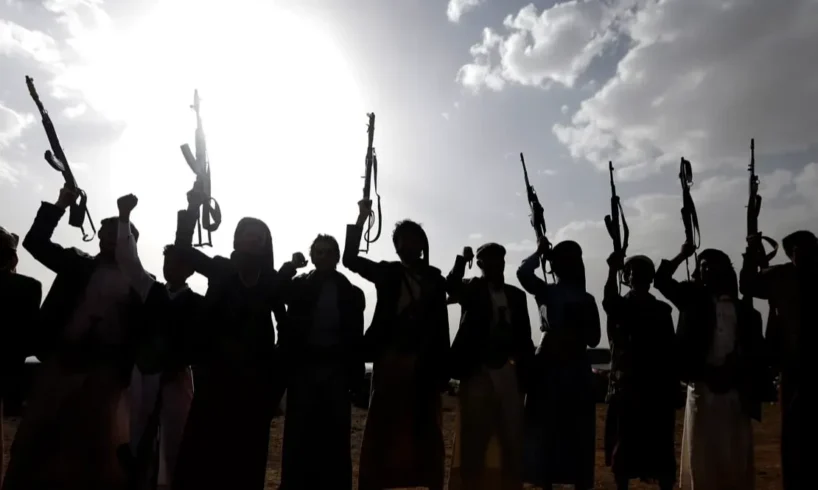
Armed tribal groups launched sweeping attacks on strategic sites, energy facilities, and oil fields in Yemen’s Hadramout province, plunging entire cities into darkness and reviving fears over the security of one of the world’s most critical maritime trade corridors.
The coordinated assaults saw gunmen seize key positions, cut major highways, and challenge government forces in an unprecedented show of open defiance. A statement released by the armed groups declared their intent to confront the authorities.
China’s Xinhua news agency, citing intelligence sources, reported that factions involved in the attacks were conducting covert coordination with elements of al-Qaeda in the Arabian Peninsula. The alleged goal: to exploit tribal tensions and weaken the Hadrami Elite Forces—the unit credited with pushing al-Qaeda out of the region.
Vice President of Yemen’s Southern Transitional Council and member of the Presidential Leadership Council, Maj. Gen. Faraj al-Bahsani, warned in remarks to Shafaq News that the armed rebellion “threatens to collapse state institutions and spill more blood.” He condemned the escalation as “a destructive and unlawful insurgency that directly harms the lives of Yemenis.”
The takeover of facilities belonging to PetroMasila—provider of fuel for power stations—plunged large parts of Hadramout into a full electricity blackout. Al-Bahsani described the situation as “service paralysis,” urging tribal leaders and local communities to rally behind the Hadrami Elite Forces, calling them the “pillar of security and stability.”
He stressed that accountability for attacks on vital oil and energy sites must be swift, warning that continued lawless military activity would “drag Hadramout centuries backward.”
Global trade at risk
Analysts say the fallout extends far beyond Yemen’s borders. Hadramout’s coastline lies along the Red Sea gateway feeding the Bab al-Mandeb and the Suez Canal—one of the world’s most vital arteries for oil and gas shipments between Asia and Europe.
Any disruption, they caution, could quickly ripple through global energy markets already strained by geopolitical shocks. Unofficial assessments indicate that the maritime route stretching from the Arabian Sea, through the Gulf of Aden and Bab al-Mandeb, up to the Suez Canal carries a significant share of global oil flows—making even localized instability a driver of higher insurance rates, shipping costs, and supply-chain vulnerabilities.
Yemen has repeatedly appealed for international support to safeguard the waterway. In October, Deputy Foreign Minister Mustafa Noman urged coordinated regional and global assistance to help Yemeni forces secure the Red Sea corridor amid rising attacks.
Noman said regional maritime-security initiatives—involving efforts to combat piracy, smuggling, and armed raids—were essential for global trade, emphasizing that “the safety of coasts and sea lanes is a joint regional and international responsibility.”
Yemen’s ambassador to the UK and permanent representative to the International Maritime Organization (IMO), Yassin Saeed Noman, recently told the IMO General Assembly in London that Iran-backed factions have turned the Red Sea, Gulf of Aden, and Arabian Sea into “open military zones” since gaining control of swathes of Yemeni territory.
“Since the Houthis seized parts of Yemen with Iranian support, the Red Sea and adjacent waters have become battlegrounds in Tehran’s strategy to extend its influence across international shipping lanes,” he concluded.