Israel and the US this week inked a new agreement to nix import duties on agricultural products from the US as the two countries advance in talks to seal a deal that would see some concessions on Trump-era tariffs imposed on Israeli exports.
The agricultural trade agreement was signed on Wednesday by Economy and Industry Minister Nir Barkat alongside his American counterpart, US Trade Representative Jamieson Greer.
Starting from Jan 1, 2026, Israel will grant tariff exemptions on about 300 US food and agricultural items, including beef, poultry, dairy products, fresh and frozen vegetables, oils, and fruits. Tariffs on the vast majority of products will take effect immediately on Jan.1, and some will gradually increase over the next decade.
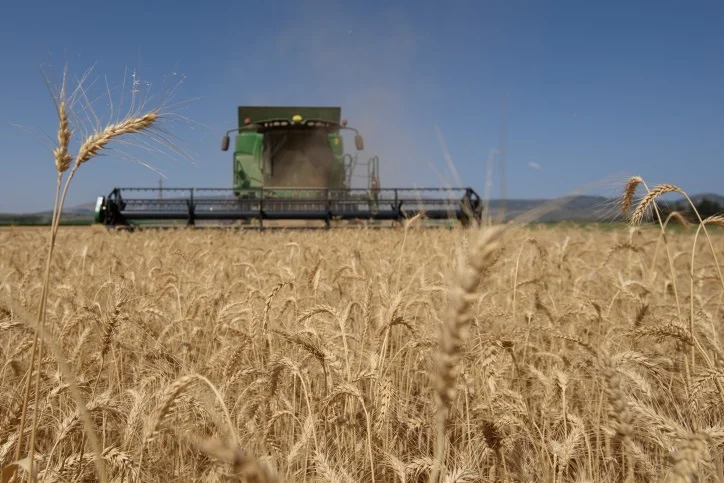
To shield local farmers, 27 sensitive agricultural products, such as fresh eggs, cheese, apples, pears, honey, powdered milk, frozen chicken, and wine, will remain protected through 2035. Their import quotas will rise gradually by about 2% per year and reach zero tariffs at the end of the transition period. In addition, Israel agreed to subsidize the import of wheat from the US as part of the agreement.
“There will also be opportunities, on the one hand, the US will get much better market access and on the other hand, Israeli farmers and the Israeli agriculture sector are going to come out stronger,” Economy and Industry Ministry deputy trade commissioner Yifat Alon Perel told The Times of Israel. “Most of the agricultural imports from the US, are already duty-free in Israel… Less than 1% of US imports to Israel aren’t currently under 0% tariffs.”
Sign up for the Tech Israel Daily
and never miss Israel’s top tech stories
By signing up, you agree to the terms
The government said the move is intended to open the Israeli market to competition, increase imports, and help ease consumer prices, while also vowing not to harm local agricultural industries.
Yifat Alon Perel, deputy trade commissioner at Israel’s Economy and Industry Ministry. (Courtesy)
“The new agreement is a significant step toward lowering the cost of living in Israel and strengthening strategic ties with the US – our most important economic and political partner,” said Economy Minister Nir Barkat.
The Economy Ministry said that the Agreement on Trade in Agricultural Products, or ATAP, which replaces a temporary arrangement from 2004, creates a permanent and clear framework for trade relations between the two countries. The agricultural pact comes as Israel is in discussions with the Trump administration to ease tariffs on Israeli exports, remove trade barriers, and expand sectoral concessions.
Following US President Donald Trump’s sweeping new increase on the price of entry to the US market, earlier this year, most goods exported from Israel to the US carry a 15% tariff, except for pharmaceuticals and semiconductors. That’s after attempts by Prime Minister Benjamin Netanyahu in April to exempt Israel from the new tariff regime impacting goods from more than 90 countries failed. Currently, 70% of Israeli exports of goods to the US are subject to new tariffs.
“Israeli companies, which since 1985 have enjoyed duty-free access to the US market thanks to our free trade agreement, were harshly hurt by the new tariff regime as they are suddenly hit by a 15% duty,” said Alon Perel. “We have lost competitiveness not only to US companies but also competitiveness, vis-a-vis other countries with lower tariffs, and we very much hope to amend that.”
Israel views the agriculture pact as a precursor toward signing a comprehensive trade agreement on goods with the US to further reduce the 15% tariff imposed on Israeli exports, Perel said.
“We are negotiating intensively and obviously we would like to go back to zero tariff, and duty-free access for all Israeli exports but that is currently not realistic,” said Perel. “I hope that very soon we will have good news for Israeli exporters on a deal for preferential treatment of some products on part of Israeli exports in the US market.”
The US is Israel’s closest ally and largest single trading partner. The volume of Israeli exports of goods to the US amounted to $17 billion. Imports of goods from the US to Israel amounted to $9.3 billion last year. The 15% US tariff mainly affects Israeli export goods such as plastics, chemicals, and medical devices.
US President Donald Trump welcomes Prime Minister Benjamin Netanyahu to the White House on April 7, 2025 (Screenshot/Channel 12)
Israel Manufacturers’ Association President Ron Tomer welcomed the expansion of relations with the US but called on the government to continue working with the Trump administration to improve conditions for Israeli exports.
“We have not yet achieved the overarching goal of lowering tariffs below the 15% threshold,” said Tomer. “But Israeli exports will hopefully be granted exemptions on tariff rates in many different industries and will have an advantage.”
“The agriculture agreement contains waivers on certain quotas that harm parts of the local industry, and we will continue to work with the economy and agriculture ministries to create incentives and grants for those industries to make up for the competitive disadvantages,” said Tomer.
Israel and the US signed a free trade agreement in 1985. Under the agreement, the US and Israel implemented phased tariff reductions, eventually leading to the almost complete elimination of duties on manufactured goods in 1995. However, the agreement did allow the US and Israel to maintain some import and tariff restrictions, like quantitative restrictions and fees on agricultural products, mainly to safeguard local production and food security.
The list of agricultural products that are currently still subject to import tariff protection also includes apples, pears, persimmons, almonds, potatoes, tomatoes, peanuts, hummus, processed corn, and frozen vegetables.
“Israel removes tariffs that protected sensitive local production in exchange for a promise of reduced tariffs of Israeli exports to the US,” said Lior Levy, chairman of the Food Industries Association. “Any move to open markets needs to be accompanied by a national responsibility plan for Israeli industry and food security, including government support, transition stages, and control mechanisms.”
Uri Dorman, Secretary-General of the Israel Farmers Federation. (Courtesy)
Secretary-General of the Israel Farmers Federation Uri Dorman warned that the agriculture agreement “severely harms several agricultural sectors and poses a significant challenge to local agriculture, especially produce by farmers along the northern borders with Syria and Lebanon and the Gaza envelope that have already suffered great damage and losses after two years of war.”
“The US protects its local agriculture by increasing tariffs, while the Israeli government acts in the opposite way and allows the import of food products that are part of Israeli food security and part of maintaining national security,” said Dorman.
Agriculture and Food Security Minister Avi Dichter called the agreement critically important amid growing hostility from some countries to do business with Israel that were previously considered friendly towards the Jewish nation.
“As we are faced with an anti-Israel environment where some countries that were once friendly have become hostile, the US is an important anchor for Israeli food security,” said Dichter.
The Economy Ministry said it is working in collaboration with the Agriculture Ministry and the Prime Minister to formulate a national support plan for the agricultural sector. The plan includes investment into innovative solutions, advanced technologies and artificial intelligence, aimed at production efficiency and improving resilience and competitiveness of Israeli agriculture for years to come.