Normal text sizeLarger text sizeVery large text size
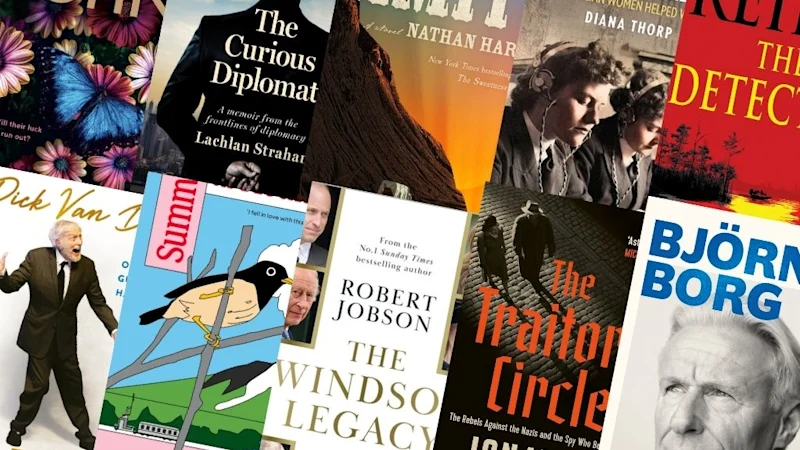
This week’s releases include pacy crime fiction, familial drama, wartime spy tales from suburban Melbourne and tennis legend Bjorn Borg’s revealing memoir.
FICTION PICK OF THE WEEK
The Detective
Matthew Reilly
Macmillan, $44.99
Blockbuster action thrillers are Matthew Reilly’s bread and butter. But as his fans will know, he can be promiscuous, having penned everything from sci-fi fantasy to historical espionage. The only constantis the full-throttle pacing and readability – and those qualities haven’t abandoned him in The Detective. His private investigator, Sam Speedman, is a super-nerd. Diagnosed with Autism Spectrum Disorder, Sam is the kind of guy who orders the same meal every time and enjoys tinkering with cars or solving exotic maths problems and has never had a girlfriend. His superpowers lie in his unusual mind and the intense focus he brings to his work; he’ll need both to solve this grim cold case. After a hurricane blows through Louisiana, a grisly discovery is made – a baby’s corpse hidden in an antique doll. With Speedman on the case, no stone will be left unturned, but not even he could be prepared for the terrible secrets the truth will unleash. Reilly has created a likeably flawed sleuth and a plot that runs like clockwork. Regular readers will appreciate the nod to high-octane action, before tendrils of gothic descend in a mystery with dark roots in the deep south’s history of racial prejudice and violence.
Amity
Nathan Harris
Tinder Press, $34.99
Following the success of The Sweetness of Water, Nathan Harris returns to the Reconstruction Era of US history in the deep south. Coleman and his sister June were given as slaves to the Harper family when they were still children. Now that the Civil War is over, they’ve been emancipated de jure, but their lives haven’t much changed. They’re family servants now, that’s all. When the head of the household, Wyatt Harper, leads an expedition to Mexico to seek fortune on the frontier, the siblings become separated – June accompanying Wyatt, Coleman left to hold the fort with the highly-strung Mrs. Harper and her querulous daughter Florence. A reunion looms after years apart, though the Harper women are no more prepared than the intelligent, sensitive Coleman for dark shadows on what seems at first to be an open road to freedom. Harris leans into the narrative architecture of the Western, but his natural talent isn’t action but sustained characterisation. The relationship between the two siblings, and the family that owned them, has a piercing and precisely observed quality that rides higher than the plot itself.
The Traitors Circle
Jonathan Freedland
John Murray, $34.99
A former headmistress. A disgraced diplomat. A bureaucrat in finance. A Countess secretly helping Jews to evade the camps. These members of the German elite have gathered at a small flat in Berlin in September 1943 – ostensibly to celebrate a 50th birthday, though the real reason is to discuss the inevitable fall of Hitler and the restoration of democracy. Our anti-Nazi dissenters aren’t firebrands. Only the scale of the disaster inflicted on Germany motivates them to resist. But among them is a traitor willing to betray them to the Gestapo. The Traitors Circle shifts from paranoia about a Judas in rebel ranks to a chilling perversion of crime fiction, complete with Gestapo interrogations and show trials for propaganda purposes. The corruption of justice in Nazi Germany is starkly rendered, as is the psychology of resistance. Guardian columnist Jonathan Freedland fleshes out historical research (the book’s inspired by real events) with a sharp empathy for characters taking an ethical stand that could prove fatal.
The Lucky Sisters
Rachael Johns
Penguin, $34.99
Stories of sisterhood are familiar ground for Rachael Johns. Her bestseller The Patterson Girls followed four adult sisters reconciling a shared past. In her latest, the two sisters are identical twins. Nora and Stevie might share genetics and adoptive parents, but they’re chalk and cheese otherwise. Nora is diligent and disciplined – a pastry chef who runs a classy Perth restaurant with her husband; Stevie’s more of a fun-loving chaos agent – never married, she works at a charity shop and is proud to have raised her daughter, Cherry, without being tied to a partner. About to turn 50, and with their adoptive mother recently deceased, Nora thinks the time is right to unearth the identity of their biological parents. What she finds upends the way the twins perceive their priorities and choices, compelling them to live as if every day might be their last. Is it a Sword of Damocles situation, or a timely memento mori to be used as a spur for change? The Lucky Sisters is a big, character-driven, and emotionally rich novel. True, Johns’ writing isn’t agile enough to avoid cliché, but this is focused and fluid storytelling.
Summer at Mount Asama
Masashi Matsuie
Indigo Press, $29.99
Incident plays second fiddle to craft in this quiet novel about an architect in early 1980s Japan. Narrated by Tōru Sakanishi, Summer at Mount Asama recollects the beginnings of his career under a mentor, Shunsuke Murai, influenced by Frank Lloyd Wright. It’s a time before CAD software, and the whole Murai office decamps to a summer house at Mount Asama, pencils in tow. Murai has entered his office in a rare competition – to design the new National Library of Modern Literature – while Tōru himself is distracted by romantic attraction to his mentor’s niece Mariko. A convoluted courtship and an architectural contest, both conducted under the shadow of an active volcano, would seem latent with dramatic promise. Yet Masashi Matsuie lets most of it simmer in the background, sidestepping pyrotechnics for contemplation, deliberate slowness, the analogue rhythms of creative life. It’s a meticulous construction, steeped in the philosophy of architecture and a nostalgic evocation of a bygone way of working, though readers seeking high drama may be frustrated by the consistency with which this book keeps running in the opposition direction.
NON-FICTION PICK OF THE WEEK
Code of Silence
Diana Thorp
Monash University Publishing, $37.99
There were 66,000 women in the services during WWII – a lot in highly classified intelligence work. So secret – signing the Official Secrets Act could be a shooting offence if they blabbed – that their stories had to wait decades to be told. Jessie Edgar, fresh out of boarding school, was assigned to an apartment block called Monterey in inner suburban Melbourne. It was an outstation of Bletchley Park in the UK, and here she received intercepted Japanese messages, decoded them and had them translated, after which they were sent to Victoria Barracks in the city. Every hour! And we’re not talking small bickies here, for the intelligence that the likes of Jessie handled was crucial in victories such as the Battle of Midway and the New Guinea campaign. There are many absorbing tales here, like the so-called “Garage Girls” who operated out of Brisbane, one of whom was Helen Frizell (Kenny), who went on to become the Literary editor of the SMH after the war. Diana Thorp has done a superb job at condensing the tales of these remarkable women who could never tell anyone – not even their families – about their war work. Acknowledgement came late – Edgar and Frizell receiving the Bletchley Park medallion from PM David Cameron in 2009. Many of them are dead, but they live on in their stories.
Heartbeats
Bjorn Borg
Sphere, $34.99
After his fifth successive win the press were starting to call Wimbledon the Bjorn Borg Invitation. His memoir, as told to his wife, gives us a behind-the-scenes picture of the ice-Borg performance. From an early age, he not only wanted to be No1, but the best. And much of his life was dedicated to achieving that dream. Until the dream turned sour. At 26, having lost his sixth Wimbledon final to John McEnroe in 1981 and having ruled the tennis world for years, he knew he was a spent force. The ice-Borg melted. He started having panic attacks, fame became something he was sentenced to and he craved solitude. Drugs stepped in, marriages came and went, and business ventures hit the net. Still, he’s “not someone who lives with regrets”. These days, spending much of the year on Ibiza where he’s just someone else having a beer on the waterfront, he takes the same pride in his extended family that he once took in his tennis. In some ways, a cautionary tale: be careful what you wish for.
The Windsor Legacy
Robert Jobson
Blink, $36.99
When you condense the number of scandals that have rocked the House of Windsor, as seasoned royal watcher Robert Jobson has in this crisply written report card, it’s amazing they’ve survived. Formerly the Saxe-Coburg-Gotha dynasty, George V wisely changed it to Windsor during WW1, prompting his cousin Kaiser Bill to suggest that Shakespeare’s Merry Wives of Windsor be re-titled the Merry Wives of Saxe-Coburg-Gotha. It may have spared them the anti-German backlash, but self-inflicted scandals have dogged the house for over a century. Edward’s abdication in 1936 remains the most famous. And it wasn’t just the Simpson women that alarmed parliament, it was Edward’s open admiration of Nazism, Churchill packing him off to the Bahamas for most of WWII. From MI5 files to Diana and Harry and Meghan, Jobson documents the rocky journey of a dynasty (held together largely through Elizabeth’s long reign) that now stands at “the crossroads”.
The Curious Diplomat
Lachlan Strahan
Monash University Publishing, $39.99
Just what does a diplomat do? It’s a question Lachlan Strahan is often asked. His richly detailed record of 30 years in the game – often as not meetings, negotiations and conferences – is a portrait of a career diplomat. Strahan, who is also a historian, sees change as “the stuff of history”, and his personal tale is as much a documentation of the massive changes the world has gone through since he began his career in the early 1990s, especially the collapse of the Soviet Bloc and the end of the East/West defined Cold War. He was in Bonn when Germany was preparing to move the capital back to Berlin, and, among other things, reported regularly back to Canberra on the post-USSR state of affairs. His postings took in Europe, Korea, India and the Pacific, plunging him into such pivotal issues as nuclear and chemical weaponry and what he regards as our “greatest challenge”, climate change. Engaging and deeply informed.
100 Rules for Living to 100
Dick van Dyke
Sphere, $34.99
Dick van Dyke, who turns 100 this month, doesn’t call this a guidebook to living a long life because he doesn’t believe in telling people how to live. Let’s just say he’s passing on a lifetime of tips. Like staying attuned to your inner child and keeping in contact with things you were passionate about when you were young. In this spirit, there’s a lot of talk about the sheer joy and wonder of being alive. But there’s also sadness and tragedy, such as the sudden death of his 13-year-old grandchild. And cautionary observations as in his struggle with alcoholism and cigarette addiction. Naturally, he draws heavily on his TV and movie career, taking from them such lessons as not acting your age. Light, with weighty moments, and often candid.
The Booklist is a weekly newsletter for book lovers from Jason Steger. Get it delivered every Friday.