Key Points
1. Trump’s envoys in Moscow show that Washington, not Brussels, is now shaping the endgame more than Europe wants to admit.
2. Anti-corruption bodies built with Western money are cutting into Zelensky’s own circle, turning old “propaganda” accusations into uncomfortable facts.
3. Manpower strain, slow Russian gains and funding fatigue mean the war is shifting from heroic slogans to hard arithmetic.
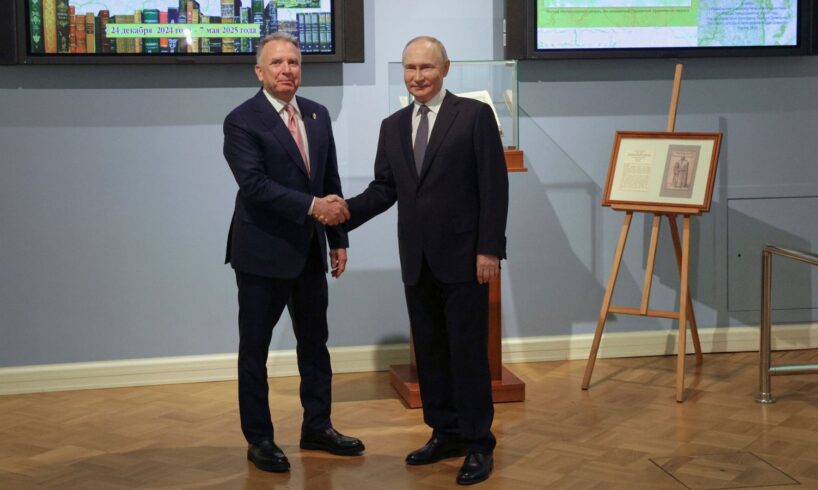
(Op-Ed Analysis) Two images capture well where the Ukraine war stands today. In Moscow, Donald Trump’s special envoy Steve Witkoff and his son-in-law Jared Kushner stroll through Red Square before hours of talks with Vladimir Putin.
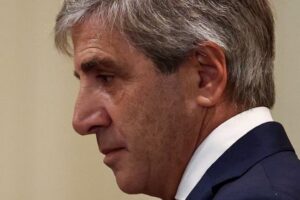
In Kyiv, anti-corruption investigators raid the home of presidential chief of staff Andriy Yermak, who soon resigns amid an energy-sector scandal. At the start, Western leaders promised something very different.
Sanctions, they said, would cripple Russia, while modern weapons and generous funding would let Ukraine drive Russian forces back to their borders.
The war was sold as a clear moral choice that would barely touch Western living standards. It has not worked out that way.
Trump’s team now wants a foreign-policy win that ends a costly war before US midterms. His envoys’ trip to Moscow signals that any serious peace talks will run through Washington, not Brussels.
European capitals fear being sidelined: they carry the refugee burden, the energy shock and the risk of a hostile Russia next door, but no longer control the tempo.
Anti-Corruption Turns Inward
Inside Ukraine, the West’s own tools are biting back. The US and EU poured money and expertise into new anti-corruption agencies and a special court, presented as proof that Ukraine was cleaning up.
Now they have exposed a kickback scheme in the energy sector worth around $100 million and helped force out Yermak, the president’s most powerful adviser.
For years, anyone who spoke too loudly about Ukrainian graft was dismissed as echoing Moscow.
Today, mainstream outlets talk openly about networks of businessmen and officials around the presidency.
Some louder online claims go far beyond what public documents show. But the broader picture is clear: corruption is not a Russian fantasy. It is a structural weakness in a country fighting a war it can ill afford to lose.
Ukrainian soldiers standing in a narrow, muddy trench under camouflage netting, in the direction of Kupiansk in Kharkiv oblast.
A War Ukraine Struggles To Sustain
The human strain is just as real. Official Ukrainian figures show more than 300,000 criminal cases for desertion and absence without leave since the full invasion began, with around 60,000 opened in 2025 alone.
Recruitment is harder. Families resist new call-ups, and videos of forced conscription circulate widely.
On the ground, Russia has inched forward again around cities like Kupiansk and Pokrovsk. Kyiv still contests them, and the front has not collapsed.
But Moscow is playing a long game of attrition, trading bodies and ammunition for small, steady gains.
Politics are catching up with the battlefield. Volodymyr Zelensky started as a unifying figure in a T-shirt, the actor who became a wartime president. He postponed elections and centralised power in the presidency.
Now his popularity is fraying. Valerii Zaluzhnyi, the former commander-in-chief moved to London as ambassador, is openly discussed as a potential rival and is quietly building networks with Ukrainians and foreign partners.
There is no proof that Zelensky has been ordered to resign or that a successor has been chosen. But Kyiv’s elite is clearly thinking about a post-Zelensky future.
Valerii Zaluzhnyi presenting his ambassadorial credentials in London
Money, Politics And The Post-Zelensky Question
Money is the other pressure point. The European Union is still arguing over how to finance Kyiv for the next two years.
The current plan leans on interest from roughly €210 billion in frozen Russian central-bank assets to back new loans, because confiscating the principal outright would test international law and Europe’s financial stability.
Voters who were told “whatever it takes” now face higher prices, stretched welfare systems and rising debt.
Legislatures in both Europe and the United States are more skeptical of foreign adventures, and patience is not infinite.
For expats and readers in Brazil, this is more than a distant conflict. It is a case study in what happens when noble goals collide with messy realities.
Corruption that was never really fixed, institutions stretched beyond their limits, and leaders who promised quick victories without explaining the costs.
The story behind the story is simple enough. Wars are not won by hashtags or lofty speeches.
They are decided by staying power, honest accounting and the willingness to recognise when a strategy has reached its limits.
On those measures, Ukraine’s friends now have as many questions to answer as its enemies.