Lawrence Du knew instinctively that his parents’ bakery had the potential to pop off on social media.
Shaun Du and Cindy Vuong opened Montmorency Bakehouse on the fringe of Melbourne’s east in 2003, after migrating to Australia from Vietnam. They started selling pillowy, coconut-dusted lamingtons, vanilla slices, chunky steak pies and crusty loaves of bread alongside crispy banh mi and rice paper rolls, creating a traditional country-style Australian bakery with a Vietnamese twist.
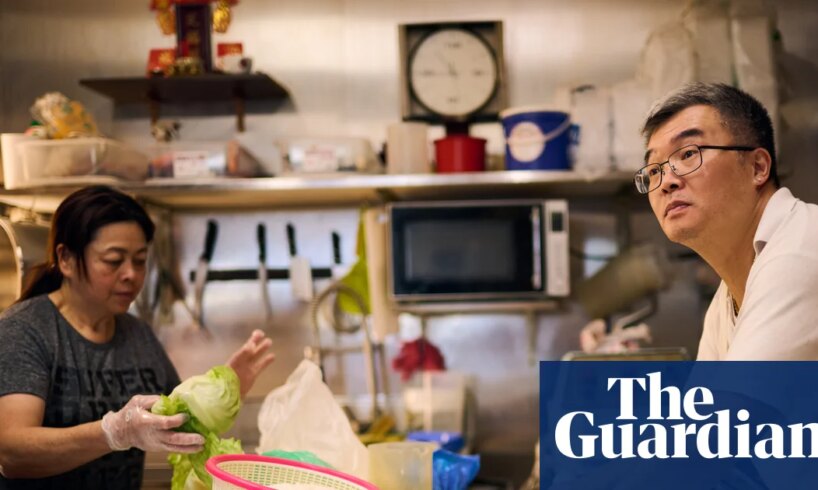
Lawrence Du (centre) helped grow the popularity of the bakery operated by his parents, Cindy Vuong and Shaun Du. Photograph: Eugene Hyland/The Guardian
Lawrence, 28, who runs his own social media marketing company, had grown up with the bakery and wanted to share stories of his parents’ “hard work, all the love and care that they pour into their business”, he tells Guardian Australia.
Shaun and Cindy had a limited understanding of what their son wanted to do. But after costs rose with inflation and competition in the area increased, they finally relented.
“I knew that the videos were going to do well, but I didn’t expect them to do this well,” Lawrence says.
Lawrence leaned into his parents’ unpolished charm: Cindy is sweet and friendly and struggles to remember her lines, a neat dramatic foil to Shaun’s sardonic sense of humour. The videos are a wholesome and funny behind-the-scenes look at the couple, the workings of the bakery and the food they sell.
Their first TikTok video appeared last year. It was an instant success.
It was viewed more than 100,000 times on that platform and another 50,000 times on Instagram, and the audience only seemed to expand. And the business grew.
Cindy was recognised while out shopping. People started making long journeys just to taste their goods – including one man who drove from Adelaide.
The bakery’s young staff – mostly high school and university students – also got involved, hosting and appearing in videos.
“Out of all the businesses I’ve filmed for, they’re the staff that are always the most friendly and most enthusiastic about being in social media,” Lawrence says. “They honestly are, they’re such good sports.”
The Australian bakery that went viral on TikTok for defending its staff from trolls – video
Like in every social media fairytale, a darker side soon began to emerge.
“We started getting racist comments, really inappropriate things said about my parents, and also some of the workers,” Lawrence says.
The negativity seemed to snowball.
Sign up: AU Breaking News email
Some of the workers were subjected to sexual harassment, and strangers found their personal accounts. Lawrence says it was “almost becoming an invasion of privacy”.
“Some of [the staff], they weren’t very happy about it,” says his father, while piping spinach and ricotta filling on to a huge sheet of pastry. “And that’s when we started trying to think [about] what to do.”
‘Everybody realises too late’
Social media strategist Meg Coffey says the quandaries that come with social media fame almost always catch businesses on the back foot.
“Everybody realises too late,” Coffey says. “There are a lot of people that really do have good intentions, and think they’re just making a fun TikTok or sharing what they do.
“And it’s other people that ruin it, because behind a screen, people feel that they can say anything.”
People have travelled from as far as Adelaide to taste their products. Photograph: Eugene Hyland/The Guardian
Coffey says as audiences increasingly reject high-production sponsored content in favour of things that are “a little bit more raw and authentic”, businesses using social media have responded. And the “influencers that are the most effective” are staff.
“But we have to provide a space that is safe for these people, especially if they’re minors,” Coffey says.
“You have to jump on those comments that are coming, and you have to jump on every single one. And you have to say, ‘this isn’t appropriate. We won’t stand for it. And this is not how you should interact on social media’.”
Owner and baker Shaun Du prepares vegetarian sausage rolls. Photograph: Eugene Hyland/The Guardian
Speaking generally, Coffey says appearing on social media shouldn’t be a requirement for many jobs, and clear guardrails need to be in place if staff agree to participate.
“There has to be consent and there has to be communication,” Coffey says. “And then, ultimately, they also need to be rewarded for that effort.”
skip past newsletter promotion
Sign up to Breaking News Australia
Get the most important news as it breaks
Privacy Notice: Newsletters may contain information about charities, online ads, and content funded by outside parties. If you do not have an account, we will create a guest account for you on theguardian.com to send you this newsletter. You can complete full registration at any time. For more information about how we use your data see our Privacy Policy. We use Google reCaptcha to protect our website and the Google Privacy Policy and Terms of Service apply.
after newsletter promotion
That reward could be as simple as giving staff movie tickets or taking them out to acknowledge their contribution.
The video that went viral
Initially, Lawrence decided to reply to the critical and offensive comments on the bakery’s social channels – “deflecting the negativity in a friendly way – to sort of say, ‘hey, this isn’t OK’ and but not make it super serious,” he says.
As things escalated, he began blocking users and deleting comments, and in some cases turning them off. Shaun stayed back late to make sure younger staff were safely collected by their parents when their shifts finished.
University student Sena says staff have been supported as the bakery dealt with offensive comments about her colleagues. Photograph: Eugene Hyland/The Guardian
Sena, 20, has been working at the bakery for more than three years and has appeared in its videos, and says she has always felt valued by her bosses.
“They’re always very grateful, and we were all really happy to be involved and share things we love about the bakery.”
While she herself didn’t experience much negativity, Sena knows some other staff were quite upset. But she says Shaun and Lawrence were “super supportive”.
“They asked us straight away, like, ‘did you want us to take any videos down?’ And even any weird comments, they were already being deleted or hidden,” she says.
“They asked us all individually as well, and made sure we were all comfortable.”
The bakery gained a strong following for the videos, which often show how their food is prepared. Photograph: Eugene Hyland/The Guardian
Last month, they posted a video directly addressing the issue. In it, Shaun asks viewers to “please stop with the thirsty comments”.
“We’ve been getting a lot of creepy comments in our TikTok,” he says in the video.
“To be honest, it’s been making some of our staff feel uncomfortable and unsafe. It’s been harder for them to come to work. We just want to make sure that our staff feel safe and comfortable filming and go to work and go home from work.”
It was this video that went viral.
It had 12.1m views on TikTok at the time of writing. It is the bakery’s most-viewed post now by far. And it attracted a lot of support from audiences.
Montmorency Bakehouse. Photograph: Eugene Hyland/The Guardian
“Engagement is engagement, and that really seems like the focus for the algorithm,” Lawrence says.
“I’m not sure if it identifies what’s good and what’s not … I would say there’s a part of me that is worried about the real human aspect of it – because these are real people in the real world.”
As far as Shaun is aware, the online negativity has not spilled over into the offline world – the opposite, in fact.
“We’ve been having a lot of supporters, which is a good thing. I hope it will stay that way.”