More than five dozen items belonging to First Nations, Inuit, and Métis are one step closer to returning home.
Following three years of negotiations, 62 cultural items previously held in Vatican museums and vaults for a century landed at Montréal-Pierre Elliott Trudeau International Airport just before noon on Saturday.
“Today is another important step, but it’s far from the end,” Cindy Woodhouse Nepinak, national chief of the Assembly of First Nations, said at a news conference in Montreal on Saturday. “It’s only the beginning and we won’t rest until all our artifacts are home.”
Assembly of First Nations National Chief Cindy Woodhouse Nepinak speaks at a news conference in Montreal on Saturday, after the cultural items were returned by the Vatican. (Graham Hughes/The Canadian Press)
The majority of the items are still unknown, but 14 items are of Inuit provenance, including an Inuvialuit kayak used to chase beluga whales, one is Métis and the remaining belong to First Nations across Canada.
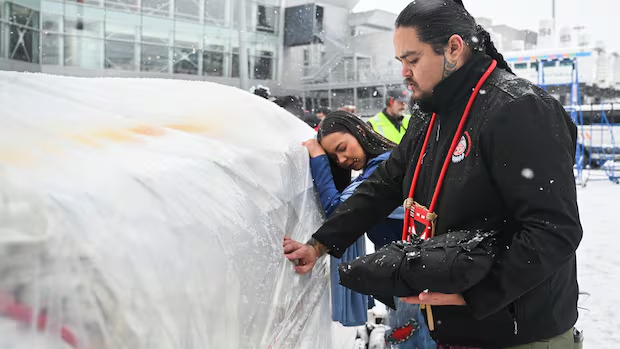
Last week, the AFN sent a delegation of elders, knowledge keepers and residential school survivors to Rome to hold ceremonies while the items were being packed for transport. They left Vatican City by truck for Frankfurt, Germany, earlier this week before arriving in Montreal on Saturday morning.
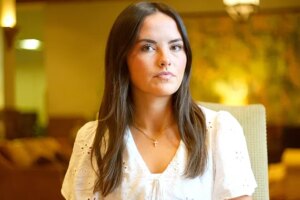
Katisha Paul is a member of the W̱ JOȽEȽP (Tsartlip First Nation) and Lil’wat Nation. She is also a youth representative of the Union of British Columbia Indian Chiefs. (Ka’nhehsí:io Deer/CBC)
“Now that we have taken these steps, and rescuing our ancestors from the Vatican, we are all looking forward to seeing our belongings feel the mountains, winds, the warmth of the sun and the cleansing energies of our lands and our waters,” said Katisha Paul, of the W̱ JOȽEȽP (Tsartlip First Nation) and Lil’wat Nation, who’s also a youth representative of the Union of British Columbia Indian Chiefs.
Paul, along with Peyal Laceese, Isaiah Bernard and Isaiah Anderson, were among a delegation of First Nations youth who accompanied the items on the flight.
“Now that they are back home with us, our nation will assert their rights to determine how best to take care of them,” Paul said. “These are not simply artifacts. They are our belongings, our ancestors, vital indicators of our nations’ histories, our people’s identities and cultures.”
WATCH | Does the return of cultural items serve truth and reconciliation?:
Is the return of 62 Indigenous cultural belongings a big step for truth and reconciliation?
Sixty-two Indigenous cultural items previously held in Vatican museums and vaults for a century are being repatriated to Canada. Cynthia Wesley-Esquimaux, Chair on Truth and Reconciliation at Lakehead University in Thunder Bay, Ont., explains why she’s ‘a bit conflicted’ about the return of these cultural belongings.
Representatives from the AFN, Inuit Tapiriit Kanatami (ITK) and Métis National Council (MNC) welcomed their arrival. Elder Ka’nahsohon Kevin Deer, from Kahnawà:ke, and federal MP Steven Guilbeault, who represents the Montreal riding of Laurier–Sainte-Marie, were also in attendance.
The welcoming included an opening prayer by Kitigan Zibi Elder Claudette Commanda, Inuit throat singing and a performance of the Red River jig.
“We’re very proud to be a part of what is a very historic repatriation,” said Natan Obed, president of ITK.
He said the Inuvialuit kayak, for example, is one of only five known to exist.
“The idea that we can examine this kayak, we can appreciate it, understand it more, will also lead to the reintroduction of kayak making,” Obed said.
A delegation of First Nations, Inuit and Métis elders, leaders and federal politicians welcome the 62 cultural items on the tarmac of the Montréal-Pierre Elliott Trudeau International Airport on Saturday after they arrived from the Vatican via Frankfurt, Germany. (Christine Tremblay/Radio-Canada)
Collected by missionaries
The 62 items were among thousands of objects originally sent to Rome between 1923 and 1925 for a world exhibition organized by Pope Pius XI, who invited Catholic missionaries to send materials from Indigenous Peoples around the world.
The items were repatriated through a church-to-church transfer, through the Vatican to the Canadian Conference of Catholic Bishops (CCCB), in November. Obed said negotiations for the repatriation began in 2022 and originally centred around the return of the kayak but later grew to a partnership between ITK, the AFN and Métis National Council.
“We recognize that reconciliation is not a single event but a long journey, one that requires humility, perseverance and above all the willingness to listen,” Archbishop of Vancouver Richard Smith, representing the CCCB, said at the news conference.
“Today is a historic first step of the return of items to our families, our communities,” Victoria Pruden, president of the Métis National Council, told reporters.
She said many more cultural objects were viewed during visits to the Vatican.
“While the Vatican only identified one Mifif/Métis, we know there’s a journey, a respectful journey of examination, more partnership, more involvement,” Pruden said.
This Inuvialuit kayak, seen during a private tour of the Vatican Museums by Indigenous delegates from Canada in 2022, has been held by the Vatican for a century. (Marie-Laure Josselin/Radio-Canada)
Manitoba Métis Federation excluded
The Manitoba Métis Federation (MMF), which left the MNC in 2021, was not included in the repatriation process. President David Chartrand said he hopes the sole Métis item returned will be stored at its Métis National Heritage Centre, which is slated to open in 2027 in Winnipeg.
Chartrand said he views the repatriation as “goodwill” on behalf of the church but noted that the items returning to Canada today represent only a small portion of Indigenous items at the Vatican.
Manitoba Métis Federation president David Chartrand speaks during a news conference in August. (Spencer Colby/The Canadian Press)
“There’s up to 10,000 items that they have under their watch in their museums and in their storages and different places they’re keeping them,” he said. “That’s a teeny raindrop in the bucket.”
Chartrand said the MMF will write to the Vatican to see what items belong to Red River Métis and also the circumstances of how they ended up there.
“You don’t take the gift back unless that reputation has been damaged or mistrust has been broken,” he said.
“I will not insult the previous leadership back in 1800s or early 1900s, if they did give a gift in honour, because we are very closely associated with the Catholic Church.”
WATCH | Indigenous cultural belongings arrive in Montreal:
Dozens of repatriated Indigenous cultural objects arrive in Canada
Sixty-two Indigenous cultural belongings returned by the Vatican touched down in Canada Saturday. Assembly of First Nations National Chief Cindy Woodhouse Nepinak called the return ‘an important and emotional moment for many First Nations across this country’ in a news conference.
More work to be done
The items are being transported by truck, escorted by the Kahnawà:ke Peackeepers, to the Canadian Museum of History in Gatineau, Que., where they will need two days to become acclimatized before being unboxed and examined.
“As temporary caretakers, we embrace our responsibility to safeguard these items with the utmost care, ensuring they remain accessible and respected as communities prepare to welcome them home,” Caroline Dromaguet, the museum’s president and CEO, said in a statement.
Woodhouse Nepinak, the AFN’s national chief, said more work needs to be done. The AFN plans to hold a public ceremony in January and will decide which items can be publicly shared.
Earlier this week, chiefs and delegates at the AFN special chiefs assembly in Ottawa passed a resolution to create a First Nations-led task force to develop a national repatriation strategy.
“We have to bring people together to make sure we go line by line every time artifacts get returned that they’re going back to their rightful owners,” Woodhouse Nepinak said.
“We have to make sure that we’re protecting First Nations peoples’ right to their artifacts and their right to their own ceremony.”