Shafaq News
Between the Tigris and Euphrates,
Mesopotamia gave the world its first cities, its first legal codes, and its
first written records. For millennia, this land shaped human development.
Today, Iraq is fighting to preserve that legacy as the environmental and
cultural foundations of Mesopotamia come under unprecedented pressure.
The First Civilization at Risk
More than 5,000 years ago, Mesopotamia
transformed from scattered settlements into organized urban life. Uruk, by
around 3100 BCE, likely hosted about 40,000 people within its walls and twice
that number in surrounding areas—making it the largest city on earth at the
time.
Inside its six-square-kilometer enclosure,
temples, administrative buildings, canals, and markets formed the earliest
model of complex city life. Here, cuneiform writing emerged, allowing the
Sumerians to record laws, trade, literature, and state administration. It was
the birth of history itself.
That heritage continued through the
Akkadian, Babylonian, and Assyrian empires, which built monumental capitals
such as Nineveh, Babylon, Hatra, and Nimrud. Their palaces, statues, tablets,
and ziggurats laid the foundations for science, astronomy, governance, and art.
But the remnants of these
civilizations—some of humanity’s earliest—now face erosion, neglect, and
destruction.
A Cradle of Civilization Running Dry
Mesopotamia thrived because of water. Its
wetlands and rivers supported agriculture, livestock, fisheries, and trade
routes that sustained early urban societies.
Yet the ecological base of Mesopotamia is
collapsing.
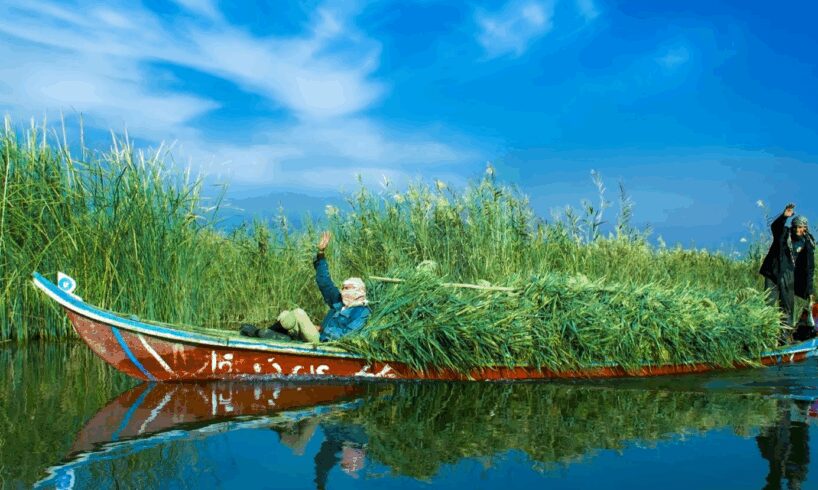
The southern marshes—the Ahwar—once
spanned 15,000 to 20,000 square kilometers, forming one of the largest wetland
systems in the world. Their environment preserved livelihoods that echoed
ancient Sumerian and Babylonian life.
By 2000, however, the Central and
Al-Hammar marshes had lost up to 97% and 94% of their area due to upstream
damming, drought, and drainage. Although partial restoration after 2003 revived
parts of the ecosystem, renewed drought has undone those gains.
The Tigris and Euphrates now carry about
40% less water than in previous decades, and in 2023 alone, an estimated 68,000
people were forced to leave the marsh regions.
This environmental collapse threatens not
just modern communities but the natural landscape that enabled Mesopotamian
civilization to exist.
Read more: A story in Hawizeh marsh: From water to dust life
Cultural Monuments Damaged and Erased
While water scarcity erodes one part of
Mesopotamia’s legacy, conflict has devastated another.
After the 2003 war, looters emptied parts
of the Iraqi National Museum in Baghdad. Thousands of artifacts representing
thousands of years of Mesopotamian history were stolen, damaged, or trafficked
abroad.
The rise of ISIS brought far deeper
destruction. Between 2014 and 2017, the group targeted the physical symbols of
Mesopotamian civilization, demolishing or looting sites to finance its
operations and impose ideological control.
In 2015, ISIS militants razed
Nimrud—capital of the Neo-Assyrian Empire—using explosives, bulldozers, and
sledgehammers to destroy 3,000-year-old bas-reliefs and statues.
The Lamassu figures of Nineveh—massive
winged guardians carved in the 9th century BCE—were shattered.
Hatra, a UNESCO World Heritage site known
for blending Greek, Roman, and eastern architectural styles, was severely
damaged.
These acts erased irreplaceable layers of
the world’s earliest civilizations, breaking a historical chain connecting
modern Iraq to its ancient identity.
A National Effort to Restore Mesopotamia’s
Narrative
Despite the scale of loss, Iraq is taking
steps to rebuild the cultural infrastructure needed to safeguard what remains
of Mesopotamia’s heritage.
At the Inclusivity of Contemporary Tourist
Destinations conference in Baghdad, Minister of Culture, Tourism, and
Antiquities Ahmed al-Badri described archaeological heritage as “the foundation
of national identity.” He said a new national museum is being planned to
showcase artifacts from Mesopotamia’s many eras, and that a site has already
been selected.
Large numbers of looted artifacts have
been recovered in recent years, al-Badri noted, though many remain in storage
due to limited display capacity.
Read more: A race against time: Restoring Iraq’s lost history
From shrinking wetlands to shattered
archaeological sites, the pressures facing Mesopotamia today threaten the
material memory of humanity’s earliest civilization. Iraq’s struggle to protect
its rivers, marshes, monuments, and museums is now central to preserving the
legacy of the land where history first began.
Written and edited by Shafaq News staff.