Britain’s security services allowed a top agent inside the IRA to commit murders and then impeded a police investigation into the affair, according to a damning official report.
MI5 helped the double agent known as Stakeknife to evade justice from a “perverse sense of loyalty” that outlasted Northern Ireland’s Troubles, the police investigation known as Operation Kenova said on Tuesday.
His handlers twice took him out of Northern Ireland for a “holiday” when they knew police sought to question him on suspicion of murder and false imprisonment, it revealed.
The nine-year investigation painted a highly critical picture of MI5’s handling of Freddie Scappaticci, a mole at the heart of the IRA who is believed to have cost more lives than he saved.
The full report, which cost an estimated £40m, shines a light into some of the murkiest corners of the Troubles.
In addition to Stakeknife the Kenova team also ran Operation Denton, which reviewed the so-called Glennane Gang, a loyalist network linked to about 120 murders.
It found “clear evidence” that “corrupt” members of the Royal Ulster Constabulary and Ulster Defence Regiment aided the Ulster Volunteer Force, but no evidence of the security forces’ collaboration in UVF bombings in Dublin and Monaghan that killed 33 people on 17 May 1974 – the biggest loss of life on a single day in the conflict.
“Denton did not find evidence of high-level state collusion or an intent on the part of the leadership of the British army or the UK government to collaborate with loyalist paramilitaries,” Jon Boutcher, the chief constable of the Police Service of Northern Ireland, who previously led the Kenova team, told a press conference.
The long-awaited report offered information but not justice for the families of people killed by Scappaticci’s unit. He died in 2023 at the age of 77 and the investigation has led to no prosecutions.
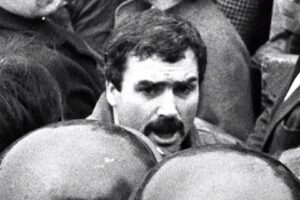
The son of Italian immigrants, Scappaticci joined the Provisional IRA in 1969 before turning against his comrades and offering his services to the British in the mid-1970s, launching a double life as a traitor while rising up IRA ranks to head its “nutting squad”, an internal security unit that hunted and killed suspected informants.
To his handlers, Scappaticci was a “golden egg” who produced priceless counter-terrorism intelligence that helped to neuter the IRA and save lives. The Kenova report said he produced “vast” amounts of often useful intelligence that was processed in a dedicated unit called the “rat hole”.
The Kenova team, however, found that the number of lives saved as a result of intelligence provided by Stakeknife was in the high single figures or low double figures and “nowhere near” the hundreds that security forces had claimed.
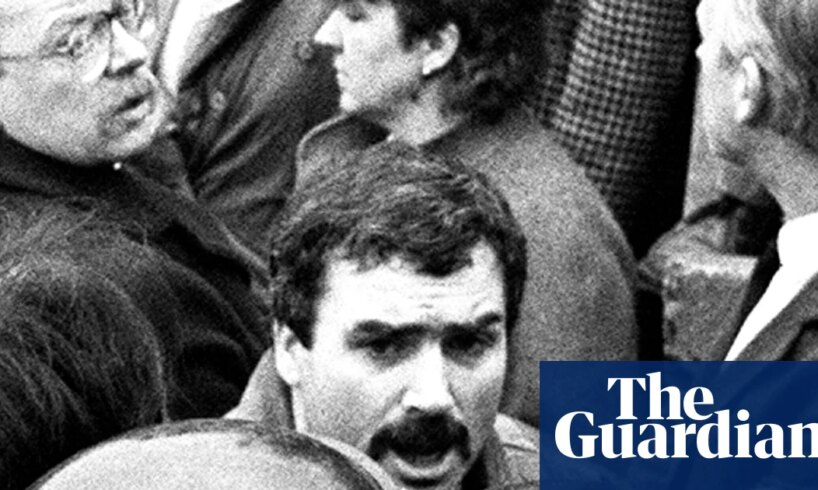
Freddie Scappaticci pictured at the 1987 funeral of IRA man Larry Marley Photograph: PACEMAKER
He is not named in the report because of a government policy against naming informers. An exception should have been made in this case, said Boutcher. “This outcome was imposed on Kenova by the government for no good reason and I know it will be a great disappointment to the families affected and cause them further pain and suffering.
“The identification of Stakeknife would not put anyone at risk, affect the recruitment or retention of agents or the flow of secret intelligence or damage national security. I believe the government’s claims to the contrary are untenable and bordering on farce.”
Boutcher quoted a solicitor for the families of those seeking justice for murdered relatives who told the BBC last year: “The dogs in the street know that Fred Scappaticci is the agent Stakeknife.”
The 160-page report accuses MI5 of “serious organisational failure” in trying to restrict the investigation. Crucial documents about the agency’s involvement with Stakeknife were passed to the investigation only last year.
“The further material revealed MI5 had earlier and greater knowledge of the agent than previously stated,” it said. “The revelation of the MI5 material was the culmination of several incidents capable of being negatively construed as attempts by MI5 to restrict the investigation, run down the clock, avoid any prosecutions relating to Stakeknife and conceal the truth.”
Sir Iain Livingstone, a former chief constable of Police Scotland who succeeded Boutcher as the head of Kenova, said the delay in sharing information undermined confidence about official cooperation with the investigation. “It was a significant failure on the part of MI5,” he said.
MI5’s director general, Sir Ken McCallum, said in a statement that he had apologised and requested an independent review into the delay. “This review concluded that none of the material was deliberately withheld, but made recommendations on how MI5 could improve its processes for the future,” he said. “I repeat today my apology for the late discoveries.”
He said the agency was implementing all of the review’s recommendations.
Many relatives fear they will never learn the full truth about the relationship between Britain’s intelligence services and an IRA commander who orchestrated numerous murders of fellow republicans from the 1970s to the 1990s.
The report said Stakeknife was implicated in “very serious and wholly unjustifiable criminality, including murder”, and that his involvement with intelligence agencies probably resulted in more lives lost than saved. The Kenova report urged republican leaders to apologise for the IRA’s abduction and murder of suspected informers.
After being outed as Stakeknife in 2003, Scappaticci fled to England and entered witness protection with lucrative earnings from his services to British intelligence.
In 2016 the PSNI outsourced an investigation to Operation Kenova, a 50-strong team of detectives led by Boutcher, a former Bedfordshire police chief constable. It arrested and questioned former members of the IRA and security forces and obtained access to intelligence files but no prosecutions ensued.
Boutcher paid tribute to the “courage, humility and dignity” of the families who had sought truth and justice for murdered relatives.
In the House of Commons, the Northern Ireland secretary, Hilary Benn, called the report sobering. He offered his condolences to the families who lost loved ones.