Ireland is on high alert as Storm Bram brings strong winds and heavy rain, with Status Orange warnings extended for coastal counties and parents monitoring for potential school closure decisions
20:44, 08 Dec 2025Updated 21:52, 08 Dec 2025
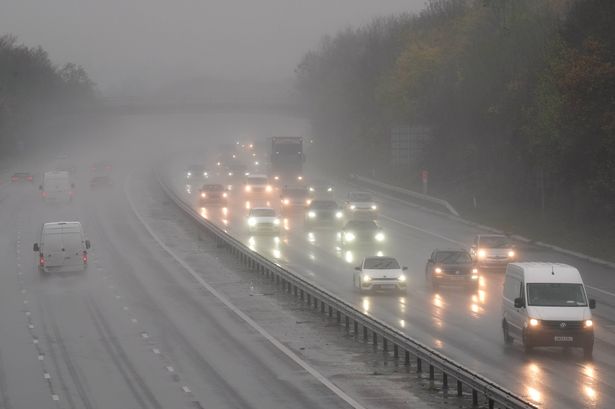
Motorists travel through rain and spray on a motorway (file photo)(Image: Joe Giddens/PA Wire)
Ireland is bracing itself as Storm Bram approaches, with Met Éireann warning of strong winds and heavy rain over the coming 48 hours. The second named storm of the season is expected to arrive on Monday night, with disruptive conditions forecast to persist throughout Tuesday.
Multiple weather warnings have been issued, including Status Orange alerts – the second highest level – for coastal areas in the south, west and northwest. A combination of Status Yellow alerts covers inland and eastern counties.
What started as Status Yellow wind and rain warnings has been escalated, with several counties now upgraded to Orange level.
Currently, a Status Yellow rain warning is active for Carlow, Kilkenny, Wexford, Cork, Kerry, Tipperary and Waterford from 9pm until 9am. Tomorrow, a Status Yellow wind warning will be in effect across the entire country from 6am until 9pm.
A Status Orange wind warning comes into force at 7am for Cork, Kerry, Waterford and Wexford, remaining in place until 3pm, reports the Irish Mirror.
On Monday evening, Met Eireann updated a second Orange wind warning for Cavan, Donegal, Monaghan, Clare, Limerick, Tipperary, Connacht, Longford, Offaly, Westmeath, set to come into effect at 10am on Tuesday and expire at 9pm.
Discussing the storm’s swift intensification, Met Éireann meteorologist Matthew Martin explained: “It’s looking increasing likely that Ireland will experience some very inclement weather from Monday night and through Tuesday. A low-pressure system in the Atlantic is going to deepen fairly rapidly as it approaches the southwest coast on Monday night.
“Initially there will be a spell of heavy rain before a swathe of very strong winds develop. There remains some uncertainty in the track and intensity of the system, but it looks likely that this will be an impactful event in some areas, especially in coastal areas of the south, west and northwest.
“Flooding impacts are expected as the rain will fall on already saturated ground and many rivers are currently approaching bank full conditions. We are in a period of high astronomical tides, which will coincide with the strong, potentially onshore winds, so there is high risk of coastal flooding. We echo the well-known advice of the Irish Coast Guard: ‘Stay Back, Stay High, Stay Dry’.
“The high tides will prevent the rivers from discharging to the sea, significantly increasing the risk of upstream flooding along low-lying areas. People should refer to the guidance of their local authorities and emergency responders in their area.”
He went on to say that warnings could be escalated further as the storm draws nearer and encouraged people to “check in regularly with Met Eireann’s forecasts and warnings, as the situation is likely to evolve with certainty in the system track and timings increases”.
With mums and dads already feeling uneasy, concerns are mounting over possible school shutdowns. Generally, a Status Red warning results in compulsory closures for schools, colleges and childcare centres – however, no Red warnings have been declared at present.
During the onslaught of Storm Amy in October, a representative from the Department of Education offered this advice to schools:.
Citizen’s Advice has clarified that the final say on school closures during severe weather rests with individual schools. A message on their website states: “School management in each school decides whether the school should close during extreme weather events. This is because they are best placed to assess how local weather conditions will affect their school’s ability to open.
“Schools will inform parents if they decide to close. This will usually be by text or email so keep an eye on your phone and emails for updates. You can also check your school’s website as they may post a notice there. Schools can use discretionary days where they planned to close to makeup for any time lost due to unexpected school closures. This can include reducing mid-term breaks, for example.”
The Government’s Office of Emergency Planning also recommends: “In the event of an emergency, the school management authority can make the decision to close a school. Any decision to close the school is made in the interest of children’s safety. The school management authority will assess local risks and consult school transport operators.”