Nominations were named by No 10 today
plymouthherald Administrator and David Lynch Press Association Political Correspondent
20:55, 10 Dec 2025
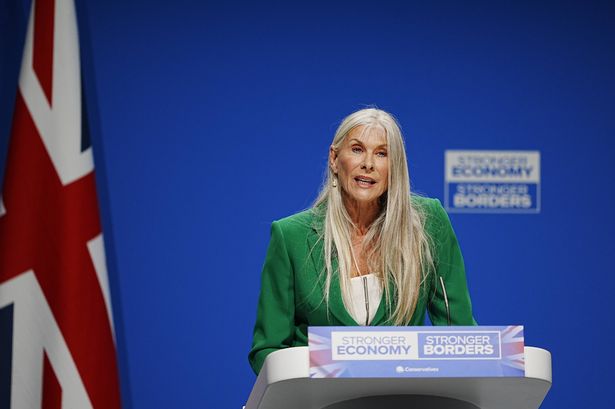
Sharron Davies delivers a speech during the Conservative Party Conference 2025(Image: PA Wire/PA Images)
Former Olympian Sharron Davies has been officially named among a list of new appointments to the House of Lords.
The Plymouth-born swimmer was one of three peerage nominations from Conservative leader Kemi Badenoch, along with 25 nominations from the Prime Minister and five from the Liberal Democrats.
Sharron represented Great Britain in the Olympics and European championships and competed for England in the Commonwealth Games. She has become an advocate for women’s rights and has spoken openly about the biological advantage of trans competitors in women’s sports, sometimes facing controversy for her comments.
She appeared on the list as: “Sharron Davies MBE – Campaigner for Women’s Rights & Olympic Swimming Silver Medallist for Great Britain.”
Reports first emerged in August that she was set to become a Conservative peer, but the full list was not published by No 10 until today (Wednesday).
Sir John Redwood, the ex-Conservative Cabinet minister, and journalist and historian Simon Heffer, were also nominated by Mrs Badenoch.
The chairman of the supermarket chain Iceland, Richard Walker, and Matthew Doyle, a former Number 10 director of communications, were among those nominated for a peerage by the Prime Minister.
Katie Martin, a former senior adviser to Chancellor Rachel Reeves, is also among the 25 nominations from Sir Keir Starmer.
The series of Labour appointments to Parliament’s upper chamber comes as the Government has faced staunch opposition from peers over its flagship workers’ rights legislation.
Also included in Labour’s list of new peers is Carol Linforth, the former Labour Party chief of staff.
She is the Labour staffer who could be seen removing Sir Keir’s jacket when he was glitter-bombed during his keynote conference speech in 2023.
Sir Michael Barber, who served in the Blair government’s delivery unit, and returned to Sir Keir’s Government as an adviser last year, is also on Labour’s list of nominations.
Elsewhere, the Liberal Democrats have made a total of five nominations, including former MP and coalition government minister, Sarah Teather.
Two of the Lib Dem nominations, Lord Addington and Earl Russell, currently sit in the upper chamber as hereditary peers.
The party has granted them life peerages to continue in their roles once the Government’s current plans to abolish the rights of the hereditary peers to sit in the Lords becomes law.
Similarly, Crossbench peer the Earl of Kinnoull has also been nominated for a life peerage.
A Labour source suggested further appointments by the party to the Lords could follow throughout the current Parliament.
They said: “The Tories stuffed the House of Lords, creating a serious imbalance that has allowed them to frustrate our plans to make working families better off.
“This needs to be corrected to deliver on our mandate from the British people.
“We will continue to progress our programme of reform, which includes removing the right of hereditary peers to sit and vote in the Lords.”
Sir Keir has now appointed a total of 62 peers since Labour entered Government, including the 25 on Wednesday evening, 30 last December, and seven peerages that were granted for ministerial appointments.
The Conservatives remain the largest bloc in the Lords, with 282 peers compared with Labour’s 234.
There are 177 crossbench peers and 75 from the Liberal Democrats.
Labour is undertaking plans to remove the remaining 91 hereditary peers from the upper chamber, with its House of Lords (Hereditary Peers) Bill.
The Bill is in the final stages of parliamentary scrutiny, known as “ping-pong”, where it is batted back and forth between the Commons and Lords.
Should it become law, it will remove some 44 hereditary Tory peers from the red benches, but will still leave the opposition party with a majority over Labour.
Baroness Angela Smith, Labour’s House of Lords leader, is due to begin the next stage in a series of reforms to the upper chamber at the start of 2026.
This will include plans to remove peers who do not turn up often enough to contribute to debates, and requiring members to retire at the end of the Parliament in which they have their 80th birthday.