During a televised debate in 2016, populist presidential candidate Rodrigo Duterte made a typically belligerent statement that he himself would jetski to Scarborough Shoal in the South China Sea and plant a Philippine flag there. Duterte claimed that he was ready to die a hero to keep the Chinese out of the bitterly contested maritime territory.
“That made millions of Filipino workers and fishers vote for him because of that one promise,” says film-maker Baby Ruth Villarama. As her new Oscar and Bafta-contending documentary Food Delivery: Fresh from the West Philippine Sea reveals, it wasn’t a promise Duterte kept. “He would make excuses that the jetski has broken down. Eventually there was an official pronouncement that it had just been a campaign joke. From then on, the fisherfolk were really enraged.”
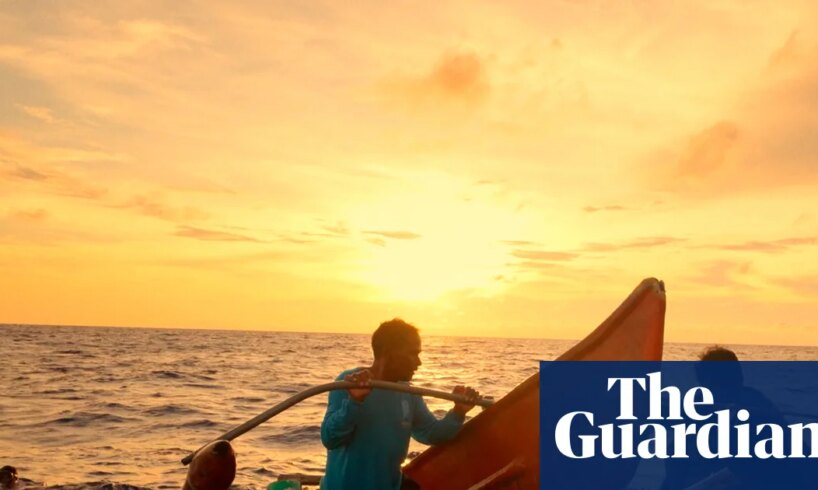
In her film, Villarama follows the fishers as they traverse what they call the West Philippine Sea, which the Philippines regards as part of its exclusive economic zone. She spent 60 days filming them, as well as recording the work of the soldiers who supply local islands with food. It’s a tough and dangerous existence that has been made even more difficult by continuous harassment from the Chinese coast guard.
Food Delivery has beautiful underwater photography and footage of bird colonies as Villarama patiently chronicles the everyday problems faced by the fishers and soldiers. They’re away from their families for long stretches; they have bills to pay; and when he is back on shore one of the main protagonists is shown undergoing tests for prostate cancer. It is in many ways an observational, human interest documentary about life at sea. Nonetheless, since completing the project in March, Villarama has found herself caught in the crosshairs of the Chinese government.
‘Working in quiet dignity’ … Food Delivery: Fresh from the West Philippine Sea. Photograph: Voyage Studios
Food Delivery was suddenly pulled from the programme of the Philippines’ CinePanalo film festival two days before its world premiere. The reason became apparent when it was subsequently selected for the Doc Edge festival in New Zealand, whose organisers received a formal request from the Chinese Consulate-General in Auckland not to screen the movie. The Consulate-General’s letter, published by the festival, saidthe film was “rife with disinformation and false propaganda, serving as a political tool for the Philippines to pursue illegitimate claims in the South China Sea.”
Villarama says the harassment of the fishers “cannot go on”. “The bullying, and boats being chased every week. If we are to live in a stable society, we have to respect certain boundaries. This 200-mile exclusive economic zone is a gift to every country. The UK has it, the US has it, the Philippines has it.”
A certain strained civility still exists between the Chinese and the Philippines coast guards. This is a campaign of harassment that can include ramming and the cutting of ropes but both sides try to steer clear of outright physical violence. Villarama and her camera crew were themselves on board a ship that got rammed by the Chinese coast guard. She expresses her relief that the ship didn’t sink: “I am not a good swimmer. I can float – but I am not a good swimmer.”
Villarama previously worked as a stringer for Reuters and as a TV journalist and her 2016 documentary Sunday Beauty Queen explored the plight of Philippine foreign workers looking for escape from their lives of underpaid drudgery by taking part in beauty pageants.
Now, though, the stakes are high. It’s not just about the livelihoods of those working in the fishing industry – national food security is at risk. “I did not ask for this personally. Who would want to make a film that would go against a superpower like China? But where I was presented with the truth, the lived experience of our fisherfolk, the very people who are working in quiet dignity, and when I realised there are actual threats to our freedom and our food security, we had no choice but to embrace the story.”