Shafaq News
On a cold evening in Diyala, Saad
sat at the edge of his bed, eyes fixed on his phone screen as a Telegram
notification lit up. The message—from a stranger who had never shown his face
but spoke flawless classical Arabic—gave him the exact second he should enter
the next trade. Saad felt a rush of certainty; this was the moment that might
change everything. He had already skipped work twice that week, convinced that
one good trade could lift him out of the financial pressure tightening around
his life.
He didn’t yet know that this
“signal” would become the beginning of a spiral—one that would drain his
savings, strain his marriage, and leave him wondering how a glowing world of
digital promises had drawn him so deeply in.
Saad is one of many young Iraqis
swept into the booming world of online trading and digital betting. Pressured
by a stagnant job market and lured by apps that glamorize quick success,
thousands enter platforms that appear harmless at first—fast, modern, and full
of opportunity. Yet the stories emerging from Diyala, Baghdad, Basra, and
beyond reveal a pattern of an early excitement that quickly turns into debt,
addiction, and emotional collapse.
Read more: Youth in despair, no jobs to share: Iraq’s workforce hanging in the air
A Shortcut in a Tough Economy
Across Iraq, economic uncertainty
has opened the door wide to digital trading and betting apps that advertise
wealth with the swipe of a finger. Influencers and international platforms have
perfected the language of seduction: screenshots of profits, testimonials of
overnight success, and promises of mentorship by “experts” who speak directly
to users.
For young Iraqis whose incomes
barely cover essentials, the appeal is immediate.
“This is the future,” Saad remembers
his friends telling him. “Everyone is making money.”
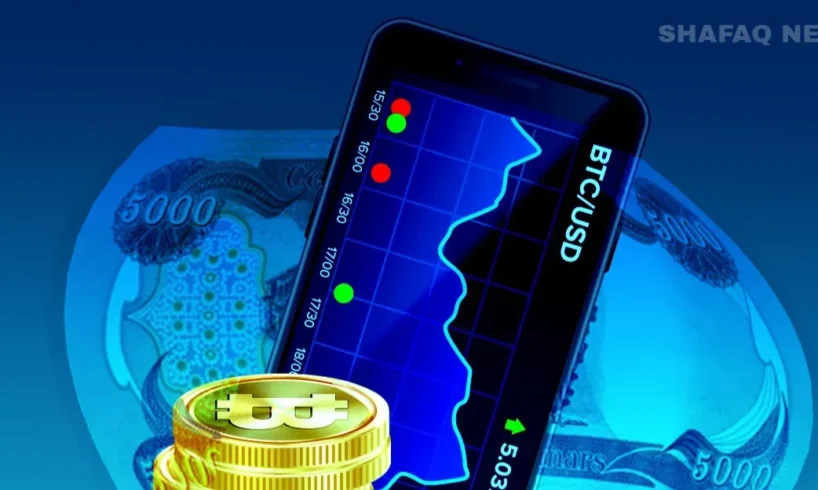
He started small—depositing $1,000
into a trading app. His first week yielded $500 in profit, an amount that felt
life-changing. It was also, he now realizes, the hook.
“Early wins convince you that you’re
on the right path,” he said. “You keep chasing the next trade.”
Like many others, Saad soon found
that earning more required “unlocking” additional signals by referring new
users. Each referral promised more opportunities—but also drew more young
people into the same vulnerable cycle.
Saad’s initial success faded
quickly. As the pressure to earn grew, he deposited $2,000, hoping to double
it. Instead, he lost everything in a single trade.
“I became obsessed…I left my job
just to be ready for the next trade. When I lost the money, I broke down.”
Young men across Diyala echo similar
stories—sleepless nights, anxiety, and a growing sense that their lives revolve
around numbers on a screen. Some face family tension, others turn to borrowing,
and many hide their losses out of shame.
The trend has spread far beyond
trading charts. In cafés, construction sites, and delivery hubs, young Iraqis
scroll through betting apps between shifts. Football matches—once purely
entertainment—have become high-stakes opportunities for quick cash.
A young man from Diyala described it
bluntly: “People used to watch football to enjoy it. Now they watch to gamble.”
Some take out small loans. Others
sell their smartphones for cheaper ones, using the price difference to place
bets. A doctor reportedly lost nearly $7,000 in a single session. Delivery
workers bet their weekly earnings. Unemployed youth who hope for a breakthrough
end up in deepening cycles of debt.
The spiral is predictable: small
wins → increased confidence → bigger bets → sudden collapse.
Read more: Lost Fortunes: Iraqi youth risk all in the world of Crypto and Forex
Legal experts warn that Iraq offers
little to no protection for users. Most trading and betting platforms active in
the country operate without licenses, without local representation, and without
any obligation to return funds when accounts are frozen or manipulated.
Human rights activist and legal
advisor Haytham Raed explained that users who lose money have no formal
authority to turn to.
“These platforms operate outside any
Iraqi oversight,” he said. “If funds disappear or accounts close, there is no
legal channel to recover anything.”
Informal intermediaries—some based
in currency-exchange shops, others operating entirely through social
media—facilitate transfers that leave no paper trail. When disputes arise,
victims have no way to verify transactions or hold anyone accountable.
Raed points to another structural
problem: limited financial literacy. “Young Iraqis often enter trading out of
need, not knowledge,” he said. “They follow untrained influencers, fake
mentors, or promotional schemes disguised as financial education.”
Many “trainers” sell unregulated
courses or push high-risk strategies tied to referral commissions. The line
between education and marketing has blurred so deeply that users often cannot
distinguish between real advice and bait.
For some, the confusion deepens when
they discover—too late—that certain transactions involve prohibited
derivatives, interest, or other forms of financial activity that violate
religious guidance.
Without accessible, official fatwas
addressing modern trading platforms, many youth enter these apps unaware of the
ethical implications. Some leave the platforms not just financially harmed, but
morally uncertain.
Cybersecurity specialists warn that
the risks go far beyond financial loss. According to Ali Hazbar, a professor of
cybersecurity, the information young users provide can be exploited for
identity theft or fraud. Many platforms lure users with small initial profits,
then suddenly freeze accounts, block withdrawals, or simply disappear.
“In the current digital chaos,”
Hazbar said, “there is no law capable of protecting young people from these
platforms. Iraq needs updated cyber legislation and consistent monitoring.”
He argued that awareness
campaigns—workshops, school programs, digital-literacy sessions—are no longer
optional. They are a national necessity.
What drives young Iraqis to these
platforms is not greed but hope—hope for stability in a stagnant economy, hope
for opportunity where few exist, hope for independence in a world that feels
increasingly out of reach.
But the illusion of easy wealth
often collapses just as quickly as it appears. For Saad, the lesson came at a
cost he still feels today. “I thought I found a way out. Instead, I lost
everything.”
Across Diyala and beyond, the glow
of digital profit continues to pull more young people toward the same uncertain
path. As long as economic pressure grows and oversight remains weak, experts
warn that the cycle will expand—bringing with it deeper financial losses,
psychological strain, and a generation caught between digital dreams and harsh
reality.
Written and edited by Shafaq News
staff.