The Geneva draft of peace plan was refined, Zelenskyi says after Ukraine, U.S. officials meet in Florida. Russia is likely preparing to reject a peace proposal, ISW says. Russia is making gains in Donetsk, Zaporizhzhia regions, DeepState says.
Geneva draft of peace plan was “refined,” Zelenskyi says after Ukraine, U.S. officials meet in Florida
Ukrainian President Volodymyr Zelenskyi said on Tuesday that he had heard reports from members of the Ukrainian delegation that participated in the talks with U.S. officials in Florida on Sunday. They discussed what “was not possible to say on the phone,” he said in a post to X.
“Rustem Umerov and participants in the negotiations in Florida reported on the key points raised by the American side in the dialogue. The work was based on the Geneva document, and that document has been refined,” Zelenskyi said.
He thanked head of the General Staff of the Armed Forces of Ukraine, Lieutenant General Andriy Hnatov, for briefing the U.S. partners in detail on the actual battlefield situation. Ukraine’s intelligence officials discussed with the U.S. delegation how the frontline situation could develop after a ceasefire, how Ukraine will be protected from Russian airstrikes and how violations of the deal will be handled.
“Our diplomats are actively working with all partners to ensure that European countries and other participants in the Coalition of the Willing are meaningfully involved in developing decisions,” Zelenskyi said.
On Monday, he met with French President Emmanuel Macron in Paris. The talks were followed by a series of phone calls with European leaders and U.S. special envoy Steve Witkoff to coordinate before Witkoff’s Tuesday meeting with Russian leader Vladimir Putin in Moscow. Zelenskyi said he spoke to his team about these meetings. “The Russians have already launched new disinformation campaigns in view of preparations for their upcoming meetings with the American side,” he added.
Zelenskyi said he had instructed officials from the Ukrainian delegation “to continue the most constructive work possible” with the U.S. team and European partners. “Ukrainian intelligence will provide partners with all available information regarding Russia’s true intentions and its attempts to use diplomatic engagement as cover to weaken sanctions and block important collective European decisions,” he added.
“Ukraine approaches all diplomatic efforts with utmost seriousness — we are committed to achieving a real peace and guaranteed security. This is exactly the level of commitment that must be compelled from the Russian side, and this task can be accomplished only together with our partners,” Zelenskyi said.
Secretary of Ukraine’s National Security and Defense Council, Rustem Umerov who chairs the delegation will stay in contact with the U.S. team to plan future meetings.
Ukrainian President Volodymyr Zelenskyi and First Lady Olena Zelenska are on their first official visit to Ireland on Tuesday. Speaking at a news conference alongside French President Emmanuel Macron on Monday, Zelenskyi said he will meet with the Ukrainian delegation in Ireland on Tuesday following the talks in Florida.
Axios said on Sunday, citing Ukrainian officials that Umerov was expected to meet Zelenskyi in Paris on Monday and give him a more detailed report about the negotiations.
Zelenskyi said on X Sunday after the meeting that Umerov reported information from the talks. “It is important that the dialogue is constructive, and that all issues at the meetings were discussed openly and in a way that ensures Ukraine’s sovereignty and national interests,” he said.
Russia likely preparing to reject peace proposal, conceal details of talks from public, ISW says
The Kremlin is setting conditions to refrain from publicly discussing the outcomes of the December 2 US-Russian meeting, possibly in order to obfuscate Russia’s likely rejection of the US-Ukrainian peace proposal, the Institute for the Study of War (ISW) said in an update on Monday. The paragraphs below are quoted from the report.
Peskov responded to a question about points in the latest US-Ukrainian peace proposal, stating that Russia does not intend to conduct negotiations through a “megaphone” or “through the media.” Peskov stated that the Kremlin will release footage from the start of the Putin-Witkoff meeting on December 2, but that it is too early to talk about any public statements afterwards.
Russian State Duma International Affairs Committee First Deputy Head Alexei Chepa stated on December 1 that he would like the US delegation to “reaffirm the fundamental nature” of the positions that the United States and Russia allegedly reached during the US-Russia Alaska summit in August 2025.
Duma Defense Committee Deputy Chairperson Alexei Zhuravlev claimed on December 1 that the “right” negotiations are between Russia and the United States, who will present a “fait accompli” to Europe and Ukraine such that they will have “no choice but to…sign whatever [the United States and Russia] say.”
High-ranking Kremlin officials and Russian milbloggers have been consistently rejecting the 28-point peace plan and its subsequent iterations since it was first reported in mid-November 2025 because the proposed plans did not concede to all of Russia’s maximalist war demands. The Kremlin has been exploiting the lack of clarity about the Alaska summit to conceal the way the Kremlin — not Ukraine — is impeding the negotiations process by sticking to its original war demands.
The Kremlin will likely try to replicate this approach with the upcoming US-Russia meeting on December 2 and is setting conditions to conceal the details of the talks from the public, likely because Russia will reject the terms of the plan. The Kremlin likely seeks to avoid framing Russia as an impediment to ending the war in Ukraine if Moscow rejects the peace deal that the United States will present to Russia, and that Ukraine agreed to. Russia previously rejected several US-proposed ceasefires that Ukraine agreed to.
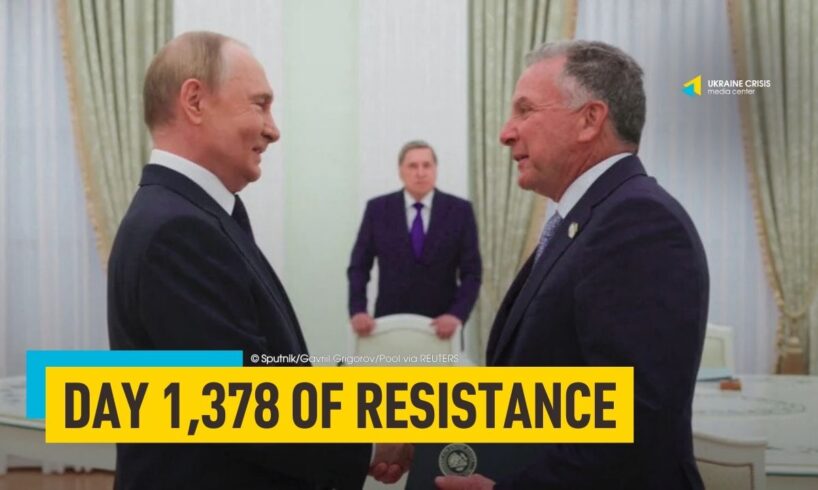
In other reports, U.S. special envoy Steve Witkoff met Russian leader Vladimir Putin in Moscow on Tuesday. Ahead of the meeting, Kremlin spokesperson, Dmitry Peskov said the head of the Russian General Staff Army General Valery Gerasimov told Putin on Sunday evening that the country’s forces captured the Ukrainian towns of Pokrovsk, in Donetsk region, and Vovchansk, in Kharkiv region.
“Units of the Defence Forces of Ukraine continue defensive operations in challenging sectors of the frontline, in particular in Pokrovsk, Vovchansk, and Kupiansk,” the General Staff of the Ukrainian Armed Forces said Tuesday. There was no confirmation of the cities’ capture from ISW or Ukrainian open-source mapping project DeepState.
Head of the Center for Countering Disinformation at Ukraine’s National Security and Defense Council, Lieutenant Andriy Kovalenko said on Telegram Monday that Russia will mount pressure in the battlefield in the coming weeks, while also making “loud statements” “exclusively for the Western audience” to increase the stakes in diplomacy.
“As of now, part of Vovchansk is controlled by Ukraine’s defense forces. Also, the enemy did not seize Kupyansk, but lied about it instead. Heavy battles continue in the front line, the enemy is throwing more forces into the battle,” Kovalenko added.
Russia making gains in Donetsk, Zaporizhzhia regions, DeepState says
Russian forces have occupied the village of Kozatske in Donetsk region and have advanced in Pokrovsk and Myrnohrad as well as near Kamyanske in Zaporizhzhia region, Ukrainian open-source mapping project DeepState said Tuesday.
Russia seized 505 square kilometers of land in November, DeepState said Monday, adding that Russian forces made 40 per cent of all gains near Hulyaipole in Zaporizhzhia region.