As winter blankets Japan in snow, the country boasts a spectacular array of festivals that turn the cold temperatures into an opportunity for artistry and celebration. Ranging from vibrant snow sculpture competitions to ancient fire rituals, Japan’s northern regions find many ways to maintain warmth and community spirit, even in the icy cold. Read on to learn about the most magical winter festivals to visit across Japan, including the poetic candlelit lanes of Otaru, the gentle beauty of traditional kamakura snow huts, the fascinating history behind Nozawa’s great Fire Festival and much more.
Sapporo Snow Festival
(Hokkaido Prefecture)
World-Famous Ice Sculptures
The Sapporo Snow Festival is undoubtedly one of the most famous winter events in Japan, drawing millions of visitors annually in early February. Beginning modestly in 1950 with high school students crafting a few snow statues, it has grown into a massive spectacle over the decades, renowned for its massive, intricately carved snow and ice sculptures displayed across several sites. The centerpiece is Odori Park, where towering sculptures, some reaching the size of multi-story buildings, are carved with incredible detail.
The sculptures often depict famous landmarks, pop culture icons and elaborate fantasy scenes, and are illuminated with colorful lights by night — turning the park into a magical, glowing wonderland. Beyond Odori Park, the nearby Susukino Site showcases beautiful clear-ice carvings, including an ice bar. The Tsudome Site offers fun family-friendly activities: giant snow slides, snow rafting and beyond.
Dates & Getting There
When: One week in early February; check the official website for this year’s dates.
Access: Odori Park is a 15-minute walk from Sapporo Station, or 2 minutes by subway.
Otaru Snow Light Path Festival
(Hokkaido Prefecture)
A Romantic, Candlelit Retreat
Providing a romantic and nostalgic counterpoint to the grand scale of the Sapporo Snow Festival, the Otaru Snow Light Path Festival takes place in the charming port city of Otaru. For 10 days in February, Otaru’s unique brick-and-stone architecture is bathed in a delicate glow, as its paths are adorned with thousands of candles and handmade snow lanterns. Locals place lantern displays in front of their own shops and residences, contributing to the fairytale-like atmosphere.
The two main illuminated paths include the iconic Otaru Canal, where candles float gently upon the water’s surface alongside illuminated gas lamps, and the historical former Temiya Railway Line, which transforms into a peaceful walking tunnel lined with lanterns and snow sculptures.
Dates & Getting There
When: Early February; see the official website for more details.
Access: From Sapporo, take a train along the JR Hakodate Main Line to Otaru. The illuminated areas are within walking distance.
Yokote Kamakura Festival
(Akita Prefecture)
Warm Up in Cozy Snow Huts
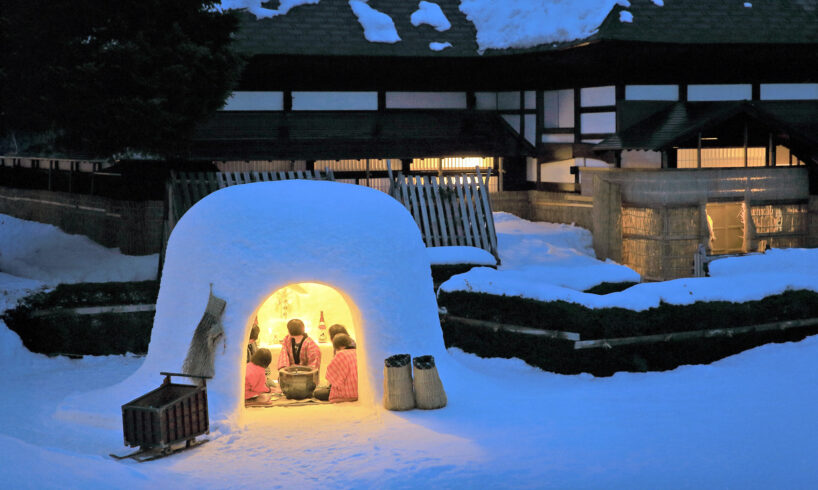
The Yokote Kamakura Festival is a spiritual and heartwarming event dating back over 450 years. The focal point of the festival is the construction of hundreds of kamakura — traditional, igloo-like snow huts — built across the city. Historically, the kamakura contained altars dedicated to the water deity to pray for an ample water supply; today, they are a core symbol of local identity in wintertime.
Visitors can even go inside these cozy snow shelters to enjoy amazake (a traditional sweet drink) and yakimochi (grilled rice cakes) from a charcoal brazier. In return, visitors can leave an offering at the altar. Beyond the large snow huts, hundreds of mini kamakura with lit candles line the Yokote River, creating a sea of lights. The festival area stretches toward Yokote Castle, which opens its observation deck during the festival, where you can admire an ethereal view of the illuminated city.
Dates & Getting There
When: Second Friday in February and the following Saturday. Check the Yokote tourism website to confirm exact dates — in 2026, it will be held on February 13 and 14.
Access: From Tokyo Station, take the Akita Shinkansen to Omagari Station, then the JR Ou Line to Yokote.
courtesy of Tohoku Tourism
Tokamachi Snow Festival
(Niigata Prefecture)
A Community-Wide Snow Art Event
Known as the “birthplace of modern snow festivals” in Japan, the Tokamachi Snow Festival was first organized by local residents in the 1950s with the lovely philosophy of “befriending the snow.” Unlike many festivals that evolved from ancient rituals, this event was — simply put — a conscious endeavor to bring some joy and light into the long, harsh winter. Tokamachi is one of the snowiest regions in Japan, regularly receiving over two meters of snowfall in its coldest months.
You’ll spot snow art, crafted by local residents, which gives the festival a cozy neighborhood feel, displayed across various hiroba throughout the city — plazas featuring food, beverages and fun activities. Many of the sculptures are entered into competitions, some featuring characters from popular animations.
The most central site of the Tokamachi Snow Festival is the Community Hiroba, which is only a 10-minute walk away from Tokamachi Station. Most other sites are accessible by foot or via the local bus system.
Dates & Getting There
When: A weekend in mid to late February; check the official website for this year’s dates.
Access: From Tokyo Station, take the Joetsu Shinkansen to Echigo-Yuzuwa, then the Hokuhoku Line to Tokamachi Station.
Sounkyo Onsen Ice Fall Festival
(Hokkaido Prefecture)
Explore an Illuminated Ice Palace
Also known as the Sounkyo Hyobaku Festival, this 50-year-old event turns the extreme climate of the secluded Sounkyo Gorge, located deep within Daisetsuzan National Park, into something beautiful. The festival site is an elaborate ice kingdom created by strategically freezing the water from the Ishikari River— essentially a massive, walkable structure composed of ice domes, tunnels and caves. Visitors can explore this surreal, temporary architecture built entirely of frozen water.
The experience is most dramatic after dark, when the structure is infused with colorful, shifting floodlights. The illumination turns the frozen tunnels into a breathtaking, kaleidoscopic environment, offering a beautiful contrast to the rugged mountain backdrop and biting cold. You can also check out Hyobaku Shrine — encased in cascading icy walls — and admire fireworks that light up the sky each year.
Dates & Getting There
When: Late January to mid-March. See the official website to confirm this year’s dates.
Access: From Sapporo Station, head to Asahikawa Station via the Lilac-Kamui Line, then take a direct bus to Sounkyo Onsen.
courtesy of nozawa onsen
Nozawa Fire Festival
(Nagano Prefecture)
Japan’s Great Fire Ritual
Believed to date back to the mid-1800s, the Nozawa Onsen Fire Festival is one of Japan’s three great fire festivals, and has been designated an Important Intangible Folk Cultural Property. At its core is a rite of passage tied to yakudoshi — the “unlucky years” in Japanese tradition, which include ages 25 and 42 for men. Hence, men of these ages play an important role in the ceremony. In the days leading up to the festival, villagers construct a wooden shrine platform called a shaden.
On the night of the event, it becomes the stage for a dramatic, highly choreographed “battle.” Torch-bearing villagers rush the structure, while the 42-year-old men stand on the roof chanting prayers to the Dosojin, deities of fertility, marriage and protection. Below them, the 25-year-olds defend the base. The ritual is symbolic: The clash of fire and bodies is meant to drive away misfortune for the yakudoshi-aged men, bless newborns and secure prosperity for the village.
When the shaden is finally set ablaze and burned to the ground, the ritual isn’t over. At dawn, locals return to the ashes to cook food over the embers, believing it brings good health for the year ahead.
Dates & Getting There
When: January 15
Access: From Tokyo Station, take the Hokuriku Shinkansen to Iiyama, then the Nozawa Onsen Liner bus.
courtesy of chichibu festival hall
Chichibu Night Festival
(Saitama)
Grand Floats and Winter Fireworks Near Tokyo
The Chichibu Night Festival (Chichibu Yomatsuri) is one of the Kanto area’s most spectacular winter events, recognized as one of Japan’s three great float festivals. Dating back at least 350 years, the festival features six massive, ornately designed floats (yatai and kasaboko). Adorned with lanterns, gilded wood carvings and tapestries, these heavy structures are pulled through the streets to the lively sounds of taiko drums and flutes, drawing massive crowds of revelers who enjoy local sake and specialties.
The festival’s climax occurs on the second night when the floats are hauled up the challenging Dango Hill, prompting massive celebration once they reach the summit. The Chichibu Yomatsuri also features hours of firework displays during the cold winter night, lighting up the floats and the surrounding nighttime scene.
Dates & Getting There
When: December 2 and 3
Access: Held in downtown Chichibu, right by Chichibu (Chichibu Railway) and Seibu-Chichibu (Seibu Railway) stations.
Yunishigawa Onsen Kamakura Festival
(Tochigi Prefecture)
A Sea of Miniature Lights
Known for its enchanting display of hundreds of miniature kamakura snow houses, the Yunishikawa Onsen Kamakura Festival offers a breathtaking winter spectacle. The kamakura are lit up at dusk along the Swaguchi riverbed — declared a Japan Night View Heritage Site — where visitors can take a magical stroll. Another primary venue is Heike no Sato, an open-air museum of traditional thatched-roof houses, which also features the glowing kamakura during the festival. Beyond the stunning views, the festival allows you to enjoy the local onsen culture and unique dining experiences.
Dates & Getting There
When: Late January to early March. See the official website for up-to-date information; please note that the illumination only takes place on Fridays, Saturdays and Sundays.
Access: From Shinjuku Station, take a direct limited express to Kinugawa Onsen, then a direct bus to Yunishigawa Onsen.
Related Posts
Discover Tokyo, Every Week
Get the city’s best stories, under-the-radar spots and exclusive invites delivered straight to your inbox.
Updated On December 11, 2025