It comes following the death of two-year-old Awaab Ishak, who died from a respiratory condition caused by prolonged exposure to mould
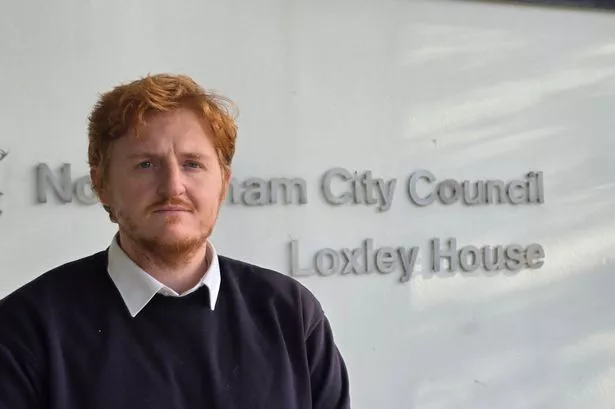
Cllr Jay Hayes(Image: LDRS)
A new team and an expected £9m investment will be used to help tackle damp and mould in council homes across Nottingham in response to a new law.
The first phase of Awaab’s Law came into force at the end of October, forcing social landlords to take urgent action to fix dangerous homes or face the full force of the law, the Government says.
It comes following the death of two-year-old Awaab Ishak, who died in December 2020 from a respiratory condition caused by prolonged exposure to mould in his Rochdale home.
The home was managed by social housing provider, Rochdale Boroughwide Housing (RBH), at the time.
Cllr Jay Hayes (Lab), executive member for housing at Nottingham City Council, spoke of the authority’s response to the new law in an interview with the Local Democracy Reporting Service on Wednesday (December 10).
“In the build-up to Awaab’s Law coming in, we’ve done some work around looking at getting access to properties and setting up a dedicated damp and mould team in-house to get on top of mould issues as they are reported,” he said.
“Instead of the normal repairs team going out, they are a specialised team focusing on damp and mould. Under Awaab’s Law we have a tight area of time where we need to react, we have 24 hours depending on the severity of it.”
Some of the key changes under the law are emergency hazards, which include a family with young children reporting extensive black mould covering bedroom walls, severe damp causing structural damage, mould growth so severe it’s causing respiratory problems, and water ingress that’s creating dangerous electrical hazards. These must be investigated within 24 hours.
If the council is unable to make the property safe for the tenant, it says it must then “offer suitable accommodation immediately.”
Significant hazards – which include persistent condensation causing mould growth in bathrooms, damp patches that are getting worse but aren’t immediately dangerous, and ventilation problems leading to humidity issues – must also be investigated within 10 days.
A landlord must then begin remedial works within five working days; if this is not possible, they must start within 12 weeks.
To help meet the tight timeframes, the authority has allocated up to £9m from its housing budget for damp and mould remediation works.
The new team is comprised of eight workers, including six surveyors, a quantity surveyor and a project manager, all supported by two partner firms, United Living and Lovell.
New requests for damp and mould cases currently sit at just above 400, and Cllr Hayes says they will be brought down “as quickly as we can”.
Many of these have come about following a full stock condition survey of all 26,000 council homes, which the authority is now 80 per cent through.
The authority was handed one of the worst ratings possible by the Regulator of Social Housing (RSH) in January 2025, after a report found nearly half of its housing had not been checked for over 10 years.
“The big challenge for us is the response time,” Cllr Hayes said, addressing the challenges.
“It’s also then working with our tenants on ventilation and heating, particularly in deprived areas where people are watching how much heating they have on, and how much air they are letting in, particularly in the cold weather.
“So part of this work is about working with those most vulnerable tenants to see what additional support we can offer.”
The second phase of Awaab’s Law, which will cover hazards like excess cold and heat as well as fire risks, will be implemented next year, while 2027’s third phase will cover other remaining hazards, the Government says.