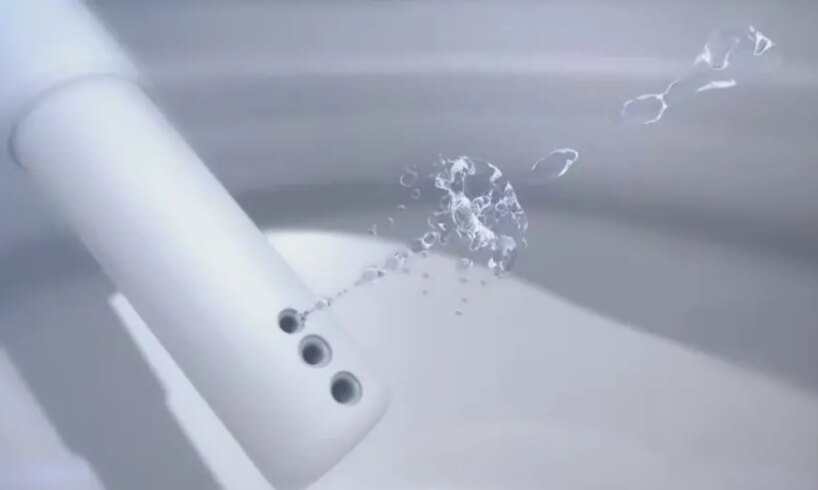
Toto’s Washlet is washing more and more backsides in the States, and there are likely two big reasons why the U.S. has started liking them for when it goes number two.
“Japan is living in the future” is a statement that’s kind of debatable. Sure, we’ve got such science fiction-y wonders as real-world ridable Pokémon over here and services that’ll 3-D scan your body to turn it into an anime robot figure component, but we’re also kind of at the mercy of bears at the moment, and nostalgia for the simpler times of a generation or two ago is still a thing in Japan too.
However, it turns out that there is one way that Japan has been clearly living in the future, and for quite some time: high-tech bidet-equipped toilets, or “washlets,” as they’re commonly known.
▼ Toto USA’s Washlet introduction video, complete with relaxing music that would be quite conducive to using the product.
Washlet is actually a brand name used by Toto, the Japanese bathroom fixture company that popularized this type of toilet in Japan. They weren’t an immediate hit, however. Either due to cost or perceived complexity (remember, Japan still has squat toilets too, basically just porcelain basins set into the floor with a hole in the center), after Toto debuted the Washlet in 1980, it took nearly two decades for them to reach 10 million total sales, something that didn’t happen until 1998.
Since then, though? Sales have been skyrocketing, as more and more people have learned the joys of having a perfectly positioned, temperature-controlled stream of water wash your backside after you’ve done your business, leaving you cleaner and fresher than dry wiping ever could. Since hitting that first 10-million-unit mark, subsequent milestones have been coming faster and faster. As of last month, Toto says that it’s now sold more than 70 million Washlets worldwide, with the last 10 million taking just three years and three months, the shortest amount of time to achieve such a jump ever.
Time needed to reach Washlet worldwide sales milestones
● From 0 to 10 million: 18 years, 1 month
● From 10 million to 20 million: Approximately 7 years
● From 20 million to 30 million; 5 years, 7 months
● From 30 million to 40 million: 4 years, 6 months
● From 40 million to 50 million: 3 years, 8 months
● From 50 million to 60 million: 3 years, 5 months
● From 60 million to 70 million: 3 years, 3 months
Considering that Japan’s population is shrinking, and also that Toto, like many Japanese manufactures, has a reputation for making high-quality, reliable products, it might seem weird to see accelerating demand for Washlets, unless their users have been disturbingly ungentle in how they operate their toilets. The key thing to remember, though, is that these are worldwide sales, and Toto says that it’s seeing growing demand from customers/poopers overseas.
Sales in Europe and other Asian nations started ramping up in the 2010s. The really big boom in bidet toilets, though, came when American customers started getting involved. Toto says that interest surged in the U.S. during the coronavirus pandemic as consumers had to deal with periodic toilet paper shortages. Looking for ways to lessen their wiping requirements, and also likely more willing to invest in home bathroom infrastructure as working from home became more widespread, more people in the U.S. started buying Washlets, and they’ve kept buying them. Toto says that the U.S. has been its fastest growing market over the last five years.
▼ We’ve come a long way since this 2012 think piece from SoraNews24 owner Yoshio.
Not to downplay the profound influence the pandemic had on people’s at-home lifestyles, but it’s also hard to ignore the likely effect that Japan’s unprecedented inbound international tourism boom has had on worldwide Washlet adoption. To the uninitiated, the idea of having a panel of buttons to control not only spray angle, strength, and temperature, but also a range of other functions including seat heating, deodorizing, fragrance diffusion, and even privacy providing music or sound effects to cover the noises associated with bodily functions, can seem like a complex hassle or decadent extravagance, and not worth the trouble and expense of installing special bathroom equipment for.
However, given a chance to test-drive Washlets, so to speak, at hotels, shopping centers, restaurants, and travel facilities while on a trip to Japan, many newbies soon learn that they’re actually pretty easy to use, and ensuring that your place where the sun don’t shine is also the place where you don’t chafe makes upgrading their home toilets back in their home countries to Washlet-type units starts to feel like a very attractive improvement. Should these people then install Washlets in their own homes, they become, essentially, Washlet missionaries. Friends and family who come to their homes can also experience the joys of Washlet pooping first-butt even without traveling to the holy land of Japan, making them more likely to purchase their own Washlets and in turn spread the good word throughout their communities.
▼ Toto’s aura-like lighting might seem a little dramatic in this promotional Washlet image, but it’ll feel appropriate to those with fond memories of using one.
With non-Washlet-type toilets still making up the overwhelming majority of the world’s toilets, there’s still a lot of room for sales to grow, but it’s looking like they’re going to continue to become more and more common outside Japan. As for whether there’s going to be a similar series of events for Japan’s new human washing machine pods, we’ll just have to wait and see.
Source: Yomiuri Shimbun
Top image: YouTube/TOTO USA
Insert images: SoraNews24, YouTube/TOTO USA
● Want to hear about SoraNews24’s latest articles as soon as they’re published? Follow us on Facebook and Twitter!
Like this:
Like Loading…