Normal text sizeLarger text sizeVery large text size
After Raymond Flaherty was found dead in the living room of his Melbourne flat by a neighbour, police discovered a discarded plastic bottle labelled “Xanax” next to his lifeless body.
Before his death in February last year, a friend of the 57-year-old told police Flaherty, who had battled health issues and drug addiction for years, was “smashing” and “chugging bottles of Xanax” which he is understood to have bought online.
Xanax is a brand name for alprazolam, a highly potent benzodiazepine commonly used for anxiety and insomnia.
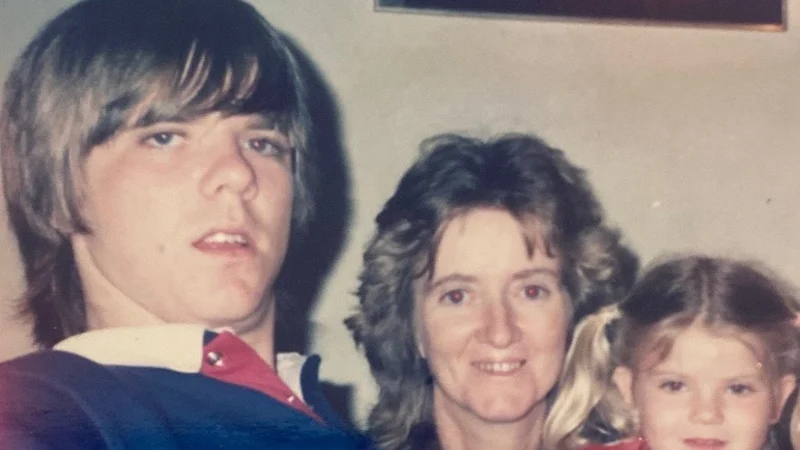
Raymond Flaherty as a young man pictured with his mother, Kaye Flaherty, and sister Carley.
But Victorian coroner Ingrid Giles, who examined the proud Wurundjeri man’s death, strongly suspected the “Xanax” tablets seized from his Fitzroy North unit were not what they seemed. Instead, they were part of a trend of synthetic benzodiazepines, or “street benzos”, which have been linked to a steady surge of accidental drug overdoses.
Giles directed the pills be forwarded to the Victorian Institute of Forensic Medicine for testing.
The institute found the Melbourne father of one had unknowingly consumed counterfeit Xanax tablets containing bromazolam, a powerful and potentially fatal sedative which has never been approved for medical use anywhere in the world.
No trace of alprazolam was detected in the tablets Flaherty had taken.
Flaherty was found dead in the living room of his flat by a neighbour.
In her findings, Giles demanded the state government take immediate action to address the emerging threat caused by a rise in counterfeit prescription pills flooding the illicit drug market.
“I consider that such circumstances raise unique and pressing public health risks which demand urgent attention by the secretary of the Victorian Department of Health,” she said.
Flaherty’s case comes as overdoses from fake or synthetic benzodiazepines soar. The first Victorian overdose death confirmed to involve such drugs occurred in 2015. There were 10 deaths linked to synthetic benzodiazepines in 2019. The figure was 40 in 2022, 33 in 2023, and 35 last year. Data for this year is still being collated by the Coroner’s Court.
Concerns about bromazolam are also rising around the country, following detection of the banned psychoactive substance in fake Xanax and Valium tablets, as well as traces of it in cocaine, leading to hospitalisations and deaths.
One person died and two people were hospitalised in NSW in January this year after taking cocaine found to contain bromazolam. In Canberra this year, bromazolam was also detected in a batch of fake benzodiazepine tablets, promoting a warning from health authorities.
To date, 16 different synthetic benzodiazepines have been identified as contributors to overdose deaths in Victoria.
Only days ago, the Victorian Pill Testing Service sent out an alert that heroin was detected in fake Xanax tablets.
Raymond Flaherty’s family have backed the recommendations from Giles, who called on the secretary of the Victorian Department of Health to commission the chief addiction medicine adviser to immediately investigate the risks posed by the expanding availability of illicit and fake benzodiazepines.
Flaherty’s sister Carley Flaherty said her older brother was deeply loved, proud of his Indigenous heritage, kind and funny, and had struggled to overcome drug addiction most of his life.
He adored his mother, Kaye Flaherty, and his dog, Munchie, a white and brown speckled papillon, who was always by his side.
“He was like a father figure to my youngest son and I looked up to him my whole life,” his sister said. “We are just so devastated.”
Flaherty (from left) with his mother, Kaye; his nephew Tye; sister Carley; and nephew Jack.
She said that in the months before his death, Raymond had distanced himself from his family and friends as he fell into the grips of another drug relapse.
Carley said the family had been distressed to learn after his death that he had been banned from his regular chemist because of erratic behaviour. This meant he had been unable to buy his prescribed batch of diazepam, commonly known by the brand name Valium.
“I think that may have been part of the reason as to why he went online to buy these pills,” she said.
A plan was arranged for a new pharmacy to dispense diazepam to him, but attempts to reach him by his longtime doctor failed.
His sister said that months after he died, the friend who found him dead in his Fitzroy North flat and had tried to revive him also died of an overdose after taking pills he had bought online.
“If me speaking out can help give people a better understanding of how horrible these drugs really are, and it can help save one person, then that will give me some comfort after losing Raymond,” she said.
Raymond Flaherty’s death was found to have been caused by a mixture of several drugs including heroin, antidepressants and the lethal effects of bromazolam found in the fake Xanax tablets.
Loading
Pennington Institute chief executive John Ryan said illicit benzodiazepines were rising in prominence in Australia, and around the world, and were increasingly being used recreationally or as antianxiety and sleep medication.
“It’s not only touching people who have been traditional consumers of illicit drugs, but it’s actually touching people from all walks of life,” Ryan said, adding there had been a worrying shift in people consuming fake pills as regulation tightened around prescription medication.
He said that because the pills were often labelled as diazepam or Xanax there could be a false sense of security, but in reality people had no idea of the danger of what they were consuming.
“It’s a Wild West market, and we’re very much flying blind as it is a relatively new but significant problem,” he said.
“The drug market keeps changing much quicker than the policy response. We’ve seen this massive increase in the availability of illicit benzos, and yet we haven’t seen an equal sort of reaction from the service system.”
Research from the Pennington Institute found benzodiazepines are fast becoming one of the leading contributors to overdoses nationally and are involved in more accidental deaths than alcohol, heroin or cocaine.
In her finding earlier this month, Giles, the coroner, called on the government to consider developing a health strategy to reach people using counterfeit benzodiazepines to educate them on the fatal risks.
She also urged the government to consult specialist services, including Reconnexion, Australia’s only specialist benzodiazepine dependency treatment program, which had its funding cut last year.
Loading
Earlier this year, it was revealed the number of Victorians dying of a drug overdose had soared to a 10-year high, in what support services described at the time as a watershed moment for the state’s drug policy.
The data showed 584 Victorians died from an overdose last year, an increase of 37 deaths compared with 2023.
A Victorian health department spokesman said the government was addressing drug harm by rolling out a $95 million statewide action plan to expand access to treatment.
“Overdose deaths are a terrible tragedy and we send our deepest condolences to Raymond Flaherty’s kin and community following his passing,” the spokesman said.
“We know that more needs to be done to save lives and give more people the support they need, and we will carefully consider the coroner’s finding and recommendations.”
Start the day with a summary of the day’s most important and interesting stories, analysis and insights. Sign up for our Morning Edition newsletter.