SINGAPORE – Touted as a “renewable fuel”, biomethane is one of the latest low-carbon fuels Singapore is looking into as it seeks to reduce emissions from its power sector.
In October, Singapore announced the
establishment of a regulatory sandbox
– a controlled environment where companies can test innovations under the supervision of a regulator – of up to 300MW to catalyse biomethane supply chain development and facilitate adoption by key industry players.
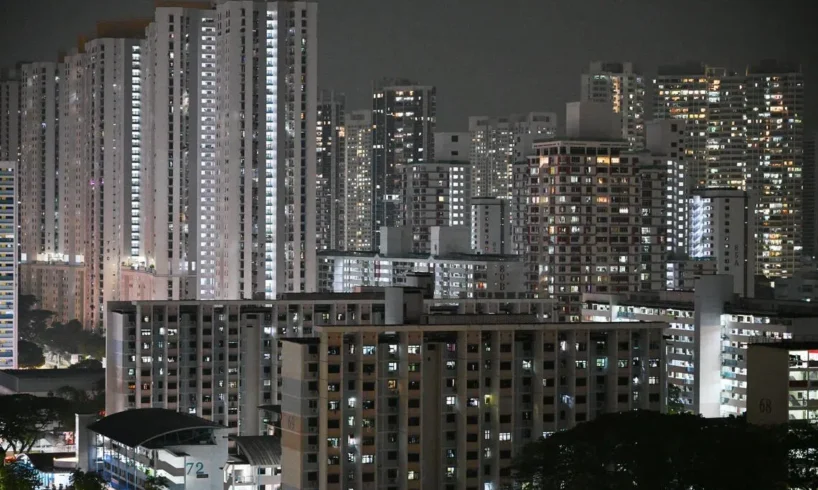
A 300MW capacity can supply the energy needs of around 600,000 HDB households.
The Straits Times explains what biomethane is and its role in energy transition.
Biomethane is a renewable, low-carbon gas produced from organic materials such as food waste, agricultural waste, animal manure and sewage sludge.
According to the International Energy Agency (IEA), it is mainly produced by upgrading biogas from organic waste in a process that removes carbon dioxide and other contaminants.
It is chemically identical to fossil-derived methane – the main component of natural gas.
Currently, Singapore relies on natural gas – a type of fossil fuel – for about 95 per cent of its electricity generation. The Republic’s power sector contributes 40 per cent of national emissions, as burning natural gas releases planet-warming emissions.
Because biomethane has a composition similar to natural gas, a key advantage is that it can be used within the existing natural gas infrastructure without costly retrofits. By contrast, using hydrogen or ammonia would require upgrades to existing plants.
Unlike natural gas, biomethane is considered to have a lower carbon footprint because the carbon it produces when burned is part of the natural carbon cycle, which would have been released into the atmosphere anyway through the process of decomposition.
If fossil-derived gas is used, new carbon is considered to have been “added” to the atmosphere.
Brazil and India are expected to be fast-growing producers due to new policy frameworks to help support biomethane production, said IEA.
IEA’s forecast showed that global biomethane production is expected to more than double by the end of the decade, largely driven by Europe and North America, with strong growth potential in Brazil and India.
China’s biogas and biomethane output is also expected to expand in the coming years as more newly installed capacity comes online, said another IEA report.
Meanwhile, South-east Asia also has high biomethane potential due to its large agricultural industry, particularly palm oil, rice, livestock and food processing, said Professor Zhou Yan from NTU’s School of Civil and Environmental Engineering.
For example, Malaysia and Indonesia have huge palm oil industries and palm oil waste, which is a good source of biomethane, she added. Methane gas is released during the processing of wastewater from palm oil production, among other sources, so the fuel only needs to be captured.
Experts have also said that South-east Asia has abundant biomass – organic material for biomethane – as plants grow year-round and dense plantations provide a concentrated feedstock supply.
As biomethane can be used in existing infrastructure, it can help to cut emissions in industries that use large amounts of natural gas for high-temperature processes such as petrochemical and refining, food manufacturing, semiconductors and electronics, as well as pharmaceuticals, said Prof Zhou.
With Singapore’s large bunkering sector, liquified biomethane could also be tapped as an alternative fuel in the maritime sector, said Ms Tan Sue-Ern, head of IEA’s regional cooperation centre in Singapore, although she noted that more supporting infrastructure would be needed to scale it up.
She also pointed out that producing biomethane can support circular economy goals by converting food and organic waste into usable energy.
The circular economy is one that focuses on designing waste out of the resource ecosystem and maximising the value of resources by keeping them in use for as long as possible.
Mr Shawn Woo, Asia-Pacific commercial lead at climate solutions provider 3Degrees, said that while biomethane will not replace the demand for natural gas, it can complement electrification and other low-carbon fuels by helping to decarbonise hard-to-abate sectors, where electrification is often not feasible or cost-effective.
Hard-to-abate sectors include industries like chemicals, aviation and shipping, which are difficult to decarbonise because they rely heavily on fossil fuels for high heat or chemical processes.
Currently, biomethane remains more expensive than conventional natural gas, experts said.
For example, the collection and preparation of raw materials for biomethane are costly because they can be logistically complex and require a lot of resources, said Prof Zhou.
Existing biomethane upgrading technologies also contribute significantly to overall costs as they remain technologically advanced and expensive to deploy, she added.
However, while the technologies may be more expensive than conventional ones now, the price gap will narrow when environmental and social benefits are included, said Mr Woo.
As with any emerging low-carbon fuel, scaling up biomethane will require supportive regulations, clear standards and commercially viable pathways, he added.
In South-east Asia, current production remains small, while policy and regulatory support is still underdeveloped, said Ms Tan.
However, she noted that the regulatory sandbox announced in October is an important first step to test commercial models, standards and cross-border supply chains before scaling.