Shafaq News
Kirkuk bears the weight of Iraq’s history, where the plains
of Mesopotamia meet the foothills of Kurdistan. Known as “Iraq in miniature,”
the province is home to Kurds, Arabs, Turkmen, and Assyrians — communities
intertwined by culture yet divided by politics.
Here, coexistence and division sit side by side, shaping a
city whose story reflects the complexities of the nation itself.
“Kirkuk is not just a city; it is Iraq’s soul compressed
into one place,” reflected Dr. Omar Mahmoud, professor of history at the
University of Kirkuk, in remarks to Shafaq News.
Soil and Strife
Positioned 250 kilometers north of Baghdad, Kirkuk covers
nearly 10,000 square kilometers, linking the Kurdish mountains to the Arab
heartland and the Turkmen plains. This geography has long been a source of both
wealth and vulnerability, placing the province at the center of competing
ambitions across centuries.
Its landscape combines fertile plains watered by tributaries
such as the Little Zab with the rugged Zagros foothills. Summers blaze past
40°C, winters occasionally bring snow, and agriculture has shaped life for
generations. Fields still yield wheat, barley, cotton, and sunflowers, while
orchards produce figs and pomegranates.
But farming no longer sustains Kirkuk as it once did.
Irrigation networks have decayed, costs have climbed, and government backing
remains thin. In Laylan, wheat farmer Ali Khorsheed reflected that “Our fathers
lived from wheat and barley; today, we barely manage because everything is tied
to oil. Agriculture here has been left behind, even though this land could feed
thousands.”
Despite hardship, the harvest each year paints the plains
gold, a reminder that beneath disputes and oil wealth lies land that has
nourished civilizations for millennia.
History’s Crucible
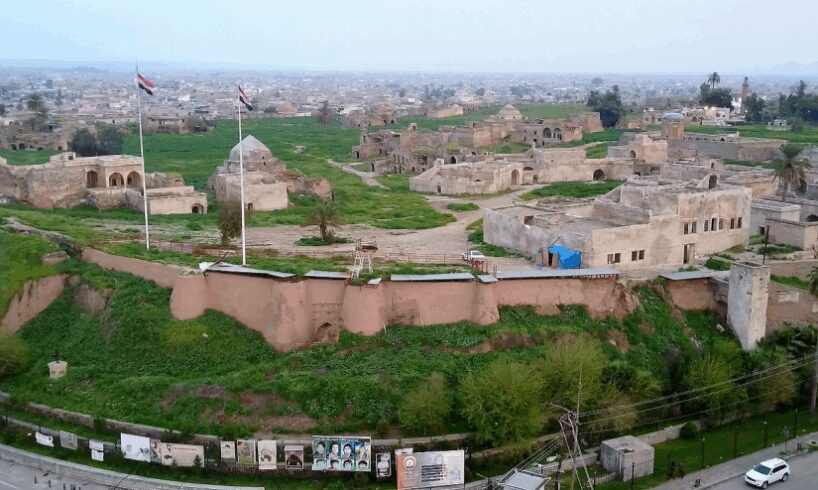
Kirkuk’s past reaches deep into antiquity. Known as Arrapha
in the 9th century BCE, it served as a prominent Assyrian city. Over time,
Babylonian and Median influences left their traces, while its citadel has been
inhabited for nearly 5,000 years — a living monument to continuity. Persian
rule, Greek conquest, Arab caliphates, and Ottoman administration each layered
new chapters onto its identity.
“The Citadel of Kirkuk is older than most cities in the
world, but it suffers neglect. If we cared for it properly, it would tell the
full story of who we are,” archaeologist Rawa Fattah explained to Shafaq News.
During the Ottoman period, Kirkuk formed part of the Mosul
Vilayet, thriving as a commercial and administrative hub. A dramatic shift came
in 1927 with the discovery of oil at Baba Gurgur, where flames burst from the
ground in what locals called an “eternal fire.”
In the 1970s and 1980s, Baathist Arabization uprooted
Kurdish and Turkmen families and replaced them with Arab settlers. Villages
were razed, wounds that still shape community relations.
The fall of Saddam Hussein in 2003 sharpened disputes.
Article 140 of the constitution promised a referendum on whether Kirkuk would
join the Kurdistan Region or remain under Baghdad’s authority, but the vote
never took place. Kurdish Peshmerga defended the city during the ISIS advance
in 2014, only to withdraw in 2017 when Iraqi forces reasserted control.
Coexistence in Conflict
“Kirkuk is like a mirror of Iraq. We have Kurds, Arabs,
Turkmen, and Christians,” shared Sheikh Mahmoud al-Obaidi, an Arab tribal
leader, with Shafaq News.
Today, the province is home to around 1.7 million people,
including Assyrians, Chaldeans, and Armenians. Each community claims deep
roots: Kurds through surrounding villages, Turkmen through Seljuk and Ottoman
heritage, Arabs through earlier migrations and Baathist-era resettlements.
These overlapping histories often fuel political rivalry but also weave a rich
cultural fabric.
Religious diversity mirrors the ethnic one. Most residents
are Muslim — Sunni and Shia alike across ethnic lines — while Christians
maintain ancient churches and the Kaka’i (Yarsani) preserve distinct spiritual
traditions. Languages overlap in everyday life: Kurdish (Sorani), Arabic, and
Turkmen mingle in markets, schools, and homes.
Tensions linger from decades of Arabization, displacement,
and political competition. Yet the rhythm of daily life often leans toward
coexistence — in shared meals, multilingual conversations at bazaars, and
festivals where songs and traditions merge.
Black Gold’s Burden
Kirkuk’s name is almost synonymous with oil. Baba Gurgur’s
discovery in 1927 marked a turning point not only for the city but for Iraq
itself. Its flames, visible for kilometers, became a symbol of untapped wealth.
From then on, Kirkuk’s crude flowed north through pipelines to Turkiye’s port
of Ceyhan and south to central Iraq.
With reserves of around 9 billion barrels, Kirkuk remains
one of Iraq’s strategic energy hubs. Production peaked above 1 million barrels
per day in the 1970s but has since declined due to conflict, sabotage, and
underinvestment. Current output swings between 250,000 and 400,000 barrels
daily, depending on political agreements and technical capacity.
After 2003, revenues were often routed through the Kurdistan
Region, sparking disputes with Baghdad. Following the 2017 Kurdish independence
referendum, federal forces retook the oil fields. Yet authority remains
contested, with periodic shutdowns of the Kirkuk–Ceyhan pipeline underscoring
the fragility of arrangements.
Outside oil, Kirkuk once boasted thriving agriculture and
light industries — carpet weaving, food processing, and construction materials
among them. These sectors have steadily declined, leaving unemployment at
12–15%, above Iraq’s national average.
Arts of Endurance
If oil defines Kirkuk’s material wealth, its cultural
diversity defines its identity. The province has long nurtured poets,
musicians, and artists across all communities, producing a mosaic of traditions
that remains vibrant despite political fractures.
Turkmen folk songs, mournful and melodic, are cherished
across Iraq, carrying themes of exile and love for the land. Kurdish poets such
as Jamil Sidqi al-Zahawi drew inspiration from Kirkuk’s landscapes, while Arab
writers contributed to its reputation as a literary crossroads.
Visual artists blend folkloric motifs with modernist
influences, while traditional crafts such as carpet weaving and embroidery
preserve the distinct patterns of each community, binding past to present.
Education has also been central to the province’s
development. Kirkuk University, established in 2003, houses faculties in
engineering, medicine, arts, and law. But limited funding, rapid population
growth, and disputes over language and curricula strain the system.
Literacy rates remain relatively high, yet many graduates
struggle to find jobs in a labor market still dominated by oil.
Looking ahead, Kirkuk’s future rests on how its people and
leaders manage these contradictions. Geography, resources, and culture give the
province unmatched potential, but political disputes and uneven development
continue to shadow its prospects.
“Kirkuk’s story is still being written. It can be a story of
unity and resilience — if its people are given the chance to shape it
together,” observed Hassan Toran, a Turkmen politician.
Written and edited by Shafaq News staff.