Nairobi has long been celebrated as the “Silicon Savannah” where technology and entrepreneurship converge.
And for the last eight weeks running up to December 19, 2025, the city has been hosting a new wave of innovators in a high-level mentorship programme designed to transform promising startups into scalable businesses.
Through the 500 Global Sustainable Innovation Seed Accelerator programme, selected startups in the country will gain mentorship, funding access and global networks through the programme that is part of the UNDP Timbuktoo Initiative.
Follow The Standard
channel
on WhatsApp
It aims to nurture Africa’s next generation of entrepreneurs.
The programme has brought on 15 companies in Africa that are developing technology-enabled approaches, especially in the agriculture, mobility, and energy sectors. Half of these are based in Kenya.
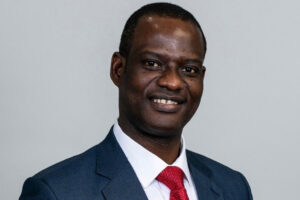
“Within Africa, Nairobi offers a healthy mix of talent, connectivity and startup energy, the key elements that attract venture capitalists to the country,” says Allan Mwangi, 500 Global programme manager.
“Kenya has a robust mobile money culture that requires little adaptation, and that’s why between 80-90 per cent of venture capitalist funds to Africa are invested in the country.”
Among the Kenyan startups in the programme is VunaPay, a platform for agricultural cooperatives that facilitates instant payment to smallholder farmers for produce delivered to cooperatives.
According to the co-founder and chief executive Gatwiri Njogu-Mokaya, 70 per cent of Africans are smallholder farmers who sell their produce through the cooperative movement and who have to wait for six months to one year before getting paid.
To sustain their daily lives, such farmers often rely on predatory loans while losing close to 70 per cent of their product value to middlemen.
“We realised that nobody is willing to pay farmers upfront for their produce, and such farmers end up selling the produce to middlemen on the side. By partnering with financial institutions, we have created a system where such farmers can be paid for their produce instantly,” says Gatwiri.
Currently, the payment programme targeting coffee, dairy, maize and bananas is working with 137 cooperatives in 14 counties with 120,000 farmers.
Gatwiri has already raised $750,000 (Sh97.5 million) through a mix of equity, grant and debt financing but is looking to raise $2 million (Sh260 million) by mid next year and increase farmer listing to 250,000 while developing a payment engine to increase margins by 20 per cent.
“Being selected for the seed accelerator programme means we have access to international best practices that will help us in scalability and streamlining governance structures. Such visibility will no doubt attract investors,” she says.
Stay informed. Subscribe to our newsletter
Quinter Ochieng, founder and director of Chargebyte, Kenya’s first AI-powered solar charging network, says she was inspired to design and manufacture hybrid charging and connectivity stations by the government’s resolve to equip schools with digital gadgets.
Her ‘made in Africa’ solution was meant to power devices and fuel education, business and communities that live off-grid and thus reduce the energy and digital access gap.
According to Ochieng, Africa’s current mobile users, now standing at 950 million, are set to increase to 1.2 billion within the next five years, and will be faced with critical power gaps, with 48 per cent experiencing daily power outages and disrupting lives.
With revenues clocking $8,000 (Sh1.03 million) monthly, Ochieng feels that securing $500,000 (Sh64.3 million) pre seed money will take Chargebyte’s revenues to between $30,000 (Sh3.8 million) and $50,000 (Sh6.4 million) per month and thus expand into low-density and underserved regions—rural markets, clinics, schools, transport hubs and religious centres.
“We knew we had the right product, but convincing financiers is easier said than done,” she says. “I can show you 288 pitches on Excel sheets. I only got feedback from 12 of those. I almost gave up.”
In 2025, Ochieng received $100,000 (Sh12.8 million) grant money; $50,000 (Sh6.4 million) from Giga UNICEF to connect schools and $50,000 (Sh6.4 million) from Spirit Wealth to develop end-to-end solar-powered devices with voice commands that will help her scale up.
While investors seem to be turning a spotlight on local startups, unfavourable government taxation policies may hinder or discourage entrepreneurs from entering the market.
For example, excise duties on digital transactions may raise costs for startups, which may find it hard to operate at par with established enterprises.
In addition, startups thrive on experimentation, and when high taxation eats into limited budgets, founders may avoid entering into risky but potentially groundbreaking ventures and slow down the country’s position as a top innovation hub on the continent.
“We could do better in promoting favourable business policies and improving Kenya’s tax regime,” says Billy Mwangi, co-founder and chief operating officer at E-Moti, a startup building a smart urban mobility platform through a combination of proprietary software and wet-leasing electric buses and vans.
E-Moti seeks to raise $200,000 (Sh25.7 million) in equity with a focus on technology development and streamlining the sales pipeline.
According to Demola Adegbite, 500 Global Partner and who leads the fund initiatives for Africa, the continent’s pressing needs create opportunities for technological solutions that can attract venture capital funding despite the concerns of the continent’s higher risk profile in comparison to other regions.
“Despite the different regulations on the continent, we must amplify our success stories and create more data points where venture capitalists can draw on information. Successful founders can also tell their stories to inspire others,” says Adegbite.
He adds that startups creating climate technology solutions have a head start since the Kenyan government has clearly pronounced itself in this field.
“Founders must look at the local opportunities, especially in the climate sector, while working with mentors with a global perspective,” he says.
500 Global, headquartered in Silicon Valley, is one of the leading venture capital firms with $2.3 billion in assets under management (AUM).
It backs early-stage companies worldwide, helping them scale through capital, expertise and connections. In Africa, the firm has invested in over 100 companies.
Follow The Standard
channel
on WhatsApp