There may be no stranger duo on the expanding stage of the global right than Chile’s president-elect José Antonio Kast and Argentina’s libertarian firebrand Javier Milei. Kast, a strict Catholic father of nine, appears with every hair in place, a tie knotted with precision. Lifelong bachelor Milei bursts in sporting a black leather jacket and an unruly mane.
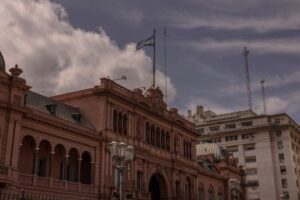
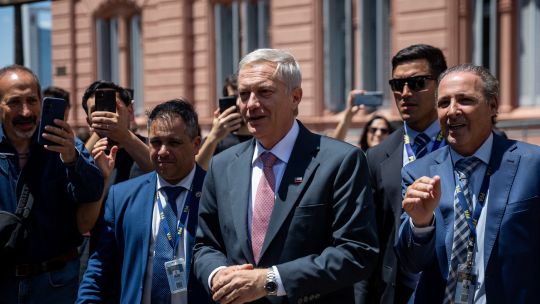
Just two days after trouncing the left in a run-off election, Kast flew across the Andes to Buenos Aires at 7.15am local time to meet with Milei at the Casa Rosada, Argentina’s presidential palace. Kast’s first foreign trip seals the pair’s ideological alliance that’s tied to conservative movements in Washington, Madrid and Budapest.
The visit’s exceptionally early timing, almost three months before Kast takes office, transcends the tradition of Chilean presidents-elect or newly sworn-in presidents to make Argentina their first international stop. Aside from shared dogma, the meeting illustrates Kast’s intent to deepen a US$7.7-billion trade relationship, harnessing Argentina’s rapidly recovering economy to help reinvigorate Chile’s own.
Milei is eagerly embracing Chile’s next president as another partner in a right-wing project he sees himself as commanding across the region. The country’s legacy as a free-market bastion once tutored by University of Chicago libertarian guru Milton Friedman is an ideological touchstone.
“Freedom advances,” Milei posted on X Sunday night, in all caps, adding he felt “enormous joy over the overwhelming victory of my friend José Antonio Kast in Chile’s presidential election.”
Before boarding his flight on Tuesday morning, the soft-spoken Kast struck a more practical tone. “We have the longest borders with Argentina, much history unites us and we want to improve it,” he said. “Together we can forge a big hub of development for South America.”
Shortly after Kast arrived in Buenos Aires a few hours later, Argentina’s Economy Minister Luis Caputo said Chile’s next president may have offered a position in his incoming government to Milei’s Economic Policy Secretary José Luis Daza. The Chilean-born former JPMorgan executive previously advised Kast during his unsuccessful 2021 campaign.
After walking out of the Casa Rosada around 2pm local time, Kast was coy when questioned about Daza, saying that announcements would be made in good time. “Everything is going to be fine, and we’re going to have a very good relationship between Argentina and Chile.”
Before his flight on Tuesday morning, he had acknowledged he would meet with Daza but “not because we want to offer him anything concrete, but because we want to talk about how Argentina’s economic recovery has been.”
He had said the Chilean delegation is “looking for an array of conversations, in business, in industrialisation,” noting in particular that Argentina could export its growing minerals supply through Chilean ports. Business executives have also floated the possibility of exporting Argentine gas through Chile.
Kast was accompanied by his top economic adviser, Jorge Quiroz, the heads of Chile’s two main business chambers and two finance executives, Quiñenco SA Chief Executive Officer Francisco Pérez Mackenna and Bicecorp SA President Luis Felipe Gazitúa. Spokesperson Mara Sedini said the delegation planned meetings with Argentine banking, agriculture and fishing industry executives.
Tense history
Despite the growing free-market alignment, Kast and Milei, like their respective countries, aren’t cut from the same cloth.
Military foxholes and landmines that dot parts of southern Chile attest to historic tensions. The two nearly went to war over a disputed border in 1978, a chapter depicted in the 2005 film Mi mejor enemigo (“My Best Enemy”).
Economically, Argentina has cycled through one crisis after another for decades, and shut off critical gas supply to Chile in 2004 when it could no longer produce enough at heavily subsidised prices at home. With less than half of Argentina’s population and higher per capita income, Chile is known for 35 years of political and economic stability.
Those differences are projected onto the two men now bound by a more than 5,000-kilometre (3,107 mile) border and the imposing Andes mountain range.
On paper, Kast and Milei champion the same agenda: cut spending, stamp out inefficient bureaucracies, slash regulations. But their styles couldn’t be more different. One prays in gratitude after his election victory, while the other gifts Elon Musk a chainsaw.
“Kast is more radical than populist. He definitely has a populist streak, but at the same time he has a very establishment platform and style – very traditionally Chilean,” said University of Maryland politics professor Giancarlo Visconti. “In no way does he resemble Milei or Bolsonaro in his performance or cultural style.”
Milei has repeatedly positioned himself as part of a new global crop of right-wing leaders. He traveled to Spain not to meet Prime Minister Pedro Sánchez but instead to attend rallies of the far-right Vox party. He showed up at gatherings of US Conservative Political Action Committee (CPAC) across the Americas, and even in Brazil after snubbing President Luiz Inácio Lula da Silva. Milei also came to Chile’s capital Santiago in a private visit with the elite business community last year, skipping a meeting with unpopular leftist President Gabriel Boric.
Internationally, Kast has orbited in more Christian nationalist circles. At CPAC in Budapest in May, he echoed Viktor Orbán’s hard line on undocumented immigrants and pro-natalist views. He has also aligned himself with tough-on-crime leaders in the region, touring Salvadoran President Nayib Bukele’s mega-prison and defending Brazil’s former president and convicted coup-plotter Jair Bolsonaro.
To be sure, Kast’s victory reinforces a wider regional lurch to the right, with Milei notching midterm gains in Argentina and Rodrigo Paz ending 20 years of socialist dominance in Bolivia. The trend will face fresh electoral tests next year as voters in Peru, Colombia and Brazil head to the polls.
Kast is unlikely to enjoy the long political runway Milei has had. Argentine voters were exhausted by entrenched Peronism and years of economic mismanagement that they stuck with Milei through the midterms despite frustrations over crime and the economy.
In contrast, Kast is taking over a politically and economically steady country where troubles, while serious, are nowhere near as deep.
On a cultural level, Chileans and Argentines often tease each other over whose wine is finer and who plays better football. After Chile beat Argentina twice in the Copa América, Chileans claimed rare bragging rights over a nation of legends like Diego Maradona and Lionel Messi. Chileans dance the folkloric cueca, while Argentines swoon to the tango.
After Kast flies home Tuesday night, his supporters and detractors alike will be waiting to see who he names to his cabinet. Like Milei, he plans to have a smaller one.
by Antonia Mufarech & Carolina Gonzalez, Bloomberg