DHAKA –
Clothes destined for Europe could soon require digital passports to prove their green credentials, opening a new era of transparency for the world’s $1.7 trillion fashion industry.
Consumers will be able to scan QR codes or electronic tags to see the garments’ digital product passports (DPPs) and check if a fashion brand’s green claims are true.
The passports will tell consumers what the clothes are made of, how much energy, water and chemicals were used to make them, and who took part in each stage of their production.
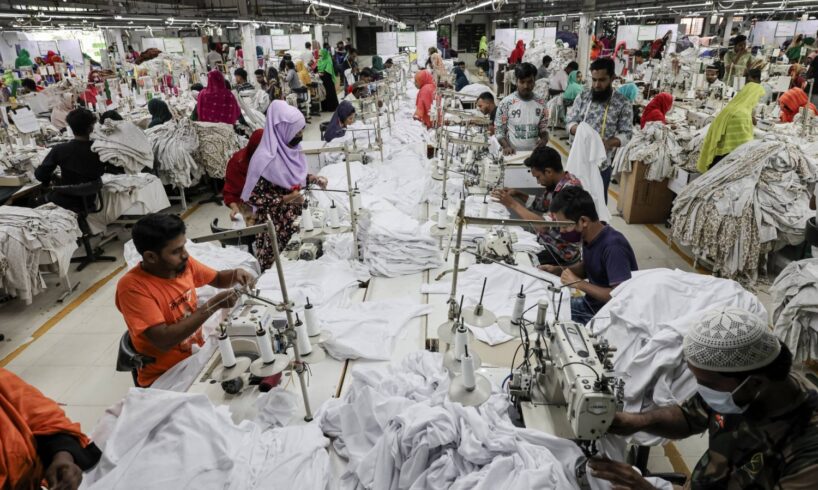
Textile suppliers from Bangladesh, the world’s second-largest apparel exporter, may need to implement an initial version of the passport as early as 2027, according to analysis by the European Parliamentary Research Service.
“As consumers place a higher premium on sustainability and transparency, the digital product passport could be a key tool to provide granular records about the environmental footprint of each piece of cloth — starting from the cotton field to finished garment,” said Asif Ibrahim, vice chairman of the Dhaka-based apparel manufacturing company Newage Group of Industries.
But Ibrahim said smaller manufacturers were far from ready to fulfill the stringent, new European Union needs, which aim to stop manufacturers overclaiming their green credentials.
From payroll information to material certifications, fashion makers already provide reams of data about labor and environmental standards to meet buyers’ requirements and audits.
Yet a 2023 report by British-based nongovernmental organization Greenpeace said some brands and suppliers had misled consumers — for instance highlighting their recycling record, even if most of the “recycled” fiber came from plastic bottles not textile scraps.
“Providing authentic and traceable data from across the supply chain is key to stop the problem of greenwashing,” said Rezwan Ahmed, CEO of Aus Bangla Jutex, a company producing bags, caps and aprons from recycled and organic cotton.
Bangladeshi suppliers have already started working with technology companies to get ready for the changes.
Ahmed has partnered with Aware, a Dutch firm working with several fashion suppliers, using decentralized blockchain to record relevant data as fabric becomes a finished garment.
A manufacturer inputs key pieces of data — perhaps yarn count, water consumption or color — and Aware’s blockchain-based platform then generates a QR code for consumers. “The manufacturers will have control over what they disclose to their brands and consumers — as we want to give the manufacturers ownership of data,” said Md. Muyeed Hasan, Bangladesh country manager at Aware.
Cotton ginners, washers and dye factories, as well as the makers of finished garments, will all upload any relevant data and certificates to their digital profiles, then must add details about each batch of production in real time.
Claims about energy and water usage will be verified by third parties, he told the Thomson Reuters Foundation.
The passport may require Bangladesh’s smaller garment makers to upgrade their hardware and software capacity as well as how they manage their data, said Ibrahim from the Newage Group.
Smaller manufacturers make up a large share of Bangladesh’s roughly 3,320 export-oriented apparel factories, according to Mapped in Bangladesh, a project developed by BRAC University in the Bangladeshi capital.
British-based DigiProdPass has partnered with Bangladesh’s garment manufacturers’ association BGMEA to help smaller producers meet the new passport requirements.
Salauddin Sohag, managing director of DigiProdPass, said his company is rolling out pilot studies and plans to train smaller businesses to help them adapt.
“Suppliers will need support from global fashion brands and development organizations to upgrade their capacity — while the government should incentivize the early adopters,” said Ibrahim.