Green Party councillors questioned Warwickshire County Council over behind-closed-doors debate on the overdue and over-budget Stoneleigh Junction project
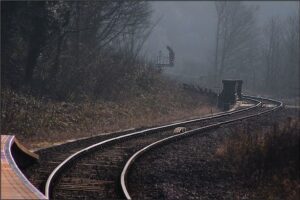
The A46 Stoneleigh junction .
Councillors resisted but were nonetheless compelled into a confidential vote on the future of Warwickshire County Council’s ill-starred ‘Bridge to Nowhere’.
Green Party group leader, Councillor Jonathan Chilvers (Leamington Brunswick), and his colleague, Councillor Keith Kondakor (Weddington), attempted to question whether the entire update on the delayed and over-budget road capacity works over the A46 at Stoneleigh Junction should be discussed in a private session.
Cllr Chilvers was refused permission to speak and Cllr Kondakor was twice prevented from raising a point of order by chair Councillor Ed Harris (Reform UK, Baddesley & Dordon), decisions he made following cues from chief executive Monica Fogarty.
Read more: Coventry named one of the most dangerous places in England as scores of crimes reported
Read more: Warning over new unemployment figures as business leader warns of ‘tidal wave’
Traditionally, all councillors are asked to approve going into a private session before asking members of the public and press to leave, and it almost always gets passed without opposition.
Some hands were raised to move it into a private session, but many councillors hesitated, with neither Cllr Harris, Ms Fogarty nor monitoring officer Sarah Duxbury – the county council’s most senior legal official – announcing that the vote had been carried.
Ms Fogarty later prompted Cllr Harris to state there would be no vote and the public and press were asked to leave.
The Green pair subsequently informed the Local Democracy Reporting Service that they never intended to discuss commercially sensitive matters in public. However, they argued that updates on the project and discussions about the knock-on effects of the project already being significantly over budget should not be concealed.
The council has confirmed that a private vote means the project will continue from January 2026.
What’s the dispute about?
It concerns the currently disconnected bridge spanning the A46 at Stoneleigh Junction, near Kenilworth.
Issues related to a lack of available material for the accesses and subsequent cost overruns led to a redesign of the scheme, pushing back the completion date to summer 2027 – five years later than planned.
The last published estimated cost of £57 million is more than two-and-a-half times the £21 million suggested when the project was initially advanced by a Conservative cabinet in 2016 and 50 per cent more than the £38 million quoted when more detailed plans were approved.
The £38 million was assembled by a mix of funding partners, but Warwickshire County Council is solely responsible for every penny spent beyond that.
The vote that never happened….
Cllr Harris introduced the exclusion of public and press as he usually would, with Cllr Chilvers and Cllr Kondakor raising their hands.
The council’s livestream reveals Ms Fogarty shaking her head towards them, prompting Cllr Kondakor to request making a point of order whilst Cllr Chilvers enquired if he could “speak on this briefly”.
Cllr Harris’s microphone captured Ms Fogarty’s instruction for him to state there would be “no provision for speaking”.
When Cllr Kondakor attempted again to raise a point of order, Ms Fogarty was heard telling Cllr Harris “there is no point of order”, which he duly repeated.
The council’s standing order 6.8 specifies that “an elected member may raise a point of order at any time” but that it “may only relate to an alleged breach of these standing orders or the law”. It further stipulates that “the elected member must cite the rule or law and the way in which they consider it has been broken”.
Cllr Kondakor wasn’t given this chance.
Ms Fogarty then directed Cllr Harris to “ask the council if they approve the exclusion”, which he proceeded to do, adding: “All in favour, yes? Do you agree with the statement and exclusion of the press and public?”.
Cllr Kondakor enquired: “Could we wait a moment?”.
At this juncture, leader Councillor George Finch (Reform UK, Bedworth Central) interjected: “Why? Why are we waiting? We’ve never done that before.”
Ms Fogarty then rose to address the gathering. “Councillors, to be clear there is no provision for a debate. It is simply to ask councillors to agree with the statement,” she declared.
Cllr Kondakor responded: “But we have the option of not agreeing. We should be able to explain why we don’t agree.”
Ms Fogarty replied: “There is no such provision to not agree. It has been published on the agenda as an exempt item and this is simply a procedural matter to exclude the press and public, that is all.”
Whispers persisted with Cllr Harris, seemingly referencing a ballot, declaring it would be a “straightforward for and against”, though his microphone captured Ms Fogarty stating: “There is no vote.”
Cllr Harris clarified: “There is no vote required, so essentially we are asking the press and public if they wouldn’t mind leaving at this point.”
Was the council justified?
The authority has invoked commercial confidentiality throughout its lengthy discussions with contractors Colas.
Earlier this year, the then-portfolio holder for finance and property Peter Butlin accidentally revealed that an additional £16 million had been allocated for cost escalations, effectively exposing the council’s position to contractors who determine pricing. His later recognition of the mistake and public apology was widely accepted by fellow councillors from the previous administration.
Commercial confidentiality ranks amongst legitimate grounds for conducting such matters behind closed doors, provided “in all the circumstances of the case, the public interest in maintaining the exemption outweighs the public interest in disclosing the information”. Nevertheless, briefings on non-financial aspects are also taking place in private sessions, an issue the Local Democracy Reporting Service highlighted with Warwickshire County Council last month.
A council spokesperson stated: “The project is still subject to the restraints of commercial sensitivity so at this stage it remains inappropriate to discuss it in public. We are working towards providing public updates as soon as we are able to.”
Yet this came alongside revelations that specialist rock cutting equipment had already been positioned to resume operations in the new year, well ahead of Tuesday’s discussion and resolution.
The authority was questioned about why such developments hadn’t been shared during open meetings and what thought had been given to conducting certain elements publicly whilst keeping others confidential. That enquiry was made over a fortnight ago with no reply forthcoming.
Cllr Kondakor subsequently informed the Local Democracy Reporting Service: “If we are doing things in confidence, that should at least be voted on in public – it’s not like all councillors are happy with the stuff that’s happening.
“The rock cutters – who was told about that? We need some public statements so councillors know where the line is on what they can talk about.”
‘Catastrophe’.
Cllr Chilvers, who stayed for the closed-door discussion and verified a ballot had taken place, commented: “This whole project is a massive disaster and it is so big that it has a knock-on impact to the rest of the county’s finances.
“It means that some of the schemes in each individual areas or towns, like keeping areas around schools safe, might not happen.
“The public deserves to have some insight into something of this scale. Some of this has to be confidential because we are still negotiating with contractors but some of this should have been in the public domain.”
When asked which elements should have been heard publicly, Cllr Chilvers replied: “The general knock-on impact for the public’s finances.
“There were hints of it in the statement of accounts for 2024-25, something that was in the public domain. It named a figure of an outstanding £13 million in accounting terms, we know that figure is no longer accurate but we can’t say what it is.”
Cllr Chilvers confirmed he was unable to talk about what he had voted on.
However, decisions costing less than £2 million do not have to go to full council votes, they can be signed off by cabinet members – the Reform UK councillors in charge of major service areas.
Cllr Chilvers said: “This confidential report would not be coming forward if all of this was still hunky-dory.
“We saw that in March when the previous administration let out the £57 million figure. Originally this project was £22 million, then it was £23 million, then £30 million, then it was £57 million. Who knows what it will end up as?”.
“It is right that some of this is confidential, we want to get the best value from the contractor. I don’t have a problem with some of it but we could look at the general principles of what is going on here, the magnitude of spend and the knock-on effect it has on other areas of the council.”
Get daily headlines and breaking news emailed to you – it’s FREE