2025-12-21T08:49:45+00:00
font
Enable Reading Mode
A-
A
A+
Shafaq News
Two years after Iraq reinstated its
provincial councils, the bodies are again facing criticism over whether they
retain the authority needed to improve services, oversee spending, or hold
local officials to account.
The councils resumed work in early 2024
following elections held in December 2023, ending a four-year suspension that
began after mass protests in 2019 accused them of corruption and
ineffectiveness. Their return was framed by lawmakers as a revival of decentralized
governance and a way to bring decision-making closer to citizens.
Under Iraq’s constitution, provincial
councils are elected local authorities with administrative, financial, and
oversight powers. In practice, however, their role has been sharply narrowed;
legal amendments adopted after the councils were dissolved stripped them of key
oversight tools, particularly the authority to question or monitor federal
ministries operating at the provincial level.
Those changes, council members and legal
experts agree, have left the bodies responsible for local outcomes without the
means to enforce decisions. A member of Baghdad’s provincial council said the
body can allocate funds to the capital’s municipality but has no legal right to
oversee projects or spending, because the municipality operates under a
separate law beyond the council’s reach.
The imbalance is not limited to Baghdad.
Across several provinces, councils now issue recommendations rather than
binding decisions, weakening their ability to influence service delivery or
intervene when projects stall. Governors and federal ministries retain
effective control over budgets and execution, blurring lines of accountability.
Political analyst Abbas Al-Jubouri told
Shafaq News that the return of the councils has not translated into measurable
improvements. Provinces functioned for years without them, he said, and their
reinstatement has added an extra bureaucratic layer without resolving core
service failures. “The structure exists, but the impact does not.”
A legal expert argued that the problem
lies in implementation rather than existence. Ali Al-Tamimi, a constitutional
lawyer, told our agency that provincial councils remain protected under Article
122 of the constitution, which defines them as independent local authorities.
Weakening or abolishing them outright, he explained, would require
constitutional amendments rather than ordinary legislation.
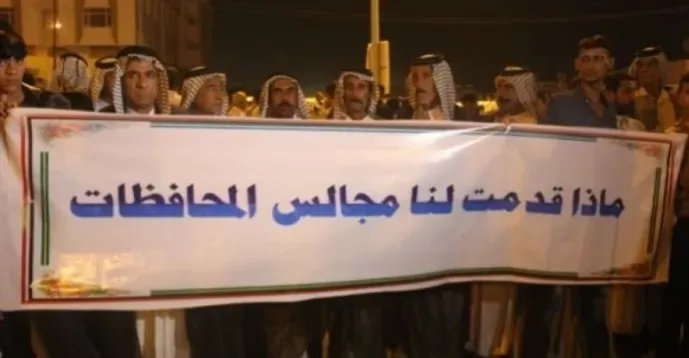
Regardless, public frustration has grown
as infrastructure failures persist. Recent flooding and service disruptions in
provinces including Babil and Al-Diwaniyah have exposed confusion over who
bears responsibility, with councils, governors, and ministries each pointing to
legal limits on their authority.
Council members and officials also cite
political quota systems, slow investigations by integrity bodies, and continued
centralization of fiscal power as obstacles that further erode local oversight.
While councils serve four-year terms, critics say their current mandate risks
expiring without meaningful reform.
As the councils reach the midpoint of
their term, this debate – over whether their powers should be restored,
redefined, or curtailed again – is not yet done.
Read more: Iraq’s Provincial Councils: Dysfunctional return deepens public disillusionment
Written and edited by Shafaq News staff.