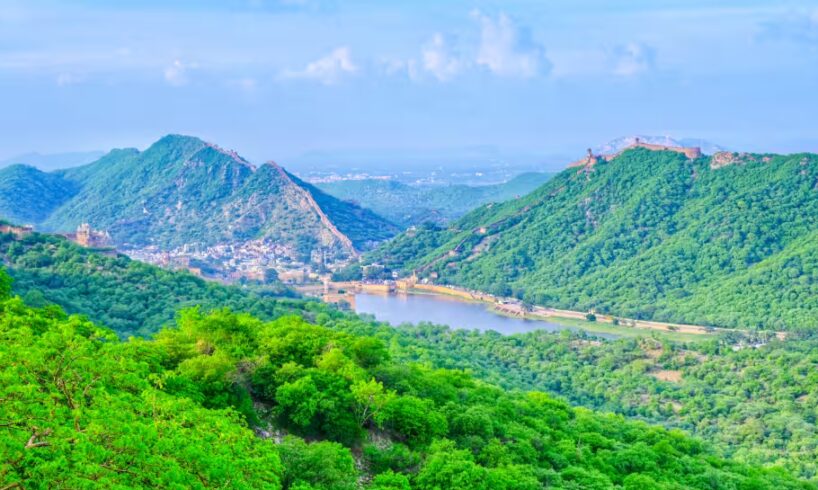
The Aravalli Hills, one of the world’s oldest mountain ranges and a critical ecological buffer for north India, have become the focus of an intense debate following a recent Supreme Court observation on how the range should be defined. What the Centre describes as a technical clarification has triggered fears of expanded mining, sparked political confrontation, and fuelled widespread outrage on social media.
At the centre of the controversy lies a fundamental question: what constitutes the Aravalli Hills?
Supreme Court Seeks Clarity
Add Zee News as a Preferred Source
The issue arose from a Supreme Court observation made weeks ago, in which the court called for a clearer and scientifically consistent definition of the Aravalli Hills and the Aravalli Range. It noted that varying descriptions over the years had created confusion in environmental regulation, land-use planning, and efforts to curb illegal mining.
Referring to globally accepted geological standards, including a definition attributed to geologist Richard Murphy, the court observed that a hill or mountain is typically identified as a landform rising 100 metres above the surrounding terrain. The court accepted this criterion, which had been supported by the Centre.
Environmental groups warned that defining the Aravallis solely based on height could exclude vast areas, particularly in Haryana and Rajasthan, from environmental protection. They argue this could leave large tracts vulnerable to mining, real estate development, and infrastructure projects.
Why The Aravallis Matter
Extending across Gujarat, Rajasthan, Haryana, and Delhi, the Aravalli range plays a vital ecological role. It acts as a natural barrier against desertification, slows the spread of the Thar Desert, helps recharge groundwater, and moderates air pollution in the National Capital Region.
Environmentalists point out that decades of legal and illegal mining have already degraded the range. Any dilution of safeguards, they say, could accelerate biodiversity loss, worsen air quality in Delhi-NCR, and deepen water scarcity in an already stressed region.
#SaveAravalli Gains Momentum
Public concern spilled over onto social media, with the hashtag #SaveAravalli gaining traction as activists, lawyers, and environmental organisations accused the government of weakening protections through technical definitions rather than overt policy changes.
Online campaigns, including videos, posts, and profile picture changes, helped turn the issue into a national talking point. Many users warned that damage to the Aravallis would be irreversible and urged immediate action.
Political Sparring Intensifies
The uproar drew sharp political responses. Former Rajasthan Chief Minister Ashok Gehlot backed the campaign, claiming the revised definition could strip protection from nearly 90 per cent of the range in the state. He warned that redefining hills to suit mining interests would have long-term consequences.
The Congress echoed these concerns in a video posted on X, accusing the Modi government of prioritising corporate interests over environmental protection. Samajwadi Party chief Akhilesh Yadav also criticised the BJP, alleging a gap between its environmental rhetoric and actions.
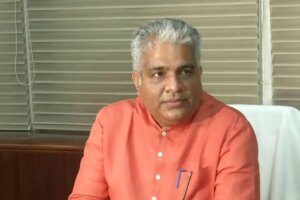
The BJP rejected the allegations, accusing the Opposition of misrepresenting the Supreme Court’s observation. Union Environment Minister Bhupender Yadav insisted that no relaxation had been granted in the protection of the Aravallis and said misinformation was being spread.
Centre’s Assurance
The Centre has maintained that the revised definition is intended to improve clarity and strengthen action against illegal mining. Bhupender Yadav said the government remains committed to protecting the Aravalli range and highlighted the Green Aravalli Wall initiative, aimed at restoring degraded areas.
He said the Supreme Court had sought clarity on definitions and noted that, under the accepted standard, landforms meeting the 100-metre criterion would remain protected. The minister claimed mining would be permitted in only 0.19 per cent of the Aravalli area and that no new mines had been approved, adding that nearly 90 per cent of the region continues to enjoy protection.
Environmental activists remain sceptical. They argue that ecosystems cannot be defined by numerical thresholds alone and that hills, forests, and catchment areas operate as interconnected landscapes. Several groups have called for the entire Aravalli ecosystem to be treated as protected, stressing that weak enforcement, rather than unclear definitions, lies at the heart of the problem.