President Donald Trump has said the United States needs Greenland for its “national security” after naming Louisiana Governor Jeff Landry as special envoy to the Danish Arctic island, prompting protests from Copenhagen.
“We need Greenland for national security, not for minerals,” Trump told reporters at his Mar-a-Lago residence in Florida on Monday, adding that Landry would “lead the charge”.
Recommended Stories
list of 3 itemsend of list
Landry said he would make the Arctic territory “a part of the US”.
The comments drew sharp rebukes from Danish Prime Minister Mette Frederiksen and Greenland’s prime minister, Jens-Frederik Nielsen.
“You cannot annex another country … Not even with an argument about international security,” they said in a joint statement. “Greenland belongs to the Greenlanders and the US shall not take over Greenland,” they added.
Since Trump returned to the White House in January, he has commented on several occasions about his desire for the mineral-rich island, a demand Denmark and many other European nations have steadfastly rejected.
So, what does Trump sending an envoy mean for Greenland, and could he succeed in acquiring it?
Why is Trump saying Greenland is ‘essential’ to US national security?
The US president insisted that the resource-rich island is “essential” for security reasons, rather than for its mineral resources.
“If you take a look at Greenland, you look up and down the coast, you have Russian and Chinese ships all over the place,” he said on Monday, while adding that the US has “many sites for minerals and oil”.
Trump’s interest in Greenland is not new.
During his first term as US president from 2017 to 2021, he mooted the idea of buying the island from Denmark. Trump then postponed a 2019 visit to the Nordic country after Danish PM Frederiksen slammed the idea.
He has refused to rule out the use of military force to seize control, noting in March that the US would “go as far as we have to”.
Geographically part of North America, Greenland’s capital, Nuuk, lies about 2,900km (1,800 miles) from New York – closer than it is to Copenhagen, Denmark’s capital, which is situated roughly 3,500km (2,174 miles) to the east.
The semi-autonomous territory has a population of 57,000 people.
Why has Trump sent an ‘envoy’ to Greenland – what does that signify?
On Sunday, the US president appointed Louisiana Governor Landry as special envoy to Greenland, prompting anger from Copenhagen, which summoned the US ambassador to explain the decision.
Following the announcement, Landry said it would be an honour to serve in a role meant to “make Greenland a part of the US”, further amplifying Denmark’s concerns about the White House’s intentions.
Taking to his social media platform Truth Social, Trump said Landry is aware “how essential Greenland is” for US national security.
Marc Jacobsen, a professor at the Royal Danish Defence College in Denmark, said while Trump is “clearly serious” about his interest in Greenland, it is unlikely he would try to take it by force.
“But we certainly see attempts to gain influence through other channels such as strategic investments and pushing narratives that portray Denmark as a bad partner,” Jacobsen told Al Jazeera.
“The appointment of Jeff Landry as special envoy and Tom Dans as the leader of the US Arctic Research Commission should be seen as new elements in this strategy,” he added.
How have Greenlanders responded to this latest move?
Lokke Rasmussen, the foreign minister of Denmark, said Trump’s appointment of Landry confirmed continued US interest in Greenland.
“However, we insist that everyone – including the US – must show respect for the territorial integrity of the Kingdom of Denmark,” he told the AFP news agency.
On Monday, Greenland’s Prime Minister Nielsen said Greenland is friendly towards Washington and that “they know there is no obstacle to the United States increasing security in the Arctic on Greenlandic territory if they wish to do so.
“But going from that to pressuring to take over a country that is populated and has its own sovereignty is not acceptable,” Nielsen told the daily Sermitsiaq.
People in Greenland broadly favour increased independence from Denmark – but not the transfer of sovereignty to the US.
In 2009, Denmark granted Greenland extensive self-governing powers, including the right to pursue independence from Denmark via a referendum.
In August, Denmark summoned the US charge d’affaires after at least three officials linked to former President Trump were spotted in Greenland’s capital, Nuuk, gauging local sentiment on strengthening ties with the US.
In March, US Vice President JD Vance and his wife, Usha Vance, were accompanied by White House National Security Advisor Mike Waltz and US Secretary of Energy Chris Wright on a tour of the US’s Pituffik Space Base in northwestern Greenland “to receive a briefing on Arctic security issues and meet with US service members”, according to a statement released by Vance’s office.
However, Greenland’s acting head of government, Mute Egede, wrote in an online post at the time that Greenland had not in fact extended any invitation for an official or private visit.
In response to Landry’s announcement, European Union Commission President Ursula von der Leyen and European Council President Antonio Costa said Arctic security was and will remain a “key priority” for the EU, “one in which we seek to work with allies and partners”.
“Territorial integrity and sovereignty are fundamental principles of international law. These principles are essential not only for the European Union, but for nations around the world,” they said on X.
On Tuesday, French President Emmanuel Macron reiterated France’s backing for the sovereignty and territorial integrity of both Denmark and Greenland.
He said Greenland “belongs to its people” and Denmark “serves as its guarantor”.
Why is Greenland strategic for the US?
Trump has repeatedly emphasised that the Arctic’s strategic geography – particularly Greenland’s position between North America and Europe – is key to US defence and global security interests.
Its location, offering the shortest route from North America to Europe, would give Washington leverage for its military and its ballistic missile early-warning system.
The US is also interested in placing radars in the waters that connect Greenland, Iceland and the United Kingdom. These waters are a gateway for Russian and Chinese ships, which the US wants to track.
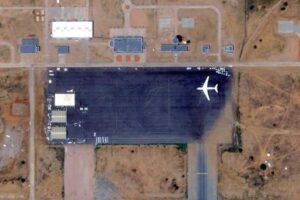
The island also hosts the Pituffik Space Base, a major US military installation used for surveillance and missile warning operations.
What mineral resources does Greenland have?
Trump has denied that its mineral wealth is the real reason he is so interested in Greenland. However, it is rich in mineral resources critical for the production of modern technologies, including rare-earth elements for electronics and clean energy, as well as uranium, zinc and other base metals.
It also holds potential oil and gas deposits, though their extraction is restricted. Surveys indicate that Greenland contains a substantial share of the critical raw materials identified by the EU.
(Al Jazeera)
Which other countries are scrambling for positions in the Arctic and why?
Several countries have become increasingly active in the Arctic in recent years.
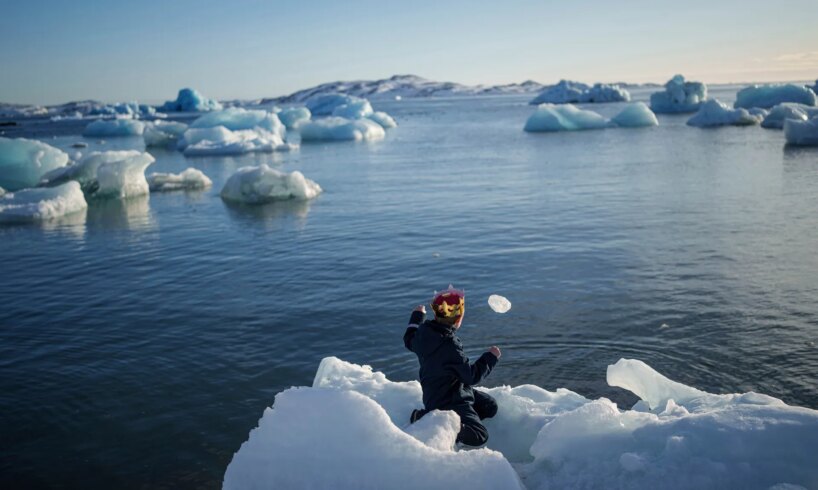
Climate change and a rapidly melting ice sheet are the main reasons the Arctic has become a geopolitical hotspot.
The Arctic is heating at a rate four times faster than the global average, increasing its accessibility for maritime trade routes and resource exploration – including by non-Arctic countries as well as those with an Arctic presence.
China has deployed vessels capable of serving both military surveillance and research functions in the region. The purposes are to collect data and secure access to resources and shipping lanes, which are emerging as a result of melting ice.
Last year, Canada unveiled a 37-page security policy detailing plans to enhance its military and diplomatic presence in the Arctic, citing threats posed by increasing Russian and Chinese activity.
In recent years, Russia has expanded its naval presence, deploying missile systems and ramping up weapons testing in the Arctic.
Russian President Vladimir Putin has also noted Trump’s interest in the region.
During an address at the International Arctic Forum in the Russian city of Murmansk, the largest city within the Arctic circle, earlier this year, Putin said he believed Trump was serious about taking Greenland and that the US would continue its efforts to acquire it.
“It can look surprising only at first glance, and it would be wrong to believe that this is some sort of extravagant talk by the current US administration,” said Putin, adding that he expects the US to continue to “systematically advance its geostrategic, military-political and economic interests in the Arctic”.
Putin also expressed concerns about Russia’s neighbours, Finland and Sweden – both of which have borders inside the Arctic circle – joining NATO, the transatlantic military alliance between North America and Europe. Finland joined NATO in 2023, and Sweden joined in 2024.
“Russia has never threatened anyone in the Arctic, but we will closely follow the developments and mount an appropriate response by increasing our military capability and modernising military infrastructure,” Putin said.
Could the US take Greenland by force?
Jacobsen said if the US were to invade Greenland, it would mean the end of the North Atlantic Treaty Organization (NATO).
Denmark and the US are founding members of NATO, a European and North American military alliance founded in 1949.
“On a personal level for Trump, it would also mean the end of any ambitions for getting a peace prize, which he has strived for so long,” Jacobsen told Al Jazeera.
“All his efforts to end the wars in Ukraine, Israel-Palestine and elsewhere would have no effect to this end.”
Jacobsen added that there are still “reasonable people in the right positions” who would pull the “handbrake on such an unreasonable idea like invading Greenland”.
“I truly don’t believe it will happen,” he added.