What a 1965 Leicester Mercury prediction got hilariously wrong (and weirdly right) about Christmas 2025
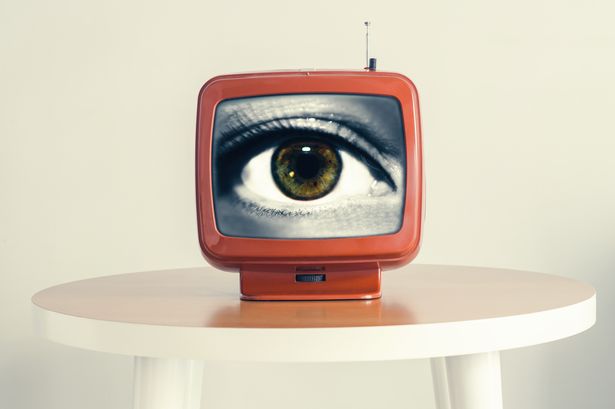
We’re still waiting for those flying cars(Image: Illustration by GraphicaArtis/Getty Images)
Sixty years ago a reporter at the Illustrated Leicestershire Chronicle sat down in the Albion Street offices—probably after a decent lunch and several pints—and decided to predict what Christmas would look like in 2025. The results are magnificent.
Picture the scene: It’s mid-December 1965. Harold Wilson is Prime Minister. The Beatles have just released Rubber Soul . Leicester Market is heaving with shoppers clutching string bags and wearing headscarves, desperately trying to win a guinea by having their photograph circled in the Chronicle’s shopping feature. A three-bedroom house in Market Bosworth will set you back £4,300.
And somewhere in the Chronicle’s newsroom, thick with cigarette smoke and the clatter of typewriters, a reporter has been handed a job. Fill that hole at the bottom of page 13. Something about Christmas. In the future. Make it snappy, everyone wants to get to the pub.
What emerged was ‘The Year – 2025: What will Christmas have to offer us?’ – a glorious, optimistic, occasionally bonkers flight of fancy that predicted laser heating, holidays in Ethiopia, Christmas cards bound in pigskin, and a Britain where the average working week was 24 hours .
Spoiler alert: they got that last bit spectacularly wrong.
‘The recently quadrupled Channel Tunnel’ – optimism levels: off the charts
But before you laugh too hard at your grandad’s generation, let’s acknowledge something remarkable: they actually nailed quite a lot. “Video-newspapers delivered through the television”, they wrote. That’s basically iPlayer, Netflix, and your phone’s news apps, isn’t it? They just got the delivery mechanism slightly wrong.
They predicted the Channel Tunnel would be carrying “a record 10,000,000 people to the Continent” each Christmas. The tunnel opened in 1994, and, whilst they got a bit carried away imagining it would be “quadrupled” by now, the basic idea was bang on. Not bad for someone who’d never seen an episode of Tomorrow’s World .
The Magnificent Misses
Where to begin? The 24-hour working week that was supposed to become “fairly general in British industry” by 2005? Someone clearly hadn’t met the management consultants who’d spend the next 60 years inventing new ways to make everyone answer emails at midnight.
Our 1965 prophet imagined Leicestershire families in 2025 roaring down to the Alps in their 200mph “Rolls-Ferraris”. In reality, we’re mostly stuck in traffic on the A46, driving Fiestas. The forecast for mass holidays in Brazil and Ethiopia hasn’t quite materialised either – though to be fair, easyJet has made Málaga pretty accessible.
Then there’s the food. “Irradiated turkey, microwaved in two minutes”, was the festive feast of the future. Whilst we do have microwaves, and yes, you can buy pre-cooked turkey, most of us are still doing it the traditional way: three hours in the oven, checking it obsessively, and mild panic about whether it’s cooked through.
Best of all: “Few homes do not have a library of Christmas cards.” Yes, you read that right. Our ancestors thought we’d be so flush with leisure time and cash that we’d collect Christmas cards as volumes, often bound in ivory or pigskin , and display them in home libraries. In reality, most of us chuck them in the recycling on Twelfth Night, feeling vaguely guilty.
Illustrated Leicestershire Chronicle, December 1965(Image: Reach Plc)
‘Most homes have two television viewing rooms fitted with stereoscopic, stereophonic colour projection sets’
The home of the future was going to be spectacular. “Cosmic ray heating” would warm our houses (we’ve got Hive thermostats instead). “Automatic vacuum vents” would suck away dust (Roomba, basically). Every home would have “two television viewing rooms fitted with stereoscopic, stereophonic colour projection sets,” with access to 10 home channels, six Continental channels, and 10 international channels, “two of which being linked with the lunar research station and the colonies on Mars”.
Ah yes, Mars. The colonies that definitely don’t exist. Though in fairness, we do have the International Space Station, and Elon Musk won’t stop banging on about the Red Planet, so perhaps they were just 60 years early on that one.
The One That Makes You Shiver
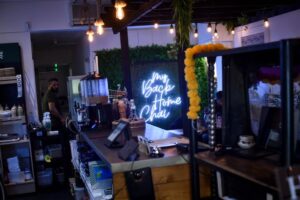
Pubs were a lot different back in the 80s
Here’s where it gets uncanny. Tucked away in the middle of all the cosmic ray nonsense was this: “Smoking became socially unpopular in the Eighties and by this century, smoking was regarded as methylated spirit drinking had been looked on earlier.”
They went further: “In 2008, the Government enacted the Smoking Clubs (Licensing) measure which confined smokers to registered clubs. At Christmas, the police, through their universal television monitors, keep a close watch on the smoking clubs.”
England’s smoking ban in public places came into force on July 1, 2007. Within a year of their prediction. CCTV cameras—the “universal television monitors”—are everywhere. They called it almost perfectly, half a century in advance, while simultaneously believing we’d be heating our homes with cosmic rays.
How did they see that one coming and miss so much else? Perhaps because smoking was already becoming controversial by 1965. The writing was on the wall, even if most of the newsroom couldn’t see it through the fag smoke.
The Mercury Tries Again
Fast forward to 1999. The Mercury was celebrating its 125th birthday with a book called The Magnificent Mercury . There was a party at the Christmas Company marquee at East Midlands Airport. Staff wore their best. And the book concluded with another attempt at prediction, this time looking ahead to January 31, 2124.
“Will there still be a newspaper as we know it?” the author wondered. Perhaps news would come through “a virtual reality headset, with which people will be able, not only to read the news, but actually see the events as they happen.” Or maybe “a piece of equipment attached to your wrist.” Or, “more bizarrely, a computer chip implanted in the brain.”
Smartwatches arrived around 2015. VR headsets exist, though mostly people use them for games rather than reading the Leicester Mercury. As for brain chips—Elon’s working on it. The 1999 predictions were more cautious than 1965’s wild optimism, but also somehow more accurate. Perhaps we’d learned something about the pace of change.
‘However strange or improbable the method of delivering the news, we can be certain of one thing’
But the real heart of that 1999 prediction was this: “However strange or improbable the method of delivering the news, we can be certain of one thing – the Leicester Mercury as an organisation will still be there to serve its communities – at the heart of everything.”
Twenty-six years later, here we are. Still telling Leicestershire’s stories. Still at the heart of everything. The format has changed—you’re probably reading this on a phone or tablet – but the mission hasn’t.
What Actually Happened
Let’s talk about what Christmas 1965 in Leicester was actually like, and what’s changed. That December, 45 mothers from the Leicestershire Twins Club brought their 90 children to a Christmas party at Knighton Parish Church. They “munched through mountains of jelly and ice cream” before joining in games. The club had been set up 10 years earlier because only one in 80 mothers had twins, and they needed support.
Today, with IVF and older mothers, twins are far more common. The novelty has worn off a bit. But the need for community support? That hasn’t changed.
Leicester retailers were expecting a £2 million Christmas spending spree that year. A Granby Street trader complained: “The lack of shoppers around town has been most noticeable. We are prepared for a fantastic rush at the last moment.” Sound familiar? Same panic, different decade. Though £2 million in 1965 money would be about £40 million today, and Leicester’s Christmas economy is now worth far more.
That three-bedroom house in Market Bosworth for £4,300? Today, according to Zoopla, the average detached house in the area is £340,389. The 1965 buyer could afford their home on a single factory wage. Today’s buyer needs two professional salaries, a hefty deposit, and probably some help from the Bank of Mum and Dad.
Granby Street is one of the city’s busiest areas(Image: Leicester Mercury)
Looking Forward from 2025
So where does that leave us? If we’re sitting here in 2025, looking ahead to Christmas 2085, what might we predict?
The temptation is to be either wildly optimistic (flying cars! Mars colonies!) or grimly pessimistic (flooded cities! food shortages!). The truth, as always, will be stranger and more mundane than we can imagine.
Climate change will have reshaped everything. Perhaps Christmas dinner really will feature lab-grown turkey – not because some 1960s futurist said so, but because traditional farming has become environmentally impossible. Leicester’s Christmas Market might be in what’s now Victoria Park, relocated because the city centre has been pedestrianised entirely, with delivery drones dropping parcels on rooftops.
Or perhaps not. Perhaps we’ll still be driving petrol cars, eating real turkey, and complaining. History suggests we’re remarkably resistant to the changes futurists predict, and remarkably adaptable to the changes we don’t see coming.
The one prediction we can make with confidence? Leicester will still be here. The city that survived the Romans, the Danes, the Wars of the Roses, the Blitz, and the 1960s ring road isn’t going anywhere. Families will gather. There will be too much food. Someone will drink too much at the work Christmas do. Children will be sick from chocolate. The bins won’t get collected on Boxing Day and everyone will moan about it.
‘Technology changes, but Leicester endures’
Our 1965 correspondent got the details wrong but the spirit right. They believed the future would be better: more leisure time, more comfort, more connection, more joy. They believed in progress. In that cigarette-fogged newsroom, probably half-cut on Bass, they believed we could build something better .
That optimism – naive, excessive, sometimes absurd—might be their best prediction of all. Not because they were right about the cosmic rays or the Rolls-Ferraris, but because they refused to imagine a future that wasn’t worth looking forward to.
So here’s to you, anonymous 1965 Chronicle hack, bashing out your predictions on deadline. You got plenty wrong. But you got the important bit right: Christmas 2025 arrived, Leicestershire is still here, and life goes on.
We’re still waiting for those flying cars, though. Merry Christmas, Leicestershire.