Nigeria’s long-term stability and progress will not be secured by rhetoric or episodic reforms. It will be secured by leaders who can hold institutions steady while society changes; leaders who make difficult decisions without losing moral clarity; and leaders who understand that trust, fairness and competence are not abstract virtues but national assets.
Across Nigeria’s executive, legislative and judicial arms of government, a small number of public servants exemplify this form of nation-building leadership through quiet consistency rather than spectacle. Among them are Dr Sanusi Hussaini Hassan of the Nigerian Midstream and Downstream Petroleum Regulatory Authority, Rt. Hon. Benjamin Okezie Kalu, Deputy Speaker of the House of Representatives, and Hon. Justice Kudirat Motonmori Olatokunbo Kekere-Ekun, Chief Justice of Nigeria.
Though they serve in different arms of government, their leadership reflects a shared discipline: purpose anchored in values rather than applause, emotional steadiness under pressure, transparency as a source of trust, openness to learning, decisiveness amid uncertainty, and an instinct to collaborate across institutional boundaries. These qualities are not merely personal attributes; they are public goods.
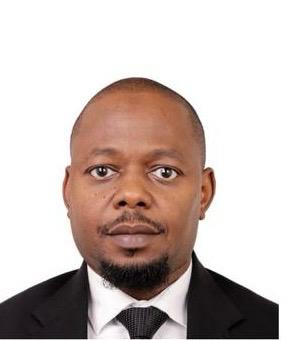
In the executive sphere, Dr Sanusi Hussaini Hassan’s contribution to nation building is best understood through the lens of institutional continuity. Following the enactment of the Petroleum Industry Act in 2021, Nigeria’s petroleum regulatory architecture was fundamentally restructured. The creation of the NMDPRA required not only legal clarity and operational realignment, but also careful stewardship of people, systems and institutional memory inherited from the former Department of Petroleum Resources, Petroleum Products Pricing Regulatory Agency and PEFMB: Petroleum Equalisation Fund (Management) Board. In such moments, human resources leadership becomes a strategic function rather than an administrative one.
As Head of Human Resources, Engr. Hassan’s work has centred on ensuring that reform does not weaken regulatory capacity. His leadership has focused on stabilising the human capital base, aligning roles with new mandates, and embedding merit-driven and performance-oriented systems consistent with the transparency and professionalism envisioned by the PIA. By prioritising fairness, clarity and staff welfare, he has helped sustain morale and operational effectiveness across a nationwide regulator whose work directly affects energy security, investor confidence and consumer protection.
His contribution illustrates a fundamental truth of nation building: institutions only function as well as the people who animate them. Every inspection, licensing decision and compliance action depends on the competence, discipline and ethical grounding of personnel. By strengthening these foundations, his leadership quietly reinforces the credibility of the state itself.
In the legislative arm, Rt. Hon. Benjamin Okezie Kalu’s nation-building role is rooted in the architecture of democratic legitimacy. As Deputy Speaker of the House of Representatives, he occupies a position that demands both authority and restraint. His influence extends beyond chamber procedure to substantive reform through his leadership of the constitutional review process, one of the most consequential exercises in Nigeria’s democratic life.
Constitutional reform requires more than technical expertise. It demands emotional intelligence, patience and a willingness to listen, particularly to groups who feel marginalised by existing arrangements. Under his stewardship, the review process has been framed not as an elite exercise but as a national conversation, with an emphasis on consultation, transparency and procedural integrity. By approaching reform as a collective endeavour rather than a partisan contest, he has helped reduce mistrust and create space for consensus.
His leadership demonstrates that effective legislation is not simply about passing laws. It is about sense-making in complex environments, translating competing interests into workable compromises, and sustaining public confidence in democratic institutions. In this way, legislative leadership becomes a form of social stabilisation.
In the judiciary, Chief Justice Kudirat Motonmori Olatokunbo Kekere-Ekun embodies the stabilising authority of the rule of law. Her elevation to the apex of Nigeria’s judicial system carries significance beyond personal achievement. At a time when public confidence in institutions is frequently tested, the judiciary’s credibility depends on visible discipline, consistency and independence.
Throughout her career on the bench, she has been recognised for intellectual rigour, composure and principled judgment. As Chief Justice, her emphasis on judicial discipline, institutional credibility and constitutional fidelity reflects an understanding that courts are not merely venues for dispute resolution but anchors of national trust. Her advocacy for procedural efficiency, including the responsible use of technology to reduce delays, signals a willingness to modernise without compromising core judicial values.
Judicial leadership of this nature is often most visible in restraint. It is seen in decisions that are carefully reasoned rather than reactive, and in an institutional tone that lowers societal temperature during periods of political tension. By reinforcing fairness and predictability, the judiciary under such leadership contributes quietly but decisively to national cohesion.
What unites these three leaders is not the prominence of their offices but the discipline of their leadership. They illustrate that nation building is sustained by leaders who prioritise purpose over popularity, manage power with emotional maturity, make fairness explicit rather than assumed, and seek collaboration rather than territorial control. They remind us that progress is rarely dramatic. It is cumulative, institutional and deeply human.
For those who aspire to leadership in public or private life, their example offers a clear lesson. Nation building is not achieved through grand gestures alone, but through the daily practice of integrity, competence and care for institutions that must outlast individuals. In that quiet commitment lies the real work of leadership and the enduring strength of the nation.