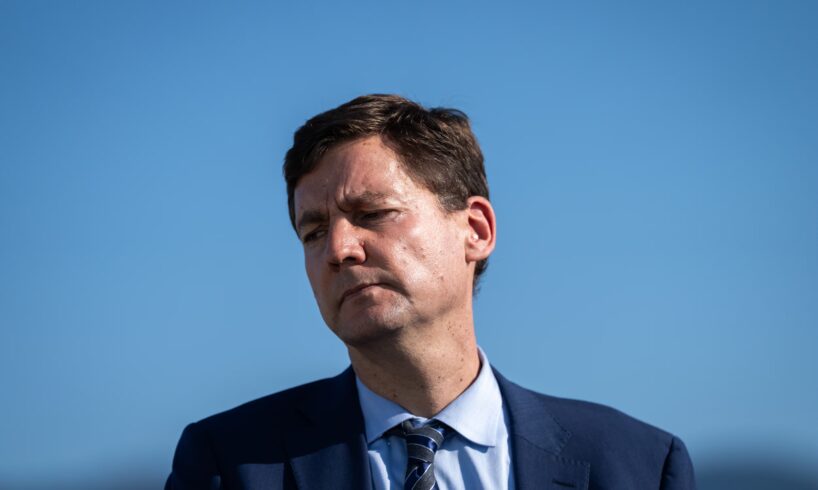
Open this photo in gallery:
Freezing out First Nations as the province awaits a resolution in the courts would put a hold on the entire provincial economy, B.C. Premier David Eby says.ETHAN CAIRNS/The Canadian Press
B.C. Premier David Eby says he agrees with Richmond Mayor Malcolm Brodie about the urgent need for clarity regarding the landmark Cowichan Tribes Aboriginal title decision over property rights but pushed back on calls from the opposition to cease all negotiations with First Nations in the meantime.
The mayor has argued the decision could dismantle the modern system of property ownership in British Columbia, a claim that the plaintiff First Nations and other Indigenous groups dispute.
Mr. Eby said the province sought to provide notice to private property owners so they could participate in a hearing before the August decision about the portion of land in southeast Richmond, on the south arm of the Fraser River.
“Unfortunately, the court decided not to provide that notice, so the first that some people are hearing about this is the letter that they got from the city of Richmond,” Mr. Eby told reporters on Monday. “It was totally unacceptable. This is one of the arguments we’re bringing forward on appeal.”
The City of Richmond over the weekend distributed letters to property owners in the area warning them that the B.C. Supreme Court ruling “could negatively affect title” to their property.
Richmond warns property owners B.C. Supreme Court decision could ‘negatively affect title’
The letter, signed by Mr. Brodie, says that the Cowichan Tribes v Canada land claim ruling, handed down in August, “may compromise the status and validity of your ownership.” The letter invites recipients to an information session to be held on Oct. 28, at Richmond City Hall.
Justice Barbara Young’s 863-page ruling, in the longest trial in Canada’s history, said that the Cowichan Tribes “have established Aboriginal title” to roughly 800 acres in the city, as well as an Aboriginal right to fish for food.
It also declared private ownership (called fee simple title) and interests held by the federal government and the City of Richmond in the lands to be “defective and invalid.” Justice Young suspended this declaration for 18 months so that the Cowichan, federal government and city “will have the opportunity to make the necessary arrangements.”
The province, the City of Richmond and several First Nations will appeal the decision.
Mr. Brodie told The Globe and Mail that he believed the decision “potentially could dismantle the land title system, certainly in our province, with ramifications across the country.”
However, the ruling stated that the plaintiffs do not seek to invalidate the fee simple interests of private landowners with the court action – a point that Robert Morales, chief negotiator for the plaintiff nations, reiterated to The Globe.
“But there are corporate interests that are part of what we’re disputing,” Mr. Morales said Sunday. “Corporations, or the governments who have privately held land as a corporation or as a government, I think that’s a different issue.”
Opinion: To recognize aboriginal title is not to abolish property rights, but to uphold them
BC Conservative Leader John Rustad asked the federal government to refer the matter to the Supreme Court of Canada, and pushed the province to do the same.
“I am asking you to join that request and to immediately pause all negotiations between the Province of B.C. and First Nations until the Supreme Court of Canada has provided clarity,” he wrote in a Sunday letter to the Premier.
Mr. Eby swiftly dismissed both requests on Monday, saying that the province seeks a decision “made on the facts” in the Court of Appeal, not in the abstract before the Supreme Court of Canada.
Freezing out First Nations as the province awaits a resolution in the courts would put a hold on the entire provincial economy, he said.
“We’re just going to stop talking to all these nations and put everything on hold? It would be a disaster,” Mr. Eby said. “That is the level of thought that comes out of the Conservatives on this.”
The First Nations Leadership Council said it is “deeply disturbed and angered” by Mr. Rustad’s letter, and similarly disturbed by Mr. Brodie’s “alarmist commentary” and related letter to Richmond residents.
Aboriginal title and fee simple private ownership can and do co-exist, and “reconciliation through recognition of this legal and political fact is not a threat to the stability and prosperity of B.C.; it is the foundation on which it is built,” the council said in a statement issued Monday.