I’m Brazilian, and I haven’t seen nearly enough of my own country. While it’s hard to admit, I know I’m not alone. Travel within Brazil was not accessible to most Brazilians until the economic boom during the Lula administration in the 2000s. Throughout that period, between 30 and 40 million Brazilians moved out of poverty and into the middle class. As things began to change, I, along with millions of people who couldn’t do so before, got to travel.
Although I’m still far from seeing everything Brazil has to offer, I’ve traveled enough to fall in love with some of its most underrated destinations and to be considered a local in small towns with names that many visitors can’t pronounce. So if you’re planning a trip to Brazil, here’s my one piece of advice: Venture out as much as you can. While you’ll likely explore popular cities, like Rio and São Paulo, make sure to continue onward to get a real taste of life outside the mainstream—starting with these six under-the-radar destinations.
Ubatuba
Aerial view of Ubatuba, Brazil.
William Peixinho/500px/Getty Images
Situated on the northern coast of São Paulo, this super-relaxed, unpretentious town is home to more than 100 beaches, arguably some of the most beautiful in all of Brazil. From nearby surf havens such as Itamambuca and Almada to the calm and peace of Praia da Fazenda and Picinguaba, there’s a coastal spot for every traveler.
Much of Ubatuba sits within the Serra do Mar State Park, a protected swath of Atlantic Forest, one of the world’s most biodiverse and endangered ecosystems. Waterfalls carve through the greenery on the drive there, but the culture and buzz of this town are on the coast. This is a land of Caiçara fishing communities and Guaraní heritage, where beachside kiosks still serve freshly caught seafood and moqueca (seafood stew). At night, learn forró, drink caipirinhas under lantern light, and fall asleep to the sound of the waves.
Where to Stay: Pousada Picinguaba
Nearest Major Airport: São Paulo/Guarulhos International Airport, about three hours by car
São Miguel dos Milagres
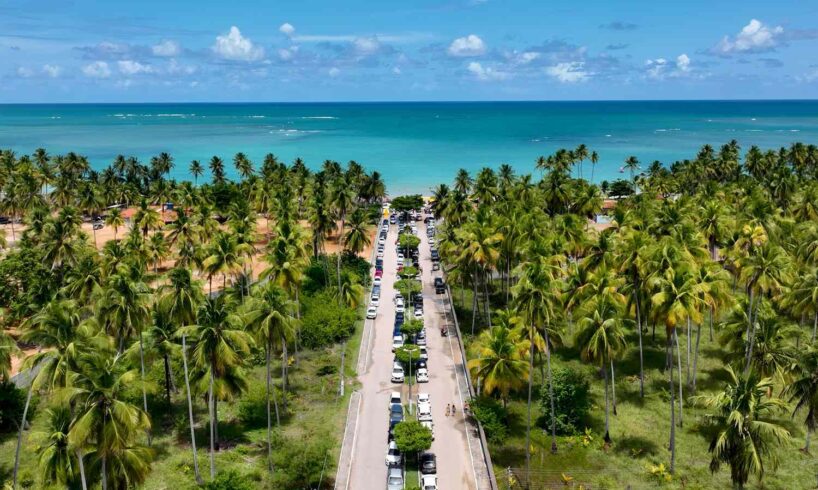
View of Sao Miguel dos Milagres Beach at Alagoas Brazil.
Cristian Lourenço/Getty Images
Known simply as Milagres to those in the know, this low-key coastal stretch, two hours north of Maceió, is the antidote to Brazil’s buzziest beach scenes. No high-rises, no swanky beach clubs—just coconut groves and a turquoise sea so clear it looks backlit. Milagres is part of the Coral Coast Environmental Protection Area (Costa dos Corais), home to one of the largest barrier reefs in Brazil. At low tide, the shoreline transforms into a natural pool paradise, with warm, shallow lagoons for lounging. Traditional jangadas, or rafts, take people to offshore reefs at Praia do Toque for snorkeling in water as calm as a bathtub.
Milagres is known locally as the “Brazilian Caribbean,” with Praia de Tatuamunha as the main character. If you’re going to visit, you may want to come for Reveillon dos Milagres, one of the best New Year’s Eve parties in the region.
Where to Stay: Peixe do Mato
Nearest Major Airport: Maceió–Zumbi dos Palmares International Airport (MCZ), about two hours by car
Boipeba Island
A tropical beach at sunset in Boipeba, Brazil.
Cavan Images/Cavan Images RF/Getty Images
Skip the usual sightseeing in Salvador, and catch a boat to Morro de São Paulo, a beauty in its own right. Most travelers make this their final destination, but the few who continue to Boipeba Island are in for something special.
Transfer to a 4×4 and rattle across sandy tracks until the road simply ends—Boipeba is only reachable by boat. One last crossing delivers you to the island’s small port. The journey feels never-ending, but in the best way. The state of Bahia is known as the “land of happiness,” and it’s not hard to see why. Locals beam with a kind of ease that comes from living close to the sea and on their own time. Tractors double as public transport from beach to beach; when the tide is low, you can just walk the shoreline instead. Seafood, rice, and farofa (toasted cassava) fuel life here, and maybe that’s part of the glow everyone seems to carry. Standing on the sand one day, I caught myself thinking: This might be the most beautiful beach I’ve ever seen. That feeling only grew stronger the further I explored.
Where to Stay: Pousada Mangabeiras
Nearest Major Airport: Salvador Bahia Airport (SSA), between four and six hours by car and boat
Atins
The Praia Inn at Muita Paz in Atins, Brazil.
Muita Paz
Sitting along the remote coast of Maranhão and at the doorstep of Lençóis Maranhenses National Park, Atins feels like the kind of place you hear about from a friend who begs you not to share the name. Once a small fishing outpost shaped by Caiçara traditions and the rhythms of the tide, it remained largely cut off from the rest of Brazil until tourism slowly crept in after the park’s creation in the 1980s. Today, it’s still a sandy, barefoot village where the wind never really stops, drawing kitesurfers, dune-seekers, and anyone craving a slower rhythm by the sea.
Expect days filled with freshwater lagoons framed by white dunes, long lunches of grilled shrimp and acai under cashew trees, and sunsets that wash over the wide, empty beach. The village is surrounded by sand, rivers, and dunes, which is why you can only reach it by boat or by 4×4 on shifting sand tracks. GPS often doesn’t work properly because streets change with the wind. With no real roads, ATMs, or rush to be anywhere, life moves by quad bike, boat, or simply on foot.
Where to Stay: Muita Paz
Nearest Major Airport: São Luís–Marechal Cunha Machado International Airport (SLZ), about four hours by car
Garopaba
Garopaba Beach, Brazil on a sunny day.
Alex Rodrigo Brondani/Getty Images
It was the surfers who first put Garopaba on the map in the 1980s, trading sleepy fishing village days for early morning swells and a life measured by tides. This change sparked a quiet cultural shift, and a mix of beach lovers, nature enthusiasts, and free-spirited travelers soon followed. Today, just 50 miles south of Florianópolis, Garopaba ranks among southern Brazil’s most exciting coastal towns. From July to November, it sits directly on the migratory route of southern right whales, often spotted from the beach.
While the whole coast is breathtaking, it’s the tiny beach community of Siriú that gives the region its quietly magical edge. Famous for its sand dunes, perfect for sandboarding, this is also a place with a tight-knit community of musicians, surfers, and fishermen who frequent the beach kiosks on a Monday, making it feel like the day of the week hardly matters.
Where to Stay: Casa Alma
Nearest Major Airport: Florianópolis–Hercílio Luz International Airport (FLN),1.5 hours by car
Miranda
The fire pit and lounge chairs at Casa Caiman.
Caiman
Set on the banks of the Miranda River, this small town is a gateway into the Pantanal, the world’s largest tropical wetland and one of Brazil’s richest wildlife regions. Life here still beats to a Pantaneiro rhythm: Fazendas rolling into the horizon, dusty roads, wooden docks on still water, and nights lit by stars. Less developed and far quieter than nearby Bonito, Miranda is for travelers who want the Pantanal at its most traditional and unfiltered. This is also Terena land, and their culture and craftsmanship are still very much part of the local fabric. Wildlife thrives year-round, but the dry season (July to October) is when the encounters are most unforgettable.
Where to Stay: Caiman
Nearest Major Airport: Campo Grande International Airport (CGR), about three hours by car