2025-12-02T22:09:40+00:00
font
Enable Reading Mode
A-
A
A+
Shafaq News
Iraq is confronting a widening environmental emergency that
now reaches every corner of public life. From toxic air blanketing the capital
to mounting contamination of rivers and unregulated waste sites, pollution has
become one of the country’s most persistent and least addressed threats — a
slow-moving crisis reshaping daily life and public health.
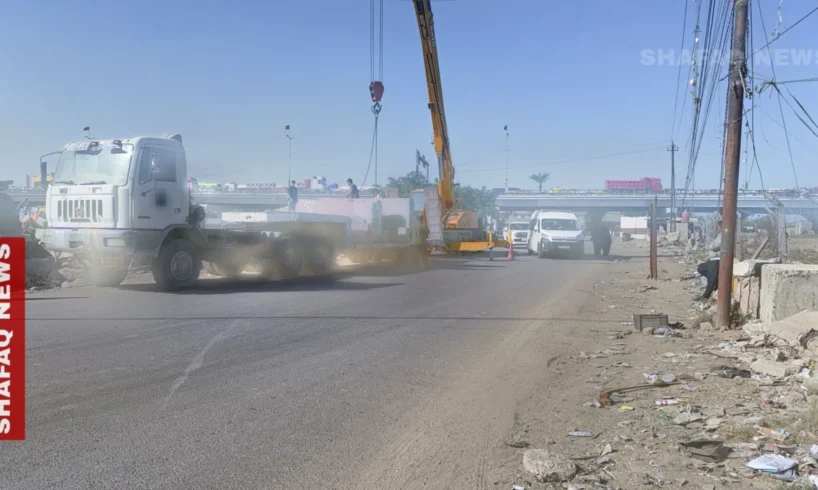
This week in Baghdad, authorities closed nearly all access
points to Camp al-Rashid, leaving only one gate open. The decision came after
an Interior Ministry assessment identified the area as a major source of the
capital’s hazardous air, driven by illegal dumping and the burning of
accumulated waste. Ministry officials say more than 6,000 inspections have been
carried out this year, leading to dozens of closures and 380 legal cases
targeting polluters across both public and private sectors. Environmental
police have already shut down 121 violating facilities, yet Baghdad’s skies
remain among the world’s most polluted. Air-quality monitors frequently show
PM2.5 concentrations in the “unhealthy” range, and stagnant winter weather has
magnified the problem, trapping exhaust fumes, industrial emissions, and
burning waste close to the ground.
A global ranking published recently placed Iraq 37th
worldwide and sixth in the Arab region for overall pollution in 2025, a stark
measure of how deeply environmental degradation has spread. Officials and
experts agree that Iraq’s waste management system sits at the core of the
crisis. Open dumps, uncontrolled landfills, and routine waste-burning create
continuous sources of airborne toxins. Camp al-Rashid is only the most visible
example; problem sites in al-Taji, Abu Ghraib, al-Bayaa, al-Mahmoudiya, and
other districts have also been cited for dangerous levels of waste accumulation
and open-air burning.
Read more: Pollution gnaws at Iraq: Laws without teeth, fines without impact
Interior Ministry spokesman Muqdad Miri told Shafaq News
that genuine progress requires modern waste-processing plants capable of
recycling and treating urban refuse. Without them, he warned, illegal dumping
and burning will continue to undermine public health regardless of how many
closures or inspections take place.
The crisis is not limited to the air. Iraq’s rivers, already
battered by drought, upstream cuts, and climate pressure, are increasingly
polluted by untreated sewage, industrial runoff, and medical waste.
Environmental assessments indicate that up to 90% of the country’s rivers now
contain contaminants. The World Bank estimates that only 13% of Iraq’s urban
wastewater is treated before being discharged into waterways, leaving
communities downstream at risk of waterborne disease and further damaging
ecosystems once central to agriculture and daily life.
Fears over environmental hazards have also spread to regions
far from Baghdad. In Kirkuk, rumors of radioactive contamination at al-Wasiti
Girls School fueled public anxiety until the Human Rights Commission intervened
with a detailed rebuttal. Officials explained that inspections conducted in
2014 — and again in 2023 using advanced detection equipment — found no trace of
radiation in the school. Local representatives accused a television crew of
deliberately editing their comments in a misleading way, prompting plans for
legal action. Residents told Shafaq News that the site had been cleared two
decades earlier and has operated normally since, with no health cases linked to
radiation.
Read more: Baghdad Fading: How shrinking rivers and failed policies endanger the capital
These threats unfold alongside the accelerating toll of
climate change. Heatwaves surpassing 50°C, shrinking water reserves, and
expanding desertification now interact with pollution to create what scientists
describe as overlapping stress layers. Dust storms — increasingly frequent and
intense — load the air with particulate matter and further degrade air quality.
Roughly 60% of Iraq’s land is at risk of desertification, exacerbating erosion,
crop loss, and airborne dust.
Government agencies have begun taking more visible measures,
from activating environmental sensors to shutting down unlicensed industrial
operations and coordinating inter-agency monitoring. But gaps persist. Only a
handful of provinces have functioning air-quality stations. Wastewater
treatment remains inadequate. Enforcement is inconsistent, and coordination
across ministries is uneven.
For Iraqi families, the consequences are immediate. Doctors
warn that continued exposure to polluted air and contaminated water increases
risks of asthma, heart disease, cancer, and neurological disorders. Children
and the elderly are especially vulnerable. Parents describe the haze settling
over their homes; farmers note changes in soil and water; and urban residents
increasingly fear what they cannot see — the particles in the air, the toxins
in the water, the contaminants in the soil.
Experts say a coordinated national strategy, serious
investment in environmental infrastructure, and transparent enforcement of
environmental law are essential if the country hopes to reverse the trend.
If these steps are not taken, Iraq risks allowing pollution
— silent, pervasive, and deadly — to shape its future more than any policy or
plan.
Read more: Iraq’s environmental disaster: Oil springs flow into river
Written and edited by Shafaq News.