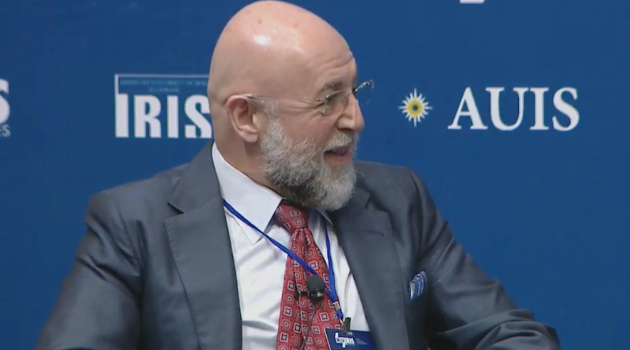
By Ahmed Tabaqchali, Chief Strategist of AFC Iraq Fund.
Any opinions expressed are those of the author, and do not necessarily reflect the views of Iraq Business News.
“Election kerfuffle, what kerfuffle !!!”
The market, as measured by the Rabee Securities U.S. Dollar Equity Index (RSISX USD Index), was up 5.0% for the month and up 11.2% for the year. Its action for the month was indifferent to the elections, and to expectations of violence or disruptions, as volumes picked up moderately. The RSISX USD index attempted a break-out of the consolidation range that it traded in since December 2024, following a blistering 35.9% three-month rally. While volumes were positive, they were not high enough to support a full break-out. Nevertheless, the market’s technical picture continues to remain positive and still suggests that the consolidation phase would continue and that the likely consolidation or pullback should be within its multi-month uptrend (chart below).
Rabee Securities U.S. Dollar Equity Index and Daily Turnover
(Source: Iraq Stock Exchange, Rabee Securities, AFC Research, daily data as of November 30th.
Note: daily turnover adjusted for block trades)
The RSISX USD Index’s constituents’ performance were mostly positive, with six stocks up, two stocks flat, and two stocks down. Positive performances were led by National Bank of Iraq (BNOI) and Iraqi Islamic Bank (BIIB), both up 10.3% for the month, followed by Asiaell Telecom (TASC) up 7.3%, Baghdad Soft Drinks (IBSD) up 4.5%, Bank of Baghdad (BBOB) up 2.1%, and Al-Mansour Bank (BMNS) up 0.5%. Both Baghdad Hotel (HBAG) and Al-Mansour Hotels (HMAN) were flat, while negative performances were led by Commercial Islamic Bank of Iraq (BCOI), which was down 2.9%, followed by Al-Mansour Pharmaceuticals Industries (IMAP) down 2.4%,
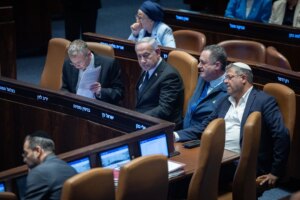
The parliamentary elections on November 11th, the sixth such elections since the U.S. invasion in 2003, were mostly greeted by the market as a non-event; crucially, they were peaceful with no indications of a repeat of the political violence that followed the prior elections in October 2021. Their results, however, suggest that the processes of government formations following the elections, while unlikely to repeat the political stalemate following the 2021 elections, yet much like them would extend over many months.
The current political, societal and economic scene is very different from that of 2021; the country is enjoying the fruits of three years of solid stability and strong economic growth. However, unlike in 2021, the upcoming government does not have the benefits of the huge budget surpluses of 2021-22 that allowed the current government to introduce the expansionary three-year budget of 2023-25. The cyclical positives that supported the budget’s revenues will become negatives in the different oil price environment, and thus the tailwinds of prior strong oil prices are reversing into headwinds over the next 9-12 months. Current expectations for weaker future oil prices, as measured by Brent crude prices, suggest that prices over the next two years would average 18% less than the average of the prior two years (chart below*).
Market Expectations for Future Oil Prices
As measured by Brent Futures Contracts (USD per barrel)
(Source: Investing.com, AFC Research, U.S. Energy Information Administration (EIA), as of November 28th)
Countering these cyclical negatives are the positives of the secular transformation of the Iraqi economy, driven by the two key dynamics discussed here often in the past, the cumulative positive effects of the relative stability and structural banking developments. These are in the early stages of their transformation of the economy, a process that would unfold over the next few years, bringing with them high economic growth that would feed into higher corporate profits, and ultimately higher stock market returns. Consequently, while the positives of secular transformation of the economy should trump the cyclical negatives, these cyclical negatives would dampen the growth of non-oil GDP and corporate profits.
The interplay of the secular positives of the transformation of the economy and the cyclical negatives of the current low expectations for oil prices was the subject of two recent webinars:
Note:
* The green line denotes actual Brent prices, the yellow line denotes current expectations of future Brent prices, while the red and grey lines denote prior expectations for future Brent prices that marked the upper and lower ranges for such expectations over the last four years.
Please click here to download Ahmed Tabaqchali’s full report in pdf format.
Mr Tabaqchali (@AMTabaqchali) is the Chief Strategist of the AFC Iraq Fund, and is an experienced capital markets professional with over 25 years’ experience in US and MENA markets. He is a board member of Arab Bank Iraq, a Visiting Fellow at the LSE Middle East Centre, Senior Fellow at the Institute of Regional and International Studies (IRIS), and a Senior Non-resident Fellow at the Atlantic Council.
His comments, opinions and analyses are personal views and are intended to be for informational purposes and general interest only and should not be construed as individual investment advice or a recommendation or solicitation to buy, sell or hold any fund or security or to adopt any investment strategy. It does not constitute legal or tax or investment advice. The information provided in this material is compiled from sources that are believed to be reliable, but no guarantee is made of its correctness, is rendered as at publication date and may change without notice and it is not intended as a complete analysis of every material fact regarding Iraq, the region, market or investment.