Terry Ryan, the Queensland state coroner, last month released the findings of an inquest into a December 2022 shootout in the rural locality of Wieambilla that left three police officers and a member of the public dead as well as the three perpetrators, Gareth, Nathaniel and Stacey Train.
The findings, held after an inquest that heard testimony from dozens of witnesses, span 264 pages. There are detailed descriptions of the lives of the Trains, the highly-prepared character of their ambush of the police and the progress of a shootout that lasted for several hours.
The findings, however, are a whitewash on two fronts.
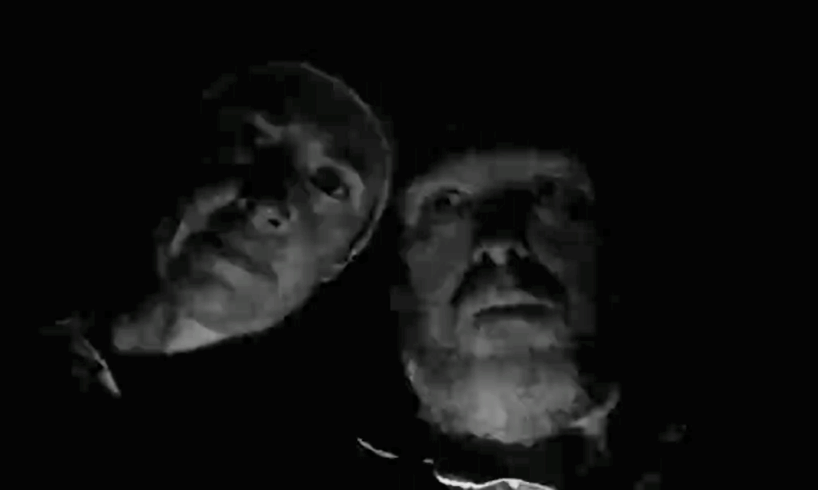
Stacey and Gareth Train [Photo: Screenshot from self-published video]
Firstly, they assert that the violent actions of the Trains cannot be classified as politically or religiously motivated terrorism, despite ample material in the report itself testifying to their right-wing extremist views and connections.
Secondly, they give the Queensland Police a clean bill of health, despite clear indications, including within the report itself, that elements within it had adopted an unusually lenient and hands-off approach to the Trains.
The findings summarise the testimony of Dr Josh Roose, an associate professor of politics at Deakin University, who is billed as an expert on terrorism and has been featured in the press. Roose, the findings note, had examined more than 2,500 primary source documents associated with the Trains.
In his assessment, their decision to ambush the police officers who came to the Wieambilla property was an act of politically motivated terrorism. It was a product of the Trains’ millennial Christianity, and was “done with the intention of advancing a religious ideological cause and with the aim of coercing and intimidating the Queensland Government.”
Roose periodised the radicalisation of the Trains. In the first stage, prior to the COVID-19 pandemic, Gareth Train had been attracted to right-wing, conspiratorial conceptions.
In the second period, between January and December 2020, coinciding with the onset of the pandemic, Gareth Train “contributed to a variety of online political forums, which demonstrated strong antigovernment views but little religious content.” Excerpts from his online activities, provided earlier in the findings, show that he viewed the pandemic as an orchestrated plot.
The third phase, between January and July 2021, involved a deepening of that radicalisation. It included the beginning of a communication with Donald Day, a US-based extremist who shared what would become the Trains’ right-wing brand of Christianity. In the following fourth phase, the Trains’ developing Christian views “fused with anti-government and institutional hatred in which state actors, including police, were viewed as corrupt and evil,” and in the fifth, immediately preceding the attack, they had adopted what Roose described as a “dispensational premillennialism,” in which they viewed their own interactions, including with the authorities, as events of an “end times” scenario.
Roose is a state-aligned figure and his views need not be accepted uncritically. However, he provided a coherent and cohesive explanation of a political radicalisation which culminated in the Trains’ decision to stage a violent assault on visiting police officers.
The periodisation is notable, because it underscores the extent to which the Trains’ radicalisation dovetailed with the COVID pandemic. The decision by Australian governments to undertake limited safety measures, including lockdowns, under pressure from the working class, became a rallying point for far-right forces.
The lockdowns were presented by far-right activists as an act of government tyranny, rhetoric that Gareth Train in particular was repeating contemporaneously. He was part of a far-right ecosystem online, corresponding with well-known right-wing activists. The findings also note that the police knew there was a substantial presence of “sovereign citizens” and other right-wing anti-government elements in the area where the Trains lived.
The anti-lockdown movement was actively encouraged and promoted by segments of the political and media establishment.
The Murdoch outlets, as well as others, railed against the lockdowns, combining libertarian calls for individual “freedom” from socially necessary public health measures, with complaints of the economic consequences of reduced business activity.
Elements of the Liberal-National Coalition, then the governing party, spouted the same line, as did far-right populists including those in parliament such as Pauline Hanson’s One Nation.
These sections of the ruling elite cultivated the anti-lockdown movement as a battering ram against the public health measures, which retained overwhelming support, particularly in the working class. In late 2021, invoking the emergence of the highly transmissible Omicron variant, governments, Labor and Coalition alike, insisted that it was necessary to dispense with lockdowns and to fully “reopen” the economy. The decision, motivated by corporate profit interests, effectively represented a victory for the far-right anti-lockdown movement.
That movement would increasingly focus on its opposition to vaccination, which was central to the Trains’ radicalisation. All three would refuse vaccination, a decision that ended Stacey Trains’ employment in public schools. The coming together of the three Trains, moreover, occurred as a result of Nathaniel Train illegally crossing into Queensland via the New South Wales border in December 2021, in violation of then pandemic-related border restrictions.
Coroner Ryan waived Roose’s evidence aside, together with this broader political context. Instead, basing himself on the testimony of medical experts, Ryan declared that the Trains were motivated by a “Shared Delusional Disorder.” He cited as evidence the irrationality of their views, specifically that they were facing state persecution and that the events of their life were expressions of an “end times” scenario.
The finding, surprisingly brief given its weight in the entire inquest, does not hold water. One would hardly expect right-wing terrorists to be the most psychologically balanced individuals. Moreover, many far-right beliefs, given that they are false, have a delusional character.
There are many examples, including from the broader anti-lockdown movement of which the Trains were a part, such as the delusional belief that vaccines are exceptionally dangerous and are part of a shadowy plot to kill people. The falsity of a political belief does not render it a psychological disorder.
The establishment has repeatedly ducked and weaved on the character of the Wieambilla shootout.
In the immediate aftermath, Queensland Deputy Police Commissioner Tracy Linford denied that it was a terrorist event. Her argument was vague and unconvincing. She cited the fact that the Trains were not part of a political organisation, even as information of their links to other far-right forces online was emerging.
Then in February 2023, Linford directly contradicted herself, stating: “Our assessment has concluded that Nathaniel, Gareth and Stacey Train acted as an autonomous cell and executed a religiously motivated terrorist attack. The Train family members prescribed [sic] to what we would call a broad Christian fundamentalist belief system known as premillennialism.”
Linford made those comments at around the same time that Prime Minister Anthony Albanese and Mike Burgess, head of the domestic spy agency ASIO, both described the Wieambilla event as terrorism.
Now, two years on, and with far more known about the political motivations of the Trains, the Queensland coroner has returned to Linford’s initial assessment, apparently contradicting what that police official now believes, along with the prime minister and the nation’s spy chief.
The contradictory responses are bound up with an attempt to cover up the official promotion of far-right forces. Such a promotion has been direct, as in the elevation of the small rabble that constituted the anti-lockdown movement, as well as indirect, with the political establishment’s relentless attacks on refugees and immigrants, including by the federal Labor government, providing succour to fascistic forces.
The mixed assessments, however, also indicate a degree of concern within the state apparatus over specifics of the Wieambilla incident.
It seems likely that they relate to the way in which the Queensland Police responded to the Trains in the lead-up to the ambush. Nathaniel Trains’ illegal entry into Queensland involved ramming a car into a state border fence and then dumping weapons including guns into floodwaters before fleeing.
The coroner unusually presented these as minor offences, even as he acknowledged they carried a maximum sentence of at least seven years’ imprisonment. Despite the gravity of the offences as measured by that potential punishment, however, the Queensland Police made virtually no attempt to apprehend Gareth Train.
A police officer testified that he had visited the Train property and left a contact card in their mailbox. When it was still there a week later, he concluded there was nobody home and left the matter. That seems an exceptionally soft touch. Gareth Trains’ apprehension on serious criminal charges was essentially left as a matter for himself.
The police visit to the Train residence was not even an attempt to detain him on those charges. Instead, it was a “welfare check,” motivated by a missing person’s report filed by New South Wales Police on behalf of his wife.
That officer’s testimony indicated why the police may have responded as they did. The officer was asked whether Train’s charges included breaching COVID regulations prohibiting border crossings. The officer said they did not, because the police had not spoken to Train to determine whether he had an exemption. That is a ludicrous explanation. If Train had an exemption, he clearly would not have sought to illegally crash through the border fence.
The clear sense is that elements within the Queensland Police sympathised with the Trains’ hostility to COVID restrictions and decided on that basis not to pursue Nathaniel Train, even as he was formally wanted.
Ironically, that provided the Trains with time to transform their property into a prepared battleground, including through the construction of hidden shooting spots. Some of the weapons that they used were those that Nathaniel Train had illegally smuggled across the border exactly a year before.
The inquest, both in pointing to police sympathy for the Trains and in whitewashing their far-right motivations, again underscores the role of the state as an incubator of fascistic forces. Such elements are being promoted and brought forward by sections of the ruling elite, as a battering ram against growing social opposition from the working class, a role that was already foreshadowed in the manner in which the establishment made use of the anti-lockdown movement.
Sign up for the WSWS email newsletter