On the evening of 12 June 2013, according to court documents, three “Chinese intruders” were arrested by the Indian army in Sultan Chusku, a remote and uninhabited desert area in the mountainous northern region of Ladakh.
The three Thursun brothers – Adil, 23, Abdul Khaliq, 22 and Salamu, 20 – had found themselves in an area of unmarked and disputed borders after a 13-day journey by bus and foot over the rugged Himalayan terrain through China’s Xinjiang province, which borders Ladakh.
The men told army officials that they had fled their family home near the city of Kashgar in Xinjiang after the Chinese authorities intensified their crackdown on Uyghur Muslims and took several of their relatives into detention centres.
More than a million Uyghurs in Xinjiang appear to have been imprisoned in “re-education” camps and subjected to torture over the past decade for just attending a mosque or wearing a hijab.
Map of Indian-Chinese border region showing Xinjiang province and Ladakh and disputed territories
China says it is tackling extremism through “controlling illegal religious activities” and “vocational education and training centres”, but other countries, including the US, have said its actions amount to genocide.
After two months of interrogation by the military, the brothers were handed over to local police to face charges of illegally crossing the border. But what followed was a bureaucratic nightmare that continues to this day.
Unable to communicate in any Indian language, the three men struggled to navigate the legal system. Their court-appointed lawyer faced similar barriers. Only after a year in detention, during which they gradually learned the local language from fellow inmates, could they answer the judge’s questions.
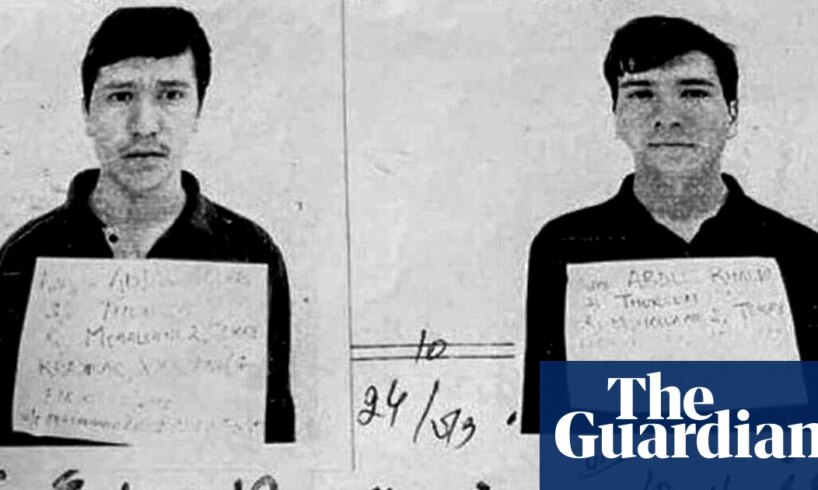
An India border police report about the brothers’ arrest in 2013, which describes them as ‘Chinese intruders’. Photograph: supplied
They were each sentenced to 18 months’ imprisonment. But their trauma did not end there.
By the time of their conviction, they had already spent a year in prison and were expected to walk free within six months. But India’s political landscape was shifting. The Hindu nationalist Bharatiya Janata party, led by the prime minister, Narendra Modi, had come to power.
When their sentence expired, instead of releasing them, the authorities invoked the Public Safety Act, a controversial detention law that allows someone to be held for six months, renewable for up to two years.
According to the detention orders, which authorities keep reissuing, the three men would remain imprisoned indefinitely, pending the government’s decision on their release or deportation to China.
Their only support has come from their lawyer, Muhammad Shafi Lassu, who met them as part of a regular court-appointed delegation visiting the prison and who could not believe they continued to be jailed for nothing more than unlawfully crossing into India.
“They said they were frightened of being sent to one of the detention centres [in China] and simply wanted to escape. They didn’t even know they were crossing into India,” he says.
For the past decade Shafi has been fighting for their release on a pro bono basis, but the Indian government remains unmoved.
The three men have been transferred between prisons several times and are now in the city of Karnal, in the Indian state of Haryana, near Delhi.
skip past newsletter promotion
Sign up to Global Dispatch
Get a different world view with a roundup of the best news, features, opinion and photography, curated by our global development team
Privacy Notice: Newsletters may contain information about charities, online ads, and content funded by outside parties. If you do not have an account, we will create a guest account for you on theguardian.com to send you this newsletter. You can complete full registration at any time. For more information about how we use your data see our Privacy Policy. We use Google reCaptcha to protect our website and the Google Privacy Policy and Terms of Service apply.
after newsletter promotion
These men were victims … What have they done to deserve such miserable conditions for over a decade?Muhammad Shafi Lassu, lawyer
The siblings have been separated and held in cramped cells designated for arrested militants and those convicted of serious crimes, says Shafi. They also struggle with the food and India’s scorching summer heat, he adds, as they are accustomed to the colder climate of their homeland.
“The persecution of Uyghurs by China is an internationally recognised issue,” he says. “These men were victims of that brutality. They are not criminals or threats to anyone.
“The government has a moral obligation to treat them fairly. What have they done to deserve such miserable conditions for over a decade?”
Shafi says the three brothers are unaware of the fate of their remaining family in Kashgar. He believes they should be granted asylum and not deported to China. “What they have endured for so many years is cruel and inhuman,” he says.
The men’s lawyer, Muhammad Shafi Lassu, who has been representing them without payment and even sending them money to pay for prison and medical expenses. Photograph: Supplied
“The two younger ones have developed health problems. They suffer from piles because the jail food is poor quality – mostly lentils – and doesn’t suit them, and they receive little medical attention.”
One of the brothers has been advised to have surgery by a doctor, but has been refused permission by the prison authorities, says Shafi, who visits them regularly and sends them money each month from his own pocket to cover prison and medical expenses.
While in prison, the three brothers have learned four local languages as well as English by talking to inmates and reading books and newspapers.
An Indian demonstrator shouts from a van after being arrested near China’s consulate in Mumbai for protesting against Beijing’s policies towards the Muslim Uyghurs in Xinjiang. Photograph: EPA
“The eldest really enjoys English and often tries to speak it with me, but the guards, because they don’t understand it, stop him and insist he speak Hindi. I joke with them that they’ll become language teachers once they’re released,” says Shafi.
Under the Modi government, human rights groups say that religious minorities, particularly Muslims, have faced systematic discrimination and marginalisation in India.
Latief U Zaman Deva, a former senior government official in Indian-administered Kashmir, of which Ladakh was part until 2019, believes the three men are victims of discrimination.
“Jailing these three violates the law. This is one of many examples where the current government demonstrates how it deals with a particular community: Muslims,” Deva says.
“The law being used against them is intended for people involved in anti-national activities or serious offences, not for persecuted people seeking refuge.”
Shafi says he will continue to fight for their release. “India has given refuge to tens of thousands of people from different persecuted communities at different stages of history. Even thousands of persecuted Tibetans live here and run their government in exile.
“If the government doesn’t want them to live here, they can release them and allow them to travel to a country which can offer them asylum. I hope they will be free one day – that is the goal of my life.”