Police, paramedics and firefighters posted to Noosa during the busy summer season are being forced to live well outside the region, due to a lack of long-term rental accommodation in the tourist hotspot.
Local Member for Noosa, Sandy Bolton, is calling for short-term rental owners to move their properties into the long-term pool.
“We need our workers here, we need our frontliners including our police to be living amongst our community,” Ms Bolton said.
“Take [rental properties] out of the short-term accommodation pool, put them into the permanent one.”
The area has faced housing availability challenges for several years, with hospitality workers feeling the hardest pinch.
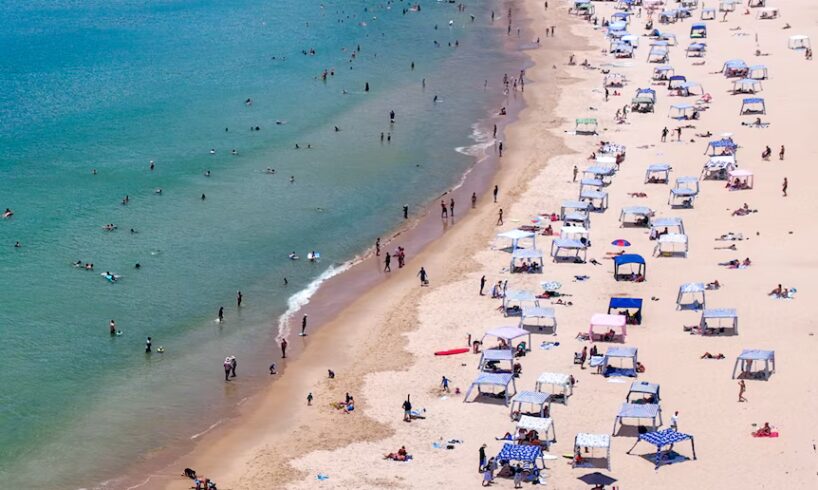
REIQ figures show the Noosa vacancy rate currently sits at 1 per cent. (Supplied: Jordy’s Drone Photography )
Ms Bolton said higher earning professionals, including emergency service workers, would not be eligible for government housing but were struggling to obtain rental accommodation in the area.
“Earning that amount of money would not make you eligible for government housing. So this is where… the big gap exists and while everyone’s working on that in the interim we need some affordable options,” Ms Bolton said.
The local member believes existing housing resources that were restricted to specific demographics, such as those over 55, could be repurposed to accommodate essential workers.
Emergency service workers are ineligible for government-subsidised housing due to their income.
Airbnb eating up long-term housing
An abundance of short-term accommodation in Noosa, especially Airbnbs has been a contentious issue in the community for several years.
While the impact on the area is debated, Ms Bolton said homes being used for Airbnb rentals were spreading into traditionally long-term areas.
“There are those houses that are known holiday homes in holiday home precincts that have traditionally been used for short term [rentals],” Ms Bolton said.
Local member Sandy Bolton is calling on owners of airbnb’s to enter the long-term rental market. (ABC: Jessica Ross)
She believes that homes in Noosa’s residential areas have been snapped up by people who are using Airbnb to turn them into commercial interests.
“Traditionally, Airbnb was for people who lived in their house, wanted to share their community by letting out a room or a couple of rooms to have visitors come so they could share their home and share their community for a holiday,” she said.
“The change that occurred there is that they were never purchased as a business, and the purchase price would reflect that it wasn’t as a business or a short-term rent, it was for families and workers to live in.”
Existing housing a potential solution
Noosa Council’s Director of Environment and Strategy Kim Rawlings admitted there was no single solution to Noosa’s housing challenges.
“Somewhere between 60 and 70 per cent of our houses are occupied by one or two people and it’s almost the equivalent that those houses are three, four and five bedroom houses,” Ms Rawlings said.
“There are a lot of spare rooms around and opening up… even a small percentage of those would make a massive contribution.
In July, Noosa Council removed the $7,000 infrastructure charge for secondary dwellings. According to the Noosa Council these dwellings must be small scale and subordinate to the dwelling house, such as granny flats or tiny homes.
Ms Rawlings said they were a “great option” for Noosa residents looking to take on a tenant.
The Noosa council has removed it’s infrastructure charge for secondary dwellings like granny flats and tiny homes, to help encourage more owners to take on a tenant. (Supplied: Aussie Tiny Houses)
“Council have just removed the infrastructure charges from secondary dwellings to encourage those as an option for permanent rental. You can’t short-stay let those, but you can permanently.”
Supply at critical levels
According to Sunshine Coast zone chair of the Real Estate Institute of Queensland, Matt Diesel, low rental supply across the region was aggravating the issue.
“The problem extends right the way across the coast we’ve got … around about a 1 per cent vacancy rate,” Mr Diesel said.
Real Estate Institute of Queensland Sunshine Coast chair Matt Diesel says the challenge is exacerbated for professionals who often move long distances. (ABC Sunshine Coast: Owen Jacques)
“A healthy rate sits around that 3.6 to 4 per cent – 1 per cent is definitely not healthy.
“It’s not a good place to be and it is hard out there for people that don’t fit the typical box for rentals.”