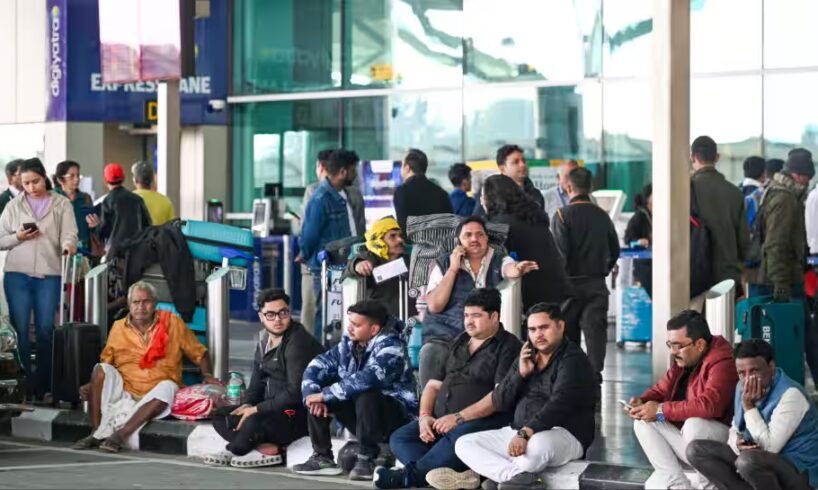
The spectacular collapse of IndiGo’s operations this week was far more than a routine scheduling failure. It was a raw and painful reminder of how fragile India’s aviation industry truly is. For an airline that built its identity on reliability and discipline, the past few days have been nothing short of a public reckoning.
IndiGo, which carries six out of every ten domestic passengers, descended into nationwide chaos within hours. Thousands were stranded as airports struggled to cope with a wave of cancellations. A single day saw roughly 550 IndiGo flights scrapped, contributing to a staggering total of more than 1,000 cancellations across major hubs. Delhi witnessed 172 cancellations, Mumbai 118, and Bengaluru 100, turning terminals into scenes of utter confusion.
A Breakdown Of IndiGo’s Own Making
Add Zee News as a Preferred Source
The consequences were immediate and distressing. Airports were swamped with angry and exhausted passengers who spent nights on terminal floors, queuing endlessly for information that never arrived. Departure boards flipped from delay to cancellation with alarming speed, while airline counters were overwhelmed by crowds searching for answers. Families travelling with children, elderly passengers in wheelchairs, and business travellers with urgent commitments were left entirely to their own fate.
IndiGo issued apologies, processed refunds, and promised it would restore normal operations. Meanwhile, the Ministry of Civil Aviation and the DGCA tried to set up round-the-clock control rooms and temporarily eased pilot-rest requirements, though this relaxation immediately drew criticism from pilot unions. Yet for many, these steps felt like afterthoughts, unable to undo the enormous suffering already inflicted.
The heart of the meltdown lay in IndiGo’s failure to prepare for the government’s revised Flight Duty Time Limitations (FDTL). These rules, intended to improve safety through longer rest hours and stricter night-time limitations, had been signalled nearly two years earlier. Despite this, IndiGo completely misjudged its impact. It failed to redesign its pilot-rostering system, did not recruit enough crew, and made no provision for the shock these rules would introduce during peak travel season.
A Corporate Failure With National Consequences
IndiGo has openly admitted that it underestimated the scale of the changes. It miscalculated staff requirements, froze hiring when demand was rising, and entered the busiest travel period without any backup plan. The DGCA, too, must account for why it failed to anticipate the chain reaction these changes would spark in the operations of the country’s largest airline.
For years, IndiGo stood as the benchmark of punctuality and efficiency in India. That image is now deeply damaged. Photographs of children sleeping on cold terminal floors and passengers stranded without assistance have overridden years of marketing. The reputational harm will linger long after flights return to schedule.
Adding to the unease are questions about unusual stock movements in the days before the crisis. Even the whisper of insider trading has deepened public mistrust. When an airline’s operations fall apart, and suspicions swirl around its financial conduct, confidence is not easily restored.
A Collapse Of Communication And Compassion
When IndiGo’s systems failed, its communication failed with them. Passengers received no timely updates. Apps and websites showed outdated information. Airport staff were unable to provide clarity. There was little empathy, almost no proactive support, and no attempt to help stranded customers find accommodation or alternative travel.
For a brand that built its reputation on discipline, this silence was a betrayal. It exposed a company that prioritised cost-cutting over passenger welfare, leaving customers unsupported at their most vulnerable moments.
Price Gouging And Market Exploitation
As IndiGo’s capacity evaporated, other airlines and hotels pounced. Fares on alternate flights leapt to three, four, even five times the normal price. Hotel rooms near major airports, especially in Delhi’s Aerocity, shot up to Rs 25,000-Rs 30,000 per night, rivalling luxury chains abroad. Many families had to choose between sleeping on terminal floors or paying extortionate prices. Elderly passengers broke down in queues, unable to afford the last-minute costs.
Authorities did nothing to stop it. There were no emergency teams, no price caps, no warnings to hotels or airlines, and no mechanism to support stranded citizens. The entire burden of the crisis was left to passengers, who bore the emotional, financial, and physical toll alone.
A National Failure Of Preparedness
The disaster grew from an airline’s operational failure into a national embarrassment because the system around it was equally unprepared. Government responses were restricted to formal statements, not decisive action on the ground. In countries like the US and those in Europe, strict passenger-rights laws would have required airlines to provide hotels, meals, transfers, and monetary compensation. Price gouging during a crisis would have triggered investigations and sanctions.
In India, travellers remain vulnerable. They are treated not as citizens with rights but as consumers to be squeezed during emergencies.
The Fallout: A Market Reset
IndiGo’s stumble is already reshaping the aviation landscape. Air India, while still repairing its own issues, will seize the chance to attract dissatisfied customers. Akasa and other carriers will court corporate clients who previously relied on IndiGo’s dominance.
Investors will demand stronger governance. Shareholders scarred by the reputational and financial damage will push for accountability at the highest levels and insist on rigorous risk modelling. Pilot capacity and scheduling resilience will now be viewed as essential assets, not administrative chores.
The Need For Real Reform
If IndiGo is to retain its position, it must invest heavily in crew strength, contingency planning, and system resilience. Dominance without backup capacity is a dangerous weakness.
More importantly, this crisis must force the government and regulators to rethink how aviation is managed. The DGCA must focus not just on compliance but on resilience. Airlines should be required to show how they will cope with shocks, be it new regulations, sudden staff shortages, or mass disruptions.
India now urgently needs a Passenger Bill of Rights with enforceable compensation, strict penalties for negligence, and clear protections during emergencies. Without this, every future disruption will turn into another humanitarian crisis.
Civil Aviation Minister Rammohan Naidu has promised action. This moment must not be wasted. IndiGo’s collapse is a warning: rapid growth without safeguards is not progress but fragility in disguise.
India’s aviation industry has reached a crossroads. The choice is simple: continue as we are and wait for the next disaster, or build a system where passengers, not profits, are finally put at the heart of policy.