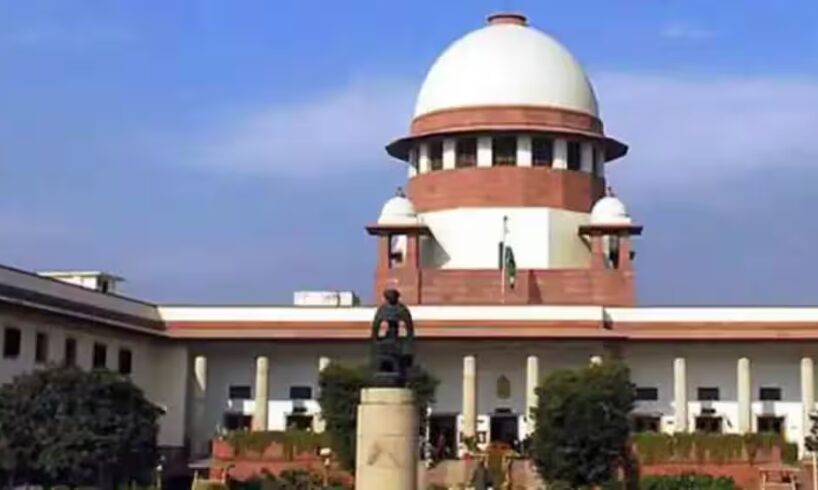
The Supreme Court’s decision this week to consider framing comprehensive, uniform guidelines for how courts should handle sexual-assault and child-sexual-abuse matters is a timely and necessary intervention. The move — triggered by an Allahabad High Court judgment of March 17 that minimised the gravity of an alleged attack on a minor — exposes a worrying pattern: well-publicised, widely-criticised orders from different high courts that reflect confusion, myths and personal value judgments by some judges about victims’ behaviour. The top court has stayed the Allahabad High Court’s controversial observations and directed that the trial continue on the higher charges of attempt to rape/rape under the IPC and POCSO.
Why the Supreme Court stepped In
The Allahabad High Court’s March 17 order described certain acts — grabbing a minor girl’s breasts, breaking the string of her pyjama and dragging her under a culvert — as insufficient to sustain charges of attempt to rape or rape. The Supreme Court called such observations “unfortunate”, stayed that part of the Allahabad judgment and ordered that the accused be tried on the more serious sections under the IPC and the POCSO Act; it also asked the top court to consider issuing uniform sensitivity norms for judges and courts hearing these matters.
Add Zee News as a Preferred Source
Conflicting High-Court Rulings
In the last few years, several rulings by different High Courts have sparked outrage on social media:
• Karnataka High Court (2020) — In a widely criticised anticipatory-bail order, Justice Krishna S. Dixit cast doubt on the complainant’s credibility and said her explanation — that she was tired and fell asleep after the alleged assault — was “unbecoming of an Indian woman” and “not the way our women react when they are ravished.” Those remarks fed public outrage about stereotyping victims and misunderstanding trauma responses.
• Bombay High Court, Nagpur Bench (2021) — the “skin-to-skin” controversy — The Nagpur bench had held that groping a minor over clothes (i.e., without direct skin-to-skin contact) did not constitute “sexual assault” under the POCSO Act; that order was stayed by the Supreme Court and ultimately set aside, with the top court emphasising that sexual intent and the nature of contact, not a rigid skin-to-skin test, determine POCSO liability. The incident provoked strong criticism from child rights and women’s groups.
• Calcutta High Court (recent, overturned) — A bench had made highly objectionable observations advising adolescent girls to “control sexual urges” and suggested that a girl who ‘gives in’ is the “loser.” The Supreme Court set that order aside, stressing that judges must not let personal moralising infect legal reasoning.
• Madhya Pradesh High Court (2020) — “tie a rakhi” bail condition — In a order that sparked outrage, a high court bench granted bail on condition that the accused go to the complainant’s home and ask her to tie him a rakhi — a symbolic act of siblinghood. The Supreme Court quashed that condition, calling for judicial sensitisation so that judicial remedies don’t humiliate victims or trivialise offences.
Why The Need For New Guidelines
According to experts and the Supreme Court’s observations, when a court questions a complainant’s credibility based on outdated gender stereotypes, it risks chilling future reporting by victims and undermining fair prosecution. When different high courts apply varying tests (skin-to-skin contact versus broader notions of sexual assault) the result is legal uncertainty for prosecutors, defence counsel and investigators. The Supreme Court has pointed to this “chilling effect” and the need for consistent guidance.
The Supreme Court’s decision to consider uniform sensitivity and procedural guidelines is both warranted and overdue. Experts believe that carefully crafted, transparent guidelines — combined with judicial training and the use of expert inputs — can protect victims’ dignity, ensure more consistent application of law, and strengthen public confidence in the justice system.