Senior Alberta government officials stalled the submission of a coal mine pollution study to a scientific journal and prevented the lead researcher from speaking publicly about his work, according to records The Narwhal obtained through a freedom of information request.
Emails included among more than 600 pages of documents show officials delayed government scientist Colin Cooke from submitting a study about selenium pollution in the McLeod River watershed for four months after it was complete. The records also indicate Cooke was not permitted to participate in at least two media interviews or speak to a community group about his research, raising concerns the province is muzzling scientists and restricting the public’s access to tax-payer funded research.
The delays came as Alberta was embroiled in a public debate about the future of coal mining in the Rockies, with the government lifting its moratorium on coal mining in the eastern slopes not long after Cooke eventually got the greenlight to submit his study.
Cooke, an aquatic scientist who works for Alberta Environment and Protected Areas, has led multiple studies into the impacts of coal mining in Alberta’s Rocky Mountains. Working with scientists both inside and outside of government, Cooke’s research found historic coal mines in the Crowsnest Pass continue to pollute nearby waterways decades after they closed. He found snowpacks have been contaminated by windblown pollution from coal mines in southeast B.C. And more recently, he and his co-authors found concerning selenium concentrations in fish from Crowsnest Lake.
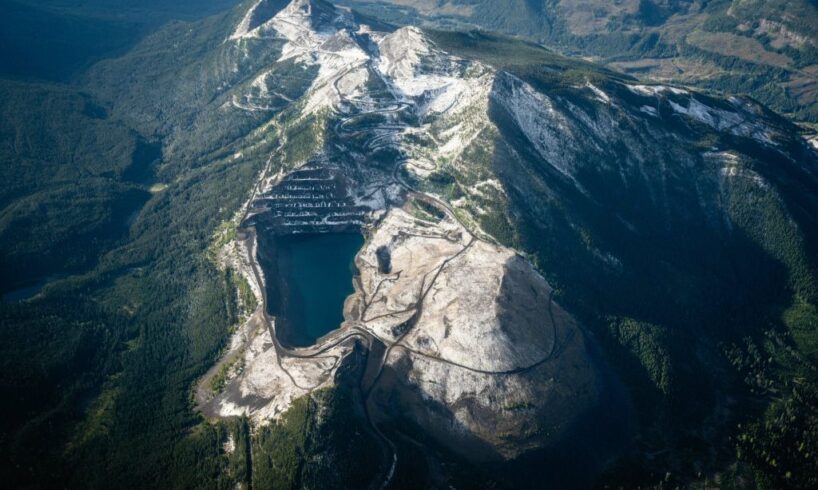
Government scientist Colin Cooke’s research has implications for B.C., where metallurgical coal mining is both big business and the subject of an international inquiry over extensive water pollution flowing through the Elk Valley and downstream into Montana and Idaho. Photo: Callum Gunn
In a study published in October, Cooke and his co-authors found selenium concentrations downstream of three coal mines in the McLeod River watershed exceeded guidelines meant to protect aquatic life. This was after the mines were considered to be partially, and in one case almost entirely, reclaimed. While a small amount of selenium is essential for life, too much can be toxic, leading to deformities in fish and, in a worst-case scenario, reproductive collapse.
The research found reclamation — the process of restoring land impacted by mining to a state of equivalent capability as compared to before the mining — had so far failed to return selenium concentrations to pre-mining levels in a watershed that’s home to two at-risk fish species. The findings called into question the effectiveness of Alberta’s regulatory and mine restoration policies. It was this study Cooke was prevented from submitting for months after it was complete.
“It showed very clear impacts — negative impacts — on downstream water quality,” Bill Donahue, a co-author on the study and former head of environmental monitoring for the Alberta government, told The Narwhal.
“What our paper, I think, makes fairly clear is that there’s pretty much an utter failure of environmental management regulation and enforcement in relation to coal mining,” he said.
Bill Donahue, a scientist and former head of environmental monitoring for the Alberta government, raised concerns about the muzzling of government scientist when submission of the paper he co-authored with Colin Cooke was delayed by senior officials. Photo: Shane Gross / The Narwhal
The Narwhal requested interviews with both Cooke and Environment and Protected Areas Minister Rebecca Schulz. Neither was granted.
Instead, in an emailed statement the minister’s press secretary Ryan Fournier said, “We take this issue seriously. That’s why we conducted this research, published it and even paid extra to make the paper open access and publicly available.” The journal that published Cooke’s McLeod River study, Environmental Pollution, allows authors or their institutions to make the study freely available without a subscription for a fee. “We’re conducting more research into coal remediation, and being more transparent, than any other government in Alberta’s history,” Fournier said.
For Donahue, interference in the release and public communication of science is a major concern. “It’s really erosive to accountable and responsible government,” he said. And, he added, it raises serious questions like, “What else is not being published or released or communicated?”
Scientist repeatedly told to hold off submitting study to journal: internal emails
Cooke approached his superiors at Alberta Environment and Protected Areas in December 2023 to arrange briefings for senior officials about the McLeod River research, emails show. He noted the study, while not yet complete, could have “significant implications” for both Alberta Environment and the Alberta Energy Regulator.
Multiple pages in the records The Narwhal obtained were redacted, but they show the director of watershed sciences emailed Cooke months later, in mid-June 2024, to “reiterate the request to hold off on submitting the McLeod manuscript to a journal” until the Alberta Energy Regulator had been briefed.
That message, to hold off submitting the paper until leadership briefings were done, was repeated again by the executive director of the airshed and watershed stewardship branch in early July. “That message and direction is not unique to this manuscript, this topic area, or even our branch,” she said.
Later that month Cooke emailed the executive director and assistant deputy minister with the final manuscript. “Now that we have briefed the [Alberta Energy Regulator] on the paper are we ok to submit the manuscript? I was hoping to submit it next Friday (August 2),” he wrote.
That date came and went. In September, a briefing note about the new study was prepared for the minister. It noted the government had previously faced criticism for not analyzing environmental monitoring data sets or releasing draft reports based on environmental data. “This current report is now ready to be shared with other departments and submitted to a peer-reviewed scientific journal,” it said.
At the end of September, Cooke again emailed his superiors to ask if he was allowed to submit the study to the journal and was again told to wait.
The scientist followed up again in mid-October and early November.
In a statement, Fournier said, “This study took about two years to complete. Internal reviews are standard practice and necessary. This review period generated additional feedback on the paper — including as late as November 2024 — and helped assess if additional monitoring or other changes were needed.”
Concerns raised that Alberta has ‘returned to muzzling our scientists’
In mid-November 2024, Donahue, who left the government in 2019, expressed frustration about the delays in an email to Cooke. He said he would submit it himself if Cooke wasn’t allowed to.
“I suggest you inform the [assistant deputy minister] and chief scientist that I simply don’t accept that they are refusing to permit the publication of our manuscript, and that they should remind themselves of their legal duties, as stipulated by the Alberta’s Environmental Protection and Enhancement Act,” Donahue wrote in the email, which he shared with The Narwhal.
He said senior officials should be asking themselves, “What is worse, the public learning how badly coal mining in Alberta has been harming downstream water quality and aquatic ecosystems, or the public learning how badly coal mining in Alberta has been harming downstream water quality and aquatic ecosystems and that we’ve returned to muzzling our scientists in an attempt to cover it up while the government tries to convince Albertans that coal mining is environmentally benign?”
Six days later, Cooke, who had just returned from vacation, forwarded the email to his director. A week after that, he was allowed to submit the paper.
The Alberta government has faced a backlash from ranchers and others opposed to the prospect of a renewed coal mining industry in the eastern slopes of the Rockies, in part, over the threat of water contamination. Photo: Leah Hennel / The Narwhal
“I’m quite confident that my letter shook some trees,” Donahue said.
From his perspective there was no reasonable justification for the government to delay the study’s submission to a journal. He said there had been ample opportunity for briefings and noted it can take several months to go through the peer-review process after a study is submitted to a journal before it’s published.
By this point, Alberta had been embroiled, for years, in a fierce debate over the prospect of a renewed metallurgical coal mining industry in the eastern slopes of the Rockies (metallurgical coal is used in steel-making, as opposed to electricity generation). In January, not long after Cooke got the green-light to submit his study, the Alberta government rescinded the moratorium on coal mining in the eastern slopes it put in place in 2021 and 2022. The moratorium had come in response to public backlash to a government decision in 2020 to cancel the province’s previous long-standing coal policy from 1976.
Last December, Energy Minister Brian Jean said the province would return to the 1976 policy as it developed a new coal policy. He said the new policy, yet to be released, would require new mines to be underground or to use technologies to prevent selenium from entering waterways. But these measures would not apply to projects considered to be “advanced,” including the controversial proposal for the Grassy Mountain mine in the Crowsnest Pass.
Katie Morrison, executive director of the Canadian Parks and Wilderness Society’s southern Alberta chapter, said it’s important to have research on the impacts of coal mining on water quality available as part of the public discourse. Photo: Supplied by Katie Morrison
Cooke’s paper, which was eventually published in October 2025, summarized decades of government and industry water quality monitoring at three Rocky Mountain coal mines in Alberta. Donahue noted the early years of data, now a couple decades old, revealed concerning selenium concentrations downstream of the mines. But little was done to address it, he said, suggesting the province has largely viewed monitoring as “a box-checking exercise.”
“Alberta Environment and the Alberta Energy Regulator have been asleep at the switch for 20 plus years when it comes to responding to clear evidence of very harmful downstream effects from coal mining,” he said.
Katie Morrison, executive director of the Canadian Parks and Wilderness Society’s southern Alberta chapter, said it’s “really frustrating to see the government trying to keep information from the public, but especially on something as important as water quality.”
“Albertans are really aware of and really concerned about the quality of our water in general, but particularly in this context of coal mining,” she said. “Research like this that shows these risks is so important to have in those conversations, so that we can hold the government accountable.”
Scientist prevented from accepting media request, community speaking invitation, emails suggest
As senior officials delayed the submission of the McLeod River study, Cooke was also seemingly being prevented from speaking to the media and community groups about previous research into coal mine pollution, emails included in the document release suggest.
In January 2024, a reporter for The Canadian Press requested an interview with either Cooke or co-author Craig Emmerton, another government scientist, about their recently published study describing lasting water quality impacts from more than a century of coal mining in Crowsnest Pass, the released emails show.
The executive director of airshed and watershed stewardship indicated in an email to Cooke that she was supportive of an interview, as was the director of communications and the assistant deputy minister. Days later, word came down from the assistant deputy minister that the minister’s office had taken the lead on the request.
The Canadian Press article was published later that month. The reporter noted neither of the government scientists involved in the study were made available for an interview.
In a statement to The Narwhal, Fournier, Schulz’s press secretary said, “The authors of these studies are trained scientists, not government spokespersons.”
Open-pit coal mining can increase levels of selenium in rivers, which can be toxic to fish populations and contaminate drinking water. Photo: Leah Hennel / The Narwhal
In June 2024, Cooke received an interview request from a CBC producer to appear on the morning show in Kelowna the next day to talk about another study, which found toxic contaminants from coal mines in B.C.’s Elk Valley in snowpacks in the region. According to the emails, Cooke was told to direct the producer to Fournier, the minister’s press secretary.
“That’s the process for all media inquiries,” the director of communications for Alberta Environment and Protected Areas wrote in an email to Cooke. “[The minister’s office] will then assess and advise from there.”
The next day CBC’s Daybreak South interviewed co-author Alison Criscitiello, the director of the Canadian Ice Core Lab at the University of Alberta, not Cooke, who was the lead author.
Then, in September 2024, the Livingstone Landowners Group of ranchers and landowners concerned about the risks of coal mining on the eastern slopes of the Rockies invited Cooke to speak to their community about his research.
“I would like to do this,” Cooke wrote in an email to the director of watershed sciences asking what approvals he’d need. The director responded that she was supportive but said Cooke would need approval from the assistant deputy minister.
In an interview, Bill Trafford, the president of the Livingstone Landowners Group said Cooke was not able to present to the group.
“It’s very concerning because it’s very germane to the issues that we’re trying to deal with,” Trafford said. “I’m really surprised they can take a scientist and say he’s not allowed to present his material publicly.”