SYDNEY – Standing in the rain outside a suburban Sydney train station, seventeen-year-old Naveed Akram stares into the camera and urges those watching to spread the word of Islam.
“Spread the message that Allah is One wherever you can… whether it be raining, hailing or clear sky,” he said.
Another since-deleted video posted in 2019 by Street Dawah Movement, a Sydney-based Islamic community group, shows him urging two young boys to pray more frequently.
The authorities are now trying to piece together what happened in the intervening six years that led a teenager volunteering to hand out pamphlets for a non-violent community group to allegedly carry out
Australia’s worst mass shooting in decades.
Akram, who remains under heavy guard at a hospital after being shot by police, was briefly investigated by Australia’s domestic intelligence agency in 2019 for links to individuals connected to ISIS, but the authorities found that he did not have extremist tendencies at the time.
“In the years that followed, that changed,” Home Affairs Minister Tony Burke said on Dec 16.
Prime Minister Anthony Albanese said the attack was
likely motivated by the ideology of ISIS
, but that Akram, 24, and his father, Sajid Akram, 50, appeared to have acted alone.
Home-made ISIS flags were found in the suspects’ car after the attack, and police said father and son in November visited the Philippines, where offshoots of the militant group have a presence.
A spokeswoman for the Philippine Bureau of Immigration said Akram, an Australian, arrived in the Philippines on Nov 1 with his father, who was travelling on an Indian passport.
Both reported Davao City, in the war-torn southern island of Mindanao, as their final destination.
A months-long conflict on the island in 2017 between the Philippine military and two militant groups linked to ISIS left over 1,000 dead and a million displaced.
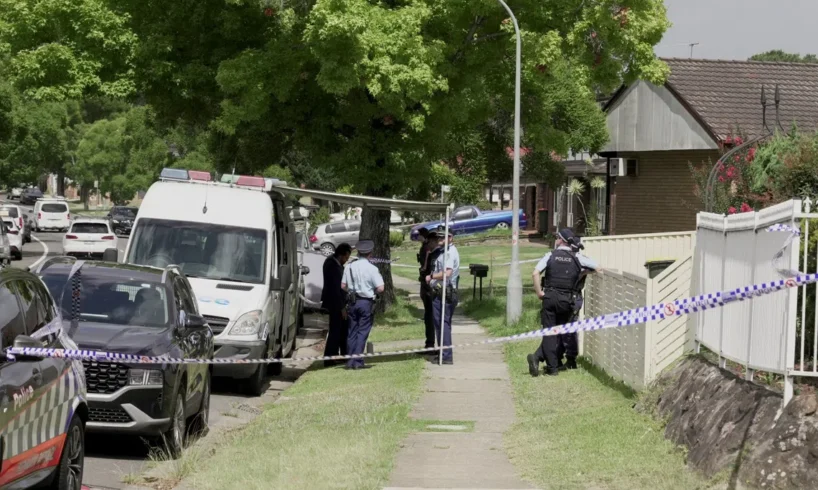
Akram and his father left the Philippines on Nov 28, two weeks before the Dec 14 attack using high-powered shotguns and rifles.
Akram, an unemployed bricklayer, attended high school in Cabramatta, a suburb around 30km by road from Sydney’s central business district and close to the family’s current home in Bonnyrigg, which was raided by police after the attack.
“I could have never imagined in 100 years that this could be his doing,” Mr Steven Luong, a former classmate, told The Daily Mail.
“He was a very nice person. He never did anything unusual. He never even interrupted in class,” said Mr Luong.
After leaving school, Akram showed a keen interest in Islam, seeking tutoring and attending several Street Dawah Movement events. The group confirmed that he appeared in the videos.
“We at Street Dawah Movement are horrified by his actions, and we are appalled by his criminal behaviour,” the group said in a statement, adding Akram attended several events in 2019 but was not a member of the organisation.
Months after the videos were posted, Akram approached tutor Adam Ismail seeking tuition in Arabic and the Quran, studying with him for a combined period of one year.
Mr Ismail’s language institute posted a photo in 2022, since deleted, showing Akram smiling while holding a certificate in Quranic recitation.
“Not everyone who recites the Quran understands it or lives by its teachings, and sadly, this appears to be the case here,” Mr Ismail said in a video statement late on Dec 15.
“I condemn this act of violence without hesitation.”
Two of the people he was associated with in 2019 were charged and went to jail, but Akram was not seen at that time to be a person of interest.
By whatever way he was radicalised, Akram’s journey from a teenager interested in Islam to one of Australia’s worst alleged killers has taken not just the public, but also law enforcement by surprise.
“We are very much working through the background of both persons,” New South Wales Police Commissioner Mal Lanyon told reporters on Dec 15. “At this stage, we know very little about them.” REUTERS
Shooting – gun crimeTerrorismAustraliaISISISIS in South-east Asia