The Philippines National Police says it is investigating the movements of the Bondi Beach shooters, including whether they spent time in an area with a history of violent Islamist militants.
Yesterday, immigration officials confirmed that father-son gunmen Sajid and Naveed Akram travelled to the Philippines for almost the entire month of November.
It is understood the pair arrived in Davao, the largest city in the southern island of Mindanao, before likely travelling on to other destinations.
The final moments of the Bondi Beach mass shooting
A senior counter-terrorism official told the ABC they suspect the pair received “military-style training” while in the Philippines.
According to an immigration spokesperson, the pair left Davao on November 28, just weeks before the deadly shooting at Bondi.
Police in the region of Davao said they were investigating whether Sajid and Naveed Akram “passed by” on their way elsewhere in the island.
Read more on the Bondi Beach shooting:
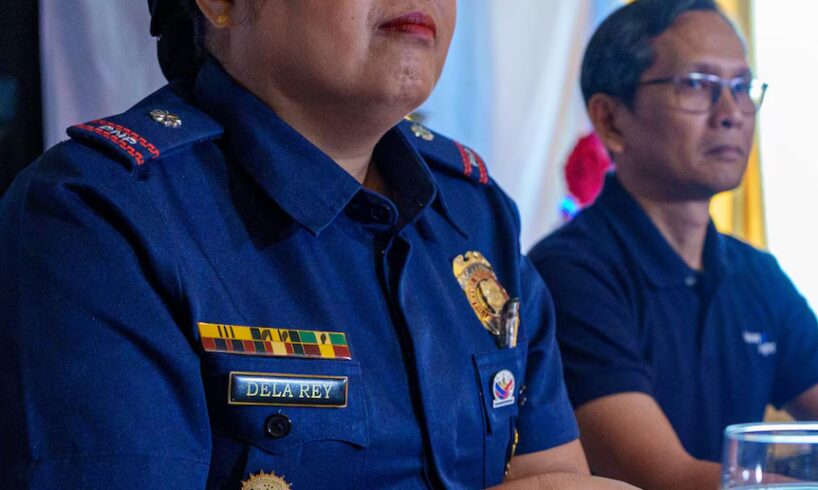
“We are conducting an investigation if they indeed arrived in Davao,” Major Catherine Dela Rey said at a press conference earlier today.
“If they arrived in Davao: Where did they stay? Who are the people they met? Or if they only passed by Davao … if they stayed in another place.
“Right now we are conducting an investigation with other agencies.”
The police spokesperson did not say whether they were coordinating with Australian law enforcement, saying they did not have that information to hand.
Naveed Akram, 24, and his father Sajid target people at Bondi Beach on Sunday. (Instagram)
The spokesperson said the investigation would be managed by their intelligence division.
The revelation that the pair may have used Davao as a transit point, just weeks before the Bondi Beach shooting, has shocked many in the city, which was once a target of suspected Islamist militants in 2016.
Major Catherine Dela Rey said police were working with other agencies. (ABC News: Haidarr Jones)
Philippines travel ‘wouldn’t set off alarm bells’
Mindanao has been known for being a hotbed for Islamist militants, with several groups pledging allegiance to Islamic State from 2014.
In 2017, hundreds of Islamic State-aligned militants stormed Marawi, the capital of Lanao del Sur province in the Muslim-majority Bangsamoro Autonomous Region in Mindanao, sparking extreme fears over the strength of Islamic State fighters in the Philippines.
Marawi was recaptured five months later, after a bloody conflict that killed more than 900 militants.
Davao is the largest city in Mindanao island, a place with a history of violent Islamic extremism. (ABC News: Haidarr Jones)
Analysts say the influence and strength of Islamic State-aligned groups in Mindanao has diminished significantly in recent years.
The Philippines military has had infrequent skirmishes with remnants of these groups over the last few years.
Experts have raised the possibility that Sajid and Naveed Akram could have received some kind of training, but said the infrastructure of terrorist organisations in Mindanao was at a much smaller scale than previous years.
Levi West, an internationally recognised expert on terrorism and radicalisation and ANU research fellow, said the training camps in the southern Philippines had changed a lot in recent years.
Families remember Bondi victims
“There is still the capacity, very much, for people to be trained,” Dr West said.
Dr West said legal military training was not uncommon in “all kinds of countries”, including the United States.
“It’s possible they [the gunmen] accessed commercial off-the-shelf tactical training, there’s [also] some very distinct possibility they spent time in a jihadist training camp,” he said.
Asked whether travel to this area would set off alarm bells, Dr West said it only would if someone was being monitored by authorities.
“Unless somebody is being monitored and being surveilled, whether by law enforcement or intelligence services, the simple purchasing of a plane ticket to the Philippines is not going to set off any alarms or triggers,” he said.
Philippines president says country is not an ‘ISIS training hotspot’
In a press conference earlier today, the president of the Philippines reportedly hit back at media characterisations of the country as an “ISIS training hotspot”.
During a press briefing, as reported by local media, a palace press officer responded to reports by saying:
“The president [Ferdinand “Bongbong” Marcos Jr] strongly rejects this sweeping statement and the misleading characterisation of the Philippines as an ISIS training hotspot.”
The press officer also said there was no evidence the Philippines was used for terrorist training, according to local media.
Loading…
In a statement, an Australian Federal Police spokesperson said it did not have any “validated information” concerning the claims about Sajid and Naveed Akram.
“Matters involving the movements of foreign nationals and potential terrorist links are being closely coordinated through the appropriate government agencies,” it said.