Russia increases its grouping fighting in Ukraine to around 710,000 troops to conduct a strategic offensive, Syrskyi says. Russia effectively rejects peace proposals, plans to continue its offensive, official statements show. The U.S. readies new Russia sanctions if Putin rejects a peace deal, Bloomberg News says.
Russia increases grouping in Ukraine to around 710,000 troops to conduct strategic offensive, Syrskyi says
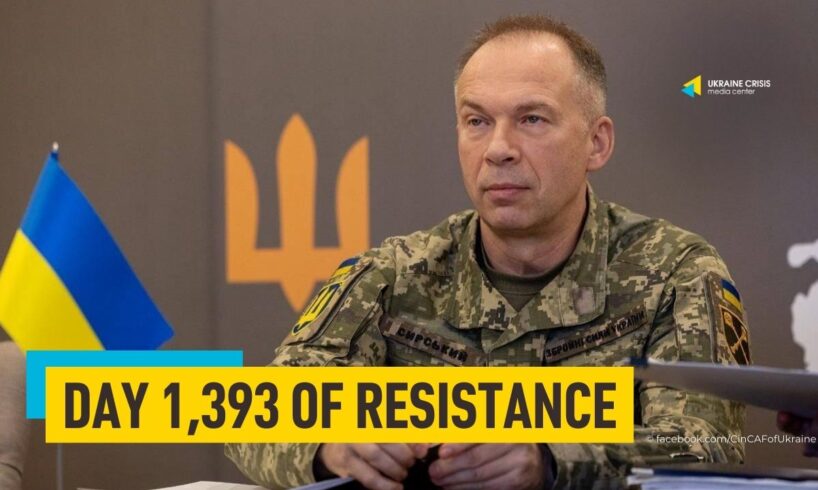
Russia has increased the size of its grouping fighting in Ukraine to around 710,000 troops to conduct a strategic offensive operation, Commander-in-Chief of the Armed Forces of Ukraine, General Oleksandr Syrskyi said in a post to social media on Wednesday.
Syrskyi’s remarks followed Tuesday’s video conference of the 32nd Ukraine Defense Contact Group meeting.
He said he had informed the allies of the battlefield situation, which he said, remains complicated. Despite heavy losses and a lack of substantial operational successes, Russia does not halt offensive operations.
Ukraine’s defense forces have thrown Russian troops back from Kupyansk, in Kharkiv region. They now control almost 90 per cent of the city, he added.
Russia has been trying to capture Pokrovsk for more than 17 months, yet Ukrainian troops are holding defensive positions and are seizing the initiative against Russia, the army chief said.
He added that Ukrainian forces had regained control of 16 square kilometers of land in the city’s northern part without specifying the time period when it happened. They have also recaptured 56 square kilometers of land near Hryshyne, Kotlyne and Udachne west of Pokrovsk.
Russia increased the number of combat troops in Ukraine from 603,000 as of January, 1 to 623,000 in early April, Syrskyi said in an interview with Ukrainian news site Livyi Bereh published in April.
The size of the Russian grouping fighting in Ukraine stands at around 710,000 soldiers and has been unchanged for quite a while, Syrskyi said on December 13.
Russia effectively rejects peace proposals, plans to continue offensive, official statements show
Russia’s Defense Minister, Andrey Belousov, told a gathering of senior defense officials on Wednesday that the ministry’s “key task for the coming year is to maintain and increase the current pace of advance” in Ukraine.
NATO is preparing its troops for a conflict with Russia by 2030, he said, adding that it “sets real preconditions” for Russia to continue fighting in Ukraine in 2026.
Belousov also called for recruitment of young people under the age of 35 to serve in the army’s unmanned systems units. His statements reflect Russia’s unreadiness to compromise on the goals for its invasion of Ukraine, Ukrainian media said.
The Kremlin explicitly rejected US and European offers to provide Ukraine with “NATO-like” security guarantees as part of a peace deal and continued to signal its unwillingness to compromise on Russia’s territorial claims to Ukraine’s sovereign territory, the Institute for the Study of War (ISW) said in an update on Tuesday. The below paragraphs are quoted from the report.
Russian Deputy Foreign Minister Sergei Ryabkov stated in an English language TV interview with ABC News on December 15 that Russia “definitely will not at any moment subscribe to, agree to, or even be content with” any NATO troops in Ukraine, even if these forces are part of a security guarantee or are members of the Coalition of the Willing. Ryabkov also reiterated that Russia would not compromise “in any form” on the five Ukrainian regions that Russia illegally annexed — which includes the entirety of Donetsk, Luhansk, Zaporizhia, and Kherson oblasts and Crimea.
Ryabkov notably stated that Russia has “five [regions] altogether,” effectively reiterating the Kremlin’s demand that Ukraine give up unoccupied parts of Donetsk, Luhansk, Zaporizhia, and Kherson oblasts to Russia, and therefore signaling that Russia remains unlikely to agree to any ceasefire that would freeze the current frontline. Ryabkov reiterated Russia’s theory of victory — which claims that Russia will inevitably win by outlasting Ukrainian resilience and Western support — by stating that the end of Russia’s war in Ukraine depends on when Ukrainian supporters “recognize the inevitable outcome of [Russian] success.”
Ryabkov also stated that Russia’s whole “purpose” of war in Ukraine is to have Ukrainians find out that they belong in Russia, effectively restating the Kremlin’s long-term goal of establishing control over Ukraine’s government and its people, not just its land.
Kremlin Spokesperson Dmitry Peskov similarly reiterated on December 16 that Russia wants to “end this war” but seeks to achieve its goals, which ISW assesses include decapitating and replacing the Ukrainian government, destroying the Ukrainian military, and undermining Western unity. Peskov also rejected the Ukrainian-proposed and US-supported idea of a Christmas truce.
The Kremlin has been effectively rejecting key points of various peace deal proposals, including the original US-proposed 28-point peace deal, such as reliable security guarantees for Ukraine or territorial swaps.
U.S. readies new Russia sanctions if Putin rejects peace deal, Bloomberg News says
The US is preparing a fresh round of sanctions on Russia’s energy sector to increase the pressure on Moscow should President Vladimir Putin reject a peace agreement with Ukraine, according to people familiar with the matter, Bloomberg News said on Wednesday. The paragraphs below are quoted from the article.
The US is considering options, such as targeting vessels in Russia’s so-called shadow fleet of tankers used to transport Moscow’s oil, as well as traders who facilitate the transactions, said the people who spoke on condition of anonymity to discuss private deliberations.
The new measures could be unveiled as early as this week, some of the people said.
Treasury Secretary Scott Bessent discussed the plans when he met a group of European ambassadors earlier this week, the people said.
The people cautioned that any final decision rests with President Donald Trump.
The discussions over further measures come as US and Ukrainian negotiators made some advances this week toward the terms of a potential peace accord. US envoy Steve Witkoff was in Berlin for two days of talks with Ukrainian President Volodymyr Zelenskiy and European leaders over the latest proposals.
In other reports, a bipartisan group of U.S. senators introduced a bill that requires targeted sanctions on the individuals and companies around the world who import and move Russian-origin oil, Ukraine’s Ambassador to the U.S. Olha Stefanishyna said in a post to social media early on Wednesday.
In October, U.S. President Donald Trump imposed sanctions on Russia for the first time in his second term, targeting oil companies Rosneft and Lukoil. The measures took effect on November 21.