Washington, DC, 19 December 2025 – The Pan American Health Organization (PAHO) congratulates Brazil on achieving the elimination of mother-to-child transmission (EMTCT) of HIV—a landmark accomplishment for public health in the Americas. As the largest country in the world to reach EMTCT, Brazil reaffirms its leadership in universal health coverage through its Unified Health System (SUS).
“Today, SUS is a source of pride for Brazil and for the world, because we are the only country with more than 100 million inhabitants to have a health system that grows stronger every day. It ensures that the humblest people, the poorest and most vulnerable, receive the same health care as the wealthiest person in the city,” said Luiz Inácio Lula da Silva, President of Brazil.
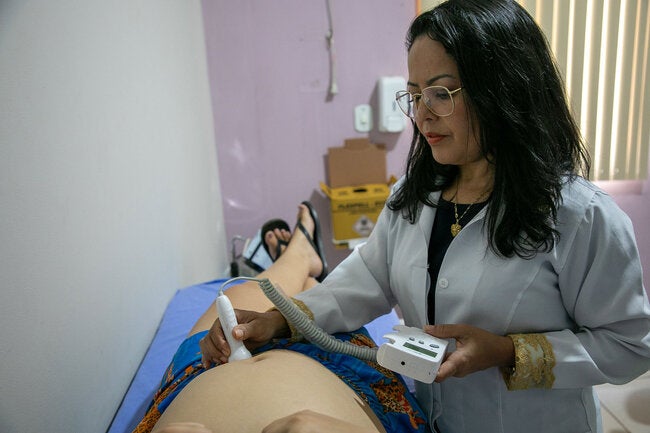
Brazil’s validation reflects years of dedicated efforts to expand access to HIV testing, treatment, and maternal health services. By reducing vertical transmission rates to below 2% and ensuring over 95% coverage for both prenatal care and antiretroviral therapy, Brazil has met the rigorous criteria for EMTCT.
“This achievement shows that eliminating vertical transmission of HIV is possible when pregnant women know their HIV status, receive timely treatment, and have access to maternal health services and safe delivery,” stated Dr. Jarbas Barbosa, PAHO Director.
A Regional Effort with Global Impact
The country implemented a progressive, subnational approach by first certifying states and municipalities with over 100 000 inhabitants, adapting the PAHO/WHO validation methodology to its national context while maintaining coherence across the country.
The evaluation, supported by PAHO, was conducted by independent experts who reviewed data, documentation, and health facility operations. Findings were then assessed by WHO’s Global Validation Advisory Committee, which formally recommended Brazil’s validation for elimination.
“Brazil is the largest country in the world to eliminate vertical transmission of HIV. The progress we celebrate reflects a collective effort, both national and global, that consolidated free access to antiretroviral therapy and modern prevention strategies. Today, SUS guarantees comprehensive care for people living with the virus and continues to expand access to simpler, more effective, and safer treatment regimens,” said Alexandre Padilha, Minister of Health.
“This achievement is also the result of the tireless dedication of thousands of health professionals, community health workers, and civil society organizations. Every day, they sustain the continuity of care, identify obstacles, and work to overcome them, ensuring that even the most vulnerable populations can access essential health services,” added Dr. Barbosa
From Local Innovation to National Strategy
Brazil’s journey began in 2017, when Curitiba became the first city certified for HIV elimination. Starting in 2021, the program expanded significantly, reaching 28 municipalities for HIV and one for syphilis. In 2022, a total of 73 municipalities were certified, consolidating the strategy. In 2023, the initiative expanded to the state level, with São Paulo and Paraná achieving certification for the elimination of HIV, while the Federal District, Sergipe, Piauí, and Goiás received silver and bronze seals for HIV and syphilis. In 2024, Santa Catarina, Goiás, and Minas Gerais were certified, and hepatitis B was incorporated into the process, reaching 40 municipalities.
By 2025, the subnational certification program had further expanded to include the elimination of vertical transmission of Human T-lymphotropic virus (HTLV). It was formally integrated into the Healthy Brazil (Brasil Saudável) Program, a national strategy aimed at eliminating more than 16 communicable diseases.
Brazil is one of the 12 countries and territories in the Americas to have been validated by WHO for EMTCT.
PAHO’s Elimination Initiative
Brazil’s achievement is aligned with PAHO’s Elimination Initiative, which aims to eliminate more than 30 communicable diseases and related conditions in the Americas by 2030. Over the past decade, this regional effort has prevented more than 50,000 pediatric HIV infections, thanks to collaboration among governments, civil society, and international partners.
Through this work, PAHO supports countries in strengthening national HIV and maternal and child health programs, improving surveillance, and building the capacity of health workers across services, helping ensure that progress is sustained and that children across the Region of the Americas are born free of HIV.