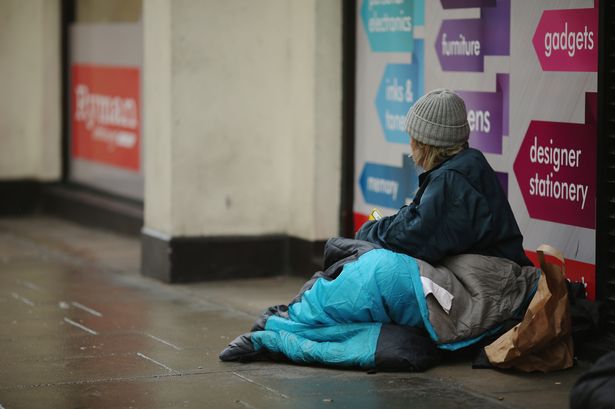
Between July and September this year 85 women were found to be sleeping rough in Plymouth
Domestic abuse has been found to be a key driver of women’s homelessness (Image: Getty Images)
A Plymouth charity has highlighted how domestic abuse is one of the key drivers behind women finding themselves homeless.
It comes as figures reveal the number of women found sleeping rough in Plymouth has doubled.
Local homelessness charity Path has raised the issue of the often hidden link between domestic abuse and women’s homelessness in the city and has urged local services and the public to recognise that leaving an abusive relationship all too often means entering into a housing crisis – and that for many women, homelessness is not just a result of poverty but a consequence of violence.
In July, Path co-ordinated Plymouth’s Women’s Homeless Census as part of Solace’s national research initiative to capture the lived experiences of women facing housing insecurity and homelessness.
This marked the city’s first participation in the census, alongside more than 80 local authorities across England, gathering vital insights into women’s experiences of rough sleeping and hidden homelessness.
The findings revealed the complex realities of women’s homelessness, including those fleeing abuse.
Between July and September, Path and partner organisations in the city including, Trevi, Shekinah, The Soup Run, BCHA – George House and Hospital Discharge Team, PCC Outreach team, the Job Centre and the Zone, identified 85 women sleeping rough in Plymouth – more than double the number previously counted.
The charity said 19 women completed the census survey, with one saying, “It is now more dangerous than ever to be homeless in Plymouth” and another citing the need for more support around mental health and accommodation services.
Plymouth City Council reports that the city experiences a high prevalence of domestic abuse, with the number of reported incidents continuing to rise over the past five years. Domestic abuse now accounts for around 27 percent of all violent crime in Plymouth, compared with a national average of 16 percent.
In 2020/21 alone, there were 6,933 domestic abuse crimes and incidents reported to the police – an increase of 21 percent on the previous year.
The census data also confirms what national research repeatedly shows: domestic abuse is a major trigger for women’s homelessness, and women’s homelessness is often hidden and under-counted.
National research in the UK illustrates the scale and severity of this issue. Homeless Link reports that “domestic abuse is a primary trigger of homelessness amongst women and continues to impact the experiences of women while homeless”.
Four out of ten homeless women identify domestic abuse as a contributing factor to their homelessness.
File picture representing domestic abuse (Image: Getty Images)
Moreover, research by the Office for National Statistics (ONS) based on interviews with women survivors in England highlighted the lack of suitable accommodation, complex processes, and the importance of both physical and emotional safety in post-abuse housing pathways.
Many women escaping domestic abuse face a stark choice between staying in an unsafe home with an abuser or leaving and risking homelessness or unstable housing, such as sofa-surfing or even rough sleeping. Plymouth’s local census adds insight to this broader context and helps shine a light on how that national challenge is playing out in our city.
Path is now urging recognition across the housing, homelessness and domestic abuse sectors that domestic abuse is a core cause of women’s homelessness, not just an associated factor. As a consequence the charity is calling for safe, affordable housing pathways to be made available to women escaping violence – not simply crisis provision, but options for stability and independence.
Victoria Allen, Path CEO, said: “We are working with services across the city to adopt trauma-informed and gender-responsive approaches that recognise hidden forms of homelessness — such as sofa-surfing or insecure stays. These experiences rarely appear in official figures, yet they carry serious risks for women’s safety and wellbeing.”
With the cold weather starting to bite Path has also launched its Winter Appeal to help ensure no one in our city has to face the cold alone. For more information, please visit Winter Appeal — Path | Hope Begins with a Home
Where homeless people can get help
Information from Plymouth City Council
Plymouth Access to Housing (PATH)
PCC funds PATH’s Rough Sleepers Team to help people on the streets in Plymouth get into accommodation. PATH also offer a range of services to reduce and prevent homelessness. Visit the PATH website or call 01752 255889 for more information.
Shekinah
Shekinah offers rough sleepers a range of advice services, shower/laundry facilities and a healthy breakfast. Visit the Shekinah website, email [email protected] or call 01752 203 480 for more information.
Shelter
Shelter give free, expert advice on issues such as homelessness, rent arrears and what to do if your rented home is in need of repair. Its solicitors can help with free, confidential legal advice for anyone eligible for legal aid. Visit the Shelter website or call 0344 515 2399 for more information.
Salvation Army
The Salvation Army offers hostel accommodation for single people with support needs. All age groups are accepted but PCC will need to refer you. Email [email protected] or call 01752 305496.
Plymouth soup run
The soup run starts daily at 8.45pm off Mayflower Street beside the Moneycentre building, then moves to the ‘wedding cake’ on The Hoe for around 9.20pm, then Martin Street at 9.35pm, ending at Kings Road (by Stonehouse Bridge) at approximately 9.50pm. Visit the Plymouth soup run website, email [email protected] or call 07794555419 for more information.
Where to get help for domestic abuse
If you are in immediate danger, call 999 and ask for the police. If you are unable to talk on the phone, call 999 and listen to the questions from the operator and if possible, respond by coughing or tapping the head set.
If prompted, press 55 to Make Yourself Heard and this will transfer your call to the police.
Pressing 55 only works on mobiles and does not allow police to track your location.
If you are deaf or can’t verbally communicate, you can register with the emergencySMS service.
Text REGISTER to 999. You will get a text which tells you what to do next. Do this when it is safe so you can text when you are in danger.
In a non-emergency email [email protected] or call 101.
You can report incidents anonymously to Crimestoppers on 0800 555 111 or online at – Independent UK charity taking crime information anonymously | Crimestoppers (crimestoppers-uk.org)
National Domestic Abuse Helpline
You can call the National Domestic Abuse Helpline for free and confidential advice, 24 hours a day on 0808 2000 247.
The Men’s Advice Line
The Men’s Advice Line is a confidential helpline for male victims of domestic abuse and those supporting them.
Telephone: 0808 801 0327
Email: [email protected]
Galop – for members of the LGBT+ community
Galop runs the National LGBT+ domestic abuse helpline.
Telephone: 0800 999 5428
TypeTalk: 18001 020 7704 2040
Email: [email protected]
Women’s Aid
Women’s Aid has a live chat service available Mondays to Fridays between 10am and 12pm as well as an online survivor’s forum. You can also find your local domestic abuse service on their website.
The Survivor’s Handbook, created by Women’s Aid, provides information on housing, money, helping your children and your legal rights.
Women’s Aid have guidance documents on domestic abuse and coronavirus for victims, family and friends, and community members of those affected.
Hestia
Hestia provides a free mobile app, Bright Sky, which provides support and information to anyone who may be in an abusive relationship or those concerned about someone they know.
Hourglass
The Hourglass confidential helpline provides information and support to anyone concerned about harm, abuse or exploitation of an older person.
Telephone: 0808 808 8141
Shelter
Shelter provide free confidential information, support and legal advice on all housing and homelessness issues including a webchat service.
NSPCC
The NSPCC operates a national female genital mutilation (FGM) helpline, which offers guidance and support if you are worried about a child who is at risk of FGM or about somebody who has already undergone FGM.
Telephone: 0800 028 3550
Email: [email protected]
Sexual Assault Referral Centres
Sexual Assault Referral Centres provide advice and support services to victims and survivors of sexual assault or abuse.