Israel’s State Comptroller Matanyahu Englman released a scathing audit Tuesday exposing catastrophic security failures along Jerusalem’s border area – where Palestinians cross freely into Israel without inspection, female IDF observers sit in mortal danger near hostile territory, and government decisions from 20 years ago remain unimplemented. The failures, Englman warned, create conditions for an October 7-style coordinated terror attack in Israel’s capital region.
“After the Simchat Torah massacre, the government and the security establishment were obligated to draw lessons and prepare appropriately for defense in all arenas,” Englman stated regarding his decision to conduct an audit on the Jerusalem area’s readiness for terror incidents and various security risks. “The deficiencies in the report are disturbing and must keep the political and security leadership awake at night,” he added.
In practice, the comptroller’s office conducted the audit between 2024-2025, covering many diverse components. For example, the areas of responsibility of the relevant bodies were examined, led by the Border Police Jerusalem periphery unit; reference threats and scenarios in the sector were detailed; the effectiveness of operational responses in the area was examined; and breaches in the barrier along the border were identified. Operational concepts with deficiencies were also examined, including the lack of synchronization among the numerous bodies operating in the sector and the misalignment of crossing infrastructure with population growth.
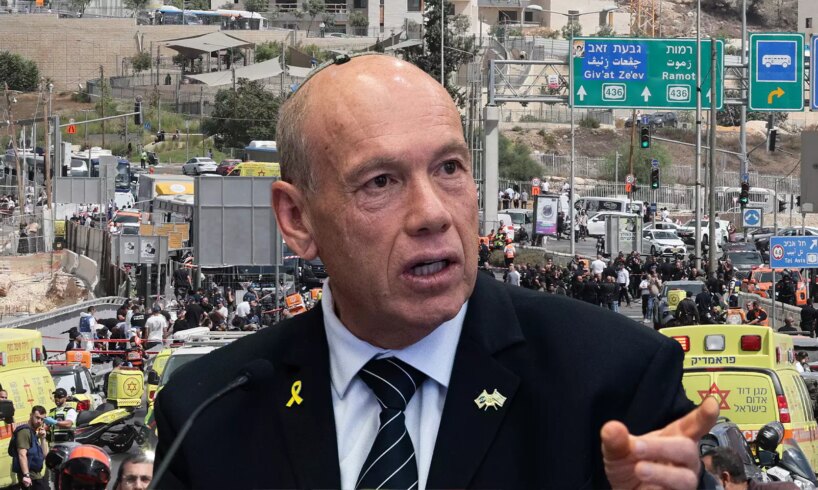
However, the report noted that the audit was completed before the murderous terror attack at Ramot Junction in September, in which six people were killed.
The scene of the terror attack at Ramot Junction in September 2025 (Photo: Yori Yalon)
Command and control
One of the fundamental issues examined in the comptroller’s report on this matter is the command and control of the various bodies located in the sector and operating at the crossings. According to the audit, for 20 years, the Israel Police has managed the various crossings without formulating a relevant operational concept that establishes the rules, principles, and methods of operation at the crossings.
It also emerged that there is a lack of clarity regarding the subordination of the Border Police Jerusalem periphery unit to the Judea and Samaria District of the police, and that the fact that the body operates, de facto, under four different arms (Central Command, Jerusalem District in the police, Judea and Samaria District in the police, and Border Police commander) has not been examined for 22 years and creates confusion and difficulty in operating forces in the sector. In general, it emerged that the multitude of forces in the sector (including Border Police, the IDF, the police, and civilian security guards) leads to operational gaps in the activities of the bodies.
Another aspect regarding command and control relates to the police’s lack of governance “in a certain area” in the Jerusalem periphery. The report does not specify which area, but it can be assumed that it refers to Kfar Aqab in northern Jerusalem, where the police simply cannot enforce the law. According to the report, “the failure to implement the police’s responsibility leads to a lack of governance and lack of municipal services, when the lack of governance damages the police’s ability to enforce and act when its intervention is required.”
It was also written that when there is activity in the place, it is often accompanied by disturbances and shooting at the forces securing the police, and that there is “the ability of Palestinians to pass from the territories into the area. Some of them hold blue identity cards that allow free movement in the territory of the State of Israel, which they exploited to carry out terror attacks in the state’s territory, and the lack of a basic response constitutes a security risk to citizens of the State of Israel.”
It should be noted that Kfar Aqab is under the municipal responsibility of the Jerusalem municipality, which invests almost no resources in the area, while security responsibility is in the hands of the IDF. In practice, only in recent weeks did Kfar Aqab’s local leadership approach the Jerusalem municipality to discuss solutions to various municipal problems within its jurisdiction, but it is unknown whether the meeting will help in the complex reality at the site.
Additional deficiencies were recorded in the training of Border Police soldiers that is not suitable for activity at the crossings, in the frequent turnover of crossing commanders which creates “difficulty in continuity of functioning and instructions,” in the shortage of weapons among police forces in the sector, as well as in the fact that there is no central body in Israel whose purpose is to handle all land crossings that are not international.
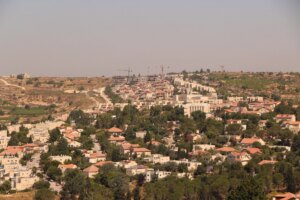
Illegal construction near Kfar Aqab, north of Jerusalem (Photo: Regavim Movement)
The operational response
The conclusions raised in this part of the audit should keep decision-makers awake at night, no less.
According to some of them, until the October 7 massacre, the Jerusalem District police did not formulate relevant reference scenarios for the sector regarding mass infiltration, which, in practice, damaged the district’s readiness and the readiness of the Border Police Jerusalem periphery unit for escalating terror incidents.
Only in August 2024, almost a year after the Simchat Torah massacre, did the preparation of the said order by the Jerusalem District police and the Border Police Jerusalem periphery unit finish. Even then, the order did not include operational instructions defining how to prepare for a scenario of infiltration from multiple points along the seam line, although the Shin Bet assessed that the Palestinians feel they have the ability to cross at the crossings easily and without real risk.
It also emerged that on the Palestinian side of the points where the barrier exists (which extends for 61% of the border), there are buildings built above the wall as well as piles of earth waste, which allow easy stone throwing and throwing of firebombs.
Another unusual conclusion that emerged in this chapter is that, during 30% of the audit time, the Border Police Jerusalem periphery unit’s order of battle was allocated to tasks “not directly related” to routine security along the barrier.
Among these tasks are the forces’ handling of disturbance incidents in the Judea and Samaria territories, escorting detainees, and reinforcing police forces in the Jerusalem District. According to the comptroller, “This fact, alongside the 11.5% gap in the police roster compared to the standard, raises concern regarding the ability of the Border Police Jerusalem periphery unit to meet the tasks assigned to it within the framework of its responsibility for the Jerusalem periphery area. Continued failure to meet routine security tasks endangers the residents of Jerusalem and allows threats to enter Israeli territory.”
The report presents a clear example of this, revealing that during five months, the recording of alerts by IDF female observation soldiers’ operations rooms about infiltration incidents in the Jerusalem periphery sector stood at hundreds and was significantly higher than the recording of Border Police alerts, which stood at only dozens and raises concern regarding the method of intelligence collection and creation by the Border Police.
Incidentally, regarding IDF female field-observers, it was written that “despite the threat from the Judea and Samaria sector, there has been no change in the concept of locating IDF collection operations rooms in the Jerusalem periphery sector, and they remain near the seam line. This reality, even after October 7, when female field-observation soldiers who stayed at an outpost near the Gaza border were killed and kidnapped, may put the female observation soldiers in the Jerusalem periphery sector at risk.”
When the comptroller’s office addressed the barrier structure itself, it emerged that there is no barrier at all for tens of miles. “Palestinians can enter Israeli territory without any control or inspection, risking Israeli residents,” it was written, alongside presenting grim data indicating the entry of thousands of illegal residents each year through the breaches.
“There is a danger of terror incidents because threats can infiltrate through the openings into Israeli territory and Jerusalem. The barrier does not manage to provide the required defensive response, and the lack of agreement between the Defense Ministry and the National Security Ministry regarding the party bearing budgetary responsibility for upgrading the barrier perpetuates the problem and endangers Israeli residents.”
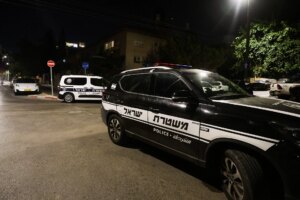
Border Police detain illegal Palestinian residents (Photo: Israel Police Spokesperson)
Inspection, security, and infrastructure alignment
The audit’s findings on inspection, security, and infrastructure alignment also raised quite unusual conclusions. Among other things, it was found that the reduction of the military police soldiers’ order of battle in June 2023 led to a situation where the “Erez” battalion of the corps could perform, in practice, about 69% of its tasks – a fact that significantly damaged the battalion’s operational activity.
In fact, from that month onward, there was an additional reduction in the battalion’s order of battle, widening the mismatch between the tasks the battalion was required to perform and what it could actually accomplish. The manpower shortage led to lane closures and a “bottleneck” at the crossing entrance. Similarly, incidentally, in the blue police activity. According to the comptroller, “in light of the lack of appropriate infrastructure and shortage of manpower, the police struggles to inspect vehicles at the crossings at the required level,” while waiting times and congestion pose a safety risk to inspectors and those waiting to cross.
It also emerged that the defense minister and the Coordinator of Government Activities in the Territories (COGAT) agreed on granting entry permits to Palestinians during the Ramadan period without taking into account the police’s ability to enforce these numbers. “According to the police, it was a partner in the discussions, but its recommendations are not taken into account in decision-making,” according to the comptroller. The inspection during Ramadan revealed that the infrastructure at the Rachel, Qalandiya, and Zeitim crossings does not allow the entry of all worshippers within the defined six-hour timeframe, and that the congestion poses a real danger to life. According to the comptroller, beyond the danger to life, this is “a reputational damage to the State of Israel as allegedly not allowing freedom of worship within its borders.”
Interestingly, the comptroller also noted to the Transportation Ministry, which decided to widen the road adjacent to the Tunnels Checkpoint without examining the impact of the move, that this contributed to the creation of “bottlenecks” at the crossing.
Implementation of government decisions
The comptroller noted that government decisions made over the years regarding the barrier were not brought for discussion at the Diplomatic-Security Cabinet, “although two decades have passed since their approval.” Among other things, successive governments did not discuss the decision to civilianize several crossings, did not implement the decision to transfer authorities from the IDF to the police in several areas, and did not ensure that the Shin Bet would be the body responsible for professional guidance regarding passenger and luggage inspection at all crossings, except those for which the IDF is responsible.
“The responsibility for correcting the deficiencies detailed in this report lies primarily with the prime minister, defense minister, national security minister, chief of staff, police commissioner, Central Command commander, Jerusalem District commander, and Border Police commander – each party at its level,” the comptroller concluded.