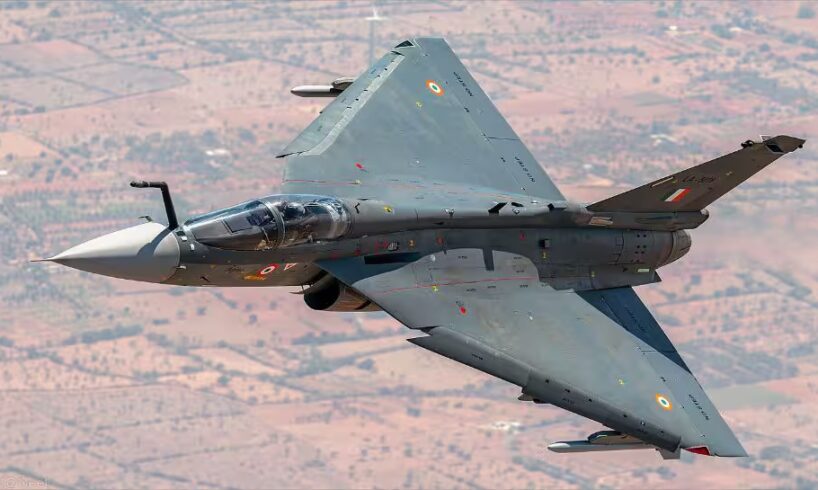
Tejas MK1A: India’s defence strategy is evolving rapidly, and at the heart of this transformation is the Tejas MK1A, a lightweight and highly manoeuvrable fighter jet designed and built domestically. While the world marvels at fifth-generation jets like the US F-35, France’s Rafale, Russia’s Su-57 and China’s J-35, India has strategically chosen to lean on its homegrown option.
Why Tejas MK1A Is IAF’s Choice
The Indian Air Force (IAF) is facing a serious shortage of fighter jets. To maintain operational readiness, India needs 42 fighter squadrons, but presently has only 30 operational. Each squadron comprises 18 jets, and with multiple squadrons approaching retirement, the gap is set to widen.
Add Zee News as a Preferred Source
To address this, India has placed an order for 180 Tejas MK1 jets, along with several trainer aircraft. The Hindustan Aeronautics Limited (HAL) manufactures these jets, with production expected to reach 24 units annually once the programme stabilises.
Tejas MK1A is classified as a 4+ generation light fighter jet. Unlike heavier fifth-generation jets, it is easy to operate and maintain. The operational cost is a major advantage. Its one 45-minute sortie needs only 1,200-1,400 kg of fuel, translating to roughly $4,000–$8,000 per flight hour.
In comparison, Rafale jets cost $16,000-$31,000 per hour, while F-35 sorties range from $35,000-$42,000 per hour. This affordability ensures the Air Force can deploy jets without excessive financial strain, making Tejas the ‘Alto’ of fighter jets, which are efficient, reliable and practical.
Balancing Cost, Capability
Experts say that a full lifecycle of an F-35 can cost $20-$45 million, factoring in maintenance, weapons load and flight hours. By contrast, Tejas MK1A costs six to eight times less across its lifecycle, making it a smart strategic investment.
While lighter than high-end jets, it provides the operational coverage India needs for most tactical scenarios, particularly along the borders with Pakistan.
Operational Geography Matters
Along the India-Pakistan border, most strategic targets are within 100-200 miles. Cities like Lahore, Rawalpindi and Islamabad lie close to the frontier. Tejas MK1A is well-suited to cover this range efficiently.
Its capabilities allow India to protect critical border areas without the prohibitive costs associated with heavier jets such as Rafale or F-35. This approach also frees budgetary resources for other defence priorities.
The China Factor
The China-India border poses a different challenge. The terrain is vast and difficult, and lighter jets like Tejas MK1A are less effective in high-altitude and long-range scenarios. To address this, India is pursuing a multi-layered strategy, which is Tejas MK2 and MKA programme. It is in development phase, along with medium- and long-range jets like Rafale and Sukhoi-30.
This combination ensures India has a balanced air defence network capable of responding to threats from both Pakistan and China.
India’s choice to prioritise Tejas MK1A reflects a calculated strategy, balancing affordability, local production and operational needs. While it may not match the raw power of fifth-generation jets, it perfectly fits India’s tactical requirements, allowing the IAF to strengthen its fleet without straining resources.
By combining Tejas with higher-end fighters, India is building a versatile air defence network, which is ready for the challenges of modern warfare.