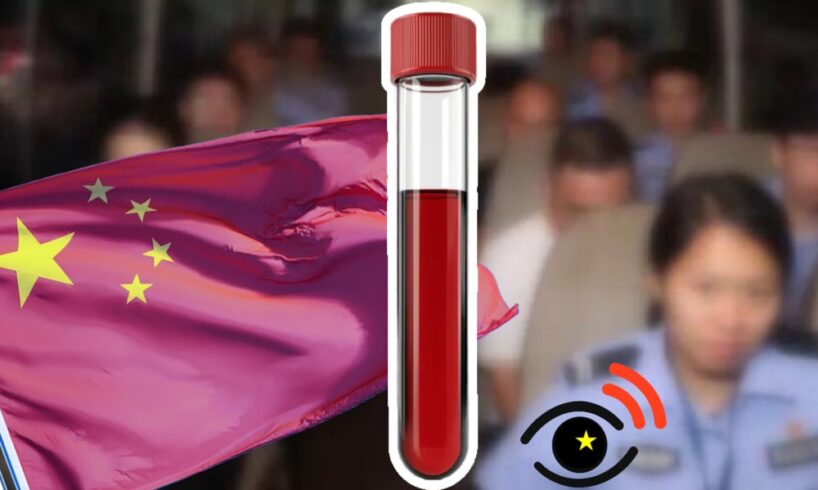
A noteworthy story in Chinese media recently, which also made it to the top trending lists on Kuaishou and Weibo, concerns the uncovering of a widespread criminal network that smuggled blood samples from over 100,000 pregnant women across the border, exposing a black-market chain active across all provinces of China. In this deeper dive, I look at what received far less attention: why so many pregnant women were willing to provide their blood in the first place.
The case was part of a major operation by Guangzhou’s anti-smuggling authorities following a year-long investigation and the mobilization of 265 officers. As part of the operation, two professional criminal groups specializing in the smuggling of pregnant women’s blood samples were dismantled, and a total of 26 people were arrested.
The groups earned a staggering 30 million yuan (US$4.2 million) from their blood-smuggling activities.
So far, the story reads almost like a vampire novel, especially with Chinese media detailing how the blood was smuggled: smugglers reportedly strapped tubes of blood to their bodies to cross the border. Others hid them in specially modified suitcases with concealed compartments.
Some commenters framed the story as the smuggling of “life samples carrying the genetic code of Chinese citizens,” and as the “poaching of ethnic genetic resources,” arguing that the data security implications could be serious if the blood were to be used for research by those with ulterior motives.
Other netizens suggested that “insiders within medical institutions must be involved,” possibly even through broader “cross-border project collaborations.” These suspicions were fueled by official reporting. Overall, the online media discourse surrounding the case focused on the risks these practices pose to national biosecurity, with fears that foreign entities could appropriate China’s human genetic information.
In reality, however, this story is about the widespread demand in China for prenatal blood testing for fetal sex determination.
The groups uncovered by Guangzhou authorities received blood from some 100,000 pregnant women because the women provided it themselves. The groups (illegally) advertised on social media that they offered non-invasive fetal sex identification and genetic disease screening, with clients paying fees of 2,000–3,000 yuan (US$285–US$426) for these blood tests.
According to Guancha.cn, the blood would be drawn by “acquaintances” or through online medical platforms, after which the samples would be mailed by courier to a designated address, where they were collected, concealed by smugglers, and delivered to overseas laboratories for testing.
Smuggled blood as seen in CCTV feature
Although none of the Chinese news reports on this case disclose where these “overseas labs” are actually located, the reports mention cooperation between authorities in Guangzhou, Foshan, and Shenzhen, and the details provided make it highly probable that the case concerns the mainland–Hong Kong border.
In a recent CCTV feature on the news, Zheng Zhong (郑重), Deputy Director of the Investigation Division of the Guangzhou Customs Anti-Smuggling Bureau, said:
“China has explicitly prohibited the determination of fetal sex for non-medical needs, which is a protection of the fetus’s right to life. It is also to maintain a healthy population ratio. Blood sample smuggling poses a high potential risk to public interests and national biosecurity.”
Fetal sex determination has been illegal in China since the first regulation in 1989, with later laws specifically outlawing the use of ultrasound imaging or other techniques to identify fetal sex.
Why Fetal Sex Determination Still Matters
Why did Zheng mention the prohibition of fetal sex determination tests in China to “maintain a healthy population ratio”?
Although abortion has generally been permitted in China—which has one of the most lenient abortion regimes in the world—strict controls on sex-selective abortions have been in place since the early 1990s.
One of the unintended effects of China’s one-child policy since 1979 has been the widespread occurrence of sex-selective pregnancy terminations, linked to traditional son preference. Fetal sex identification has been a precursor to these abortions, contributing to severe distortions in the country’s sex ratio. Non-medical fetal sex identification and sex-selective abortion came to be known as the “two illegitimates.”[1]
Now that China is entering its first decade since the end of the one-child policy, you might expect that these “two illegitimates” have become less pressing issues. After all, with couples now allowed to have more than one child (even three children or more), why would sex determination still be so relevant that 100,000 women would continue to submit blood samples despite the practice officially being illegal?
🔎 In reality, research suggests that the end of China’s one-child policy has not been the turning point it was perhaps expected to be. Although it has reduced pressures, its impact on son preference and sex-selective practices has been somewhat underwhelming.[2]
Since 2016, there has indeed been a rise in daughter preference and gender indifference, as well as a decline in male-to-female sex ratios at birth, but significant regional differences remain and son preference persists, alongside sex-selective abortion.[3] As a result, the sex ratio at birth remains skewed in certain provinces, especially for first births.[4]
👉 So what does this mean in practice? It means that, despite laws and regulations, expecting parents are still eager to find ways to identify fetal sex by whatever means possible (blood-based tests, ultrasound scans), and that agencies able to profit from this desire have been widespread for years.
In provinces like Jiangxi, Fujian, Guangdong, Guangxi, Hubei, and Hunan, which together with Hainan accounted for more than a third of all births in China in 2020, there is still a deeply rooted familism culture and an abnormally high number of male births.[5]
Even though Chinese authorities introduced specific measures more than a decade ago to ban the mailing of blood samples overseas for fetal sex identification, underground networks smuggling fetal blood samples to Hong Kong for gender testing have been rampant—and this goes well beyond 100,000 samples.
Framing Pregnant Women’s Blood Smuggling in Chinese State Media
It is noteworthy that Chinese coverage of this case leaves out issues related to fetal sex selection, the persistence of sex-selective practices in post–one-child China, and parents’ willingness to learn the sex of their fetus to such an extent that they are prepared to pay large sums of money for this information.
In the 8-minute CCTV feature on this case, as well as in other reports, the core narrative centers on how an organized criminal network that endangered national biological security by illegally smuggling pregnant women’s blood samples was successfully dismantled by Chinese authorities through state surveillance and coordinated law enforcement.
China has, in fact, strict laws on the protection of human genetic resources. Since 2019, regulations have specifically prohibited foreign entities from collecting genetic material within China and restricted the transfer of genetic material and related data out of China. Any research involving Chinese human genetic resources must be conducted through approved collaboration with a qualified Chinese institution (see China Law Translate).
In the CCTV report, fetal sex identification is mentioned only briefly: first, in describing how the criminal group attracted customers online, and second, by Zhong, to emphasize that the practice is illegal. This framing places the entire issue within the domains of legality, regulation, and security, while the ethical, socio-cultural, and gender dimensions that lie at the root of the practice are entirely ignored.
Word cloud generated with the assistance of AI, based on the fully transcribed and translated text of the main CCTV investigative report on the blood-smuggling case.
Instead, the case is narrated using dominant language such as “blood smuggling,” “genetic resources,” and “security.” This framing has led to some confusion online. One of the most popular search queries related to the story on Weibo was: “What is the purpose of smuggling pregnant women’s blood samples abroad?” (孕妇血液样本走私境外目的是什么).
On Xiaohongshu, some commenters similarly asked: “I just don’t understand what pregnant women’s blood is used for.” Another user replied: “They can extract genetic codes, create a virus, and kill us with it.”
There are, however, many commenters who directly connect the case to its underlying issue. One woman on Xiaohongshu asked: “Isn’t it possible to tell [the fetus’s sex] just by doing a B-ultrasound? Why would they spend so much money to draw blood?” Another commenter replied: “It takes several months before you can do an ultrasound. A blood test is faster, and you can know the result before the abortion deadline.” (In some regions of China, non-medical abortions are not permitted after 14 weeks of pregnancy.)
Demographic Anxiety and Shifts in Narratives
Chinese headlines about the uncovering of the blood-smuggling operations appeared in the same week when netizens discussed unofficial reports about China’s 2025 estimated birth rates, suggesting that the country’s fertility rate will hit another historic low and fall to second-lowest in the world (higher only than South Korea), with a total fertility rate of about 1.09.
“Let people with money have kids,” some commenters suggested. “Right now, it’s hard for young people to get a job. When you can’t even find a job, who would think of having kids?”
Another person on Weibo wrote: “I’m part of the elite social class with a PhD degree, and yet I’m miserable. I’m pessimistic and disappointed about the future. I won’t have kids, won’t buy [a house], and won’t get married.”
Over the past years, and especially recently, Chinese authorities have introduced numerous measures in attempts to boost the country’s birth rates, from child-rearing subsidies to taxes on contraceptives.
In this light, tackling illegal practices involving fetal sex identification is more relevant than ever—and pushing such news to the top of China’s trending lists, together with frightening narratives about blood thieves and biosecurity risks, serves as a warning as much to smugglers as to expecting mothers not to engage in such practices. In this context, expecting parents would not only be crossing legal red lines by testing the sex of their unborn child, but would also be framed as handing over China’s national DNA to potential foreign enemies.
🔴 In doing so, Chinese official narratives shift, yet also fall back into old habits: at a time when fertility is dramatically dropping and confidence among young people in love & marriage is eroding, the state does more than regulate or guide ideas about family planning and fetal sex determination; it changes the meanings attached to it.
But there’s also a side effect to these stories. Because official news coverage presents the case as one of potential risks of Chinese genetic data being stolen, while largely leaving out the relevant social context, some ordinary Chinese netizens have begun to worry about what happens to their blood samples at hospitals once they leave their check-up appointments.
“Can they profit from it?” some wonder, while others worry about unintentionally contributing to future biological warfare.
Ultimately, the story of “blood smuggling” is not just about smugglers or overseas laboratories. It is about how, in an era of increasing demographic anxiety, reproductive behavior is increasingly reframed through the language of security.
Luckily, many genuinely don’t see what all the fuss is about: “People would really smuggle pregnant women’s blood abroad for what? Is it really so important to know whether you’re having a boy or a girl?”🔚
📌🎬 Although I also published last week, I didn’t send that article as a newsletter. So, in case you missed it, here’s a short recap: the past year has been a tumultuous one for China’s entertainment industry, and especially for renowned director Wong Kar-wai. After the success of the TV drama Shanghai Blossoms, a former screenwriter accused Wong and his team of discrediting, exploiting, and abusing him.
The case was already explosive, but it became even more sensitive when audio recordings were leaked in which Wong criticised the Party. Almost any other celebrity would likely have been blacklisted for such remarks, yet Wong seems to have escaped that fate. Why? You can explore the case in this in-depth article by Ruixin Zhang. It’s worth the read.
👉 This piece is part of Chapters, the format I use for deeper, more analytical pieces. Alongside Chapters, I also publish Signals, which tracks slower-moving shifts in Chinese online culture and digital life, and China Trend Watch, which offers a regular overview of what has been trending across China’s digital platforms. Keep an eye on the upcoming editions to follow the thread.
By Manya Koetse
(follow on X, LinkedIn, or Instagram)
[1] Ruby Lai Yuen Shan, “The Transformation of Abortion Law in China,” in Research Handbook on International Abortion Law, edited by Mary Ziegler (Cheltenham, UK: Edward Elgar Publishing, 2023), 172–73.
[2] Xinyi Zhang, “Estimating the Effect on the Sex Ratio of the Two-Child Policy: Evidence from China,” Proceedings of the International Conference on Social Psychology and Humanity Studies 9 (2023): 1–8.
[3] Li Mei and Quanbao Jiang, “Sex-Selective Abortions over the Past Four Decades in China,” Population Health Metrics 23, no. 6 (2025): 1–16.
[4] Mengjun Tang and Jiawei Hou, “Changes of Sex Ratio at Birth and Son Preferences in China: A Mixed Method Study,” China Population and Development Studies 8 (2024): 1–27.
[5] Tang and Hou, “Changes of Sex Ratio at Birth,” 4–5.
Spotted a mistake or want to add something? Please let us know in comments below or email us. First-time commenters, please be patient – we will have to manually approve your comment before it appears.
©2025 Whatsonweibo. All rights reserved. Do not reproduce our content without permission – you can contact us at [email protected].